
By Biswajit Mondal from Shyamnagar, Satkhira
In the saline coastal region of southwestern Bangladesh, where climate change and soil salinity continue to threaten agriculture, many farming families have adapted by relying on traditional knowledge, innovation, and determination. One inspiring example is Shibani Rani of Purba Kalinagar village in Munshiganj Union, Shyamnagar Upazila, who has transformed her homestead into a thriving, biodiversity-rich agroecological farm.
Shibani owns a 99-decimal homestead and 2.5 bighas of paddy land. After the death of her husband, Monoj Mondal, at a young age, she was left to raise her infant son alone. Unable to seek work outside the home, she turned to farming as her family’s primary livelihood. With careful planning, local knowledge, and support from neighbours, she gradually diversified every corner of her homestead into a productive farming system.
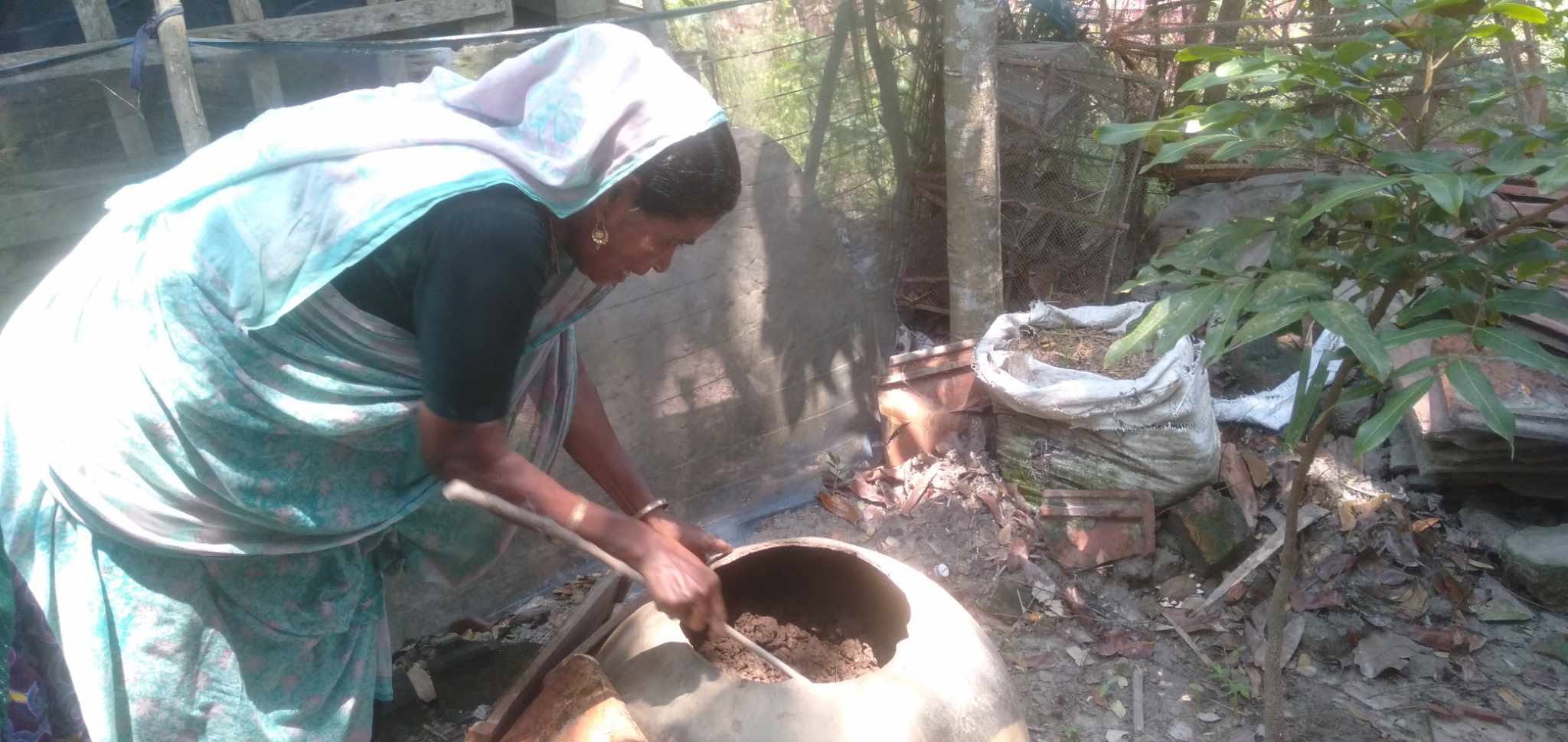
Today, she produces vegetables, fruits, fish, livestock, and poultry throughout the year. She cultivates seasonal crops using environmentally friendly methods such as trellis farming, sack cultivation, and vegetable production on pond embankments. The produce not only meets household food needs but is also shared with relatives and neighbours, while the surplus is sold in local markets to support the family’s income.
Shibani grows a wide range of vegetables and spices, including bottle gourd, banana, cucumber, eggplant, tomato, cabbage, cauliflower, beans, potato, taro, yam, okra, long bean, ginger, turmeric, onion, garlic, coriander, chilli, and fennel. Around her ponds, she has developed raised beds where rice, fish, and vegetables are produced in an integrated system. She also conserves seeds from most of her crops for future cultivation.
Her homestead is rich in biodiversity, with fruit trees such as mango, jackfruit, guava, coconut, pomegranate, sapodilla, rose apple, elephant apple, jujube, hog plum, and papaya, alongside timber species including mahogany, babla, and sissoo. She also protects many wild edible plants such as amrul, bathua, kolmi, and other indigenous leafy vegetables. The ponds support native fish species and freshwater giant prawns, while five cattle, six goats, thirteen ducks, fourteen chickens, and twelve pigeons contribute to the family’s nutrition and income.
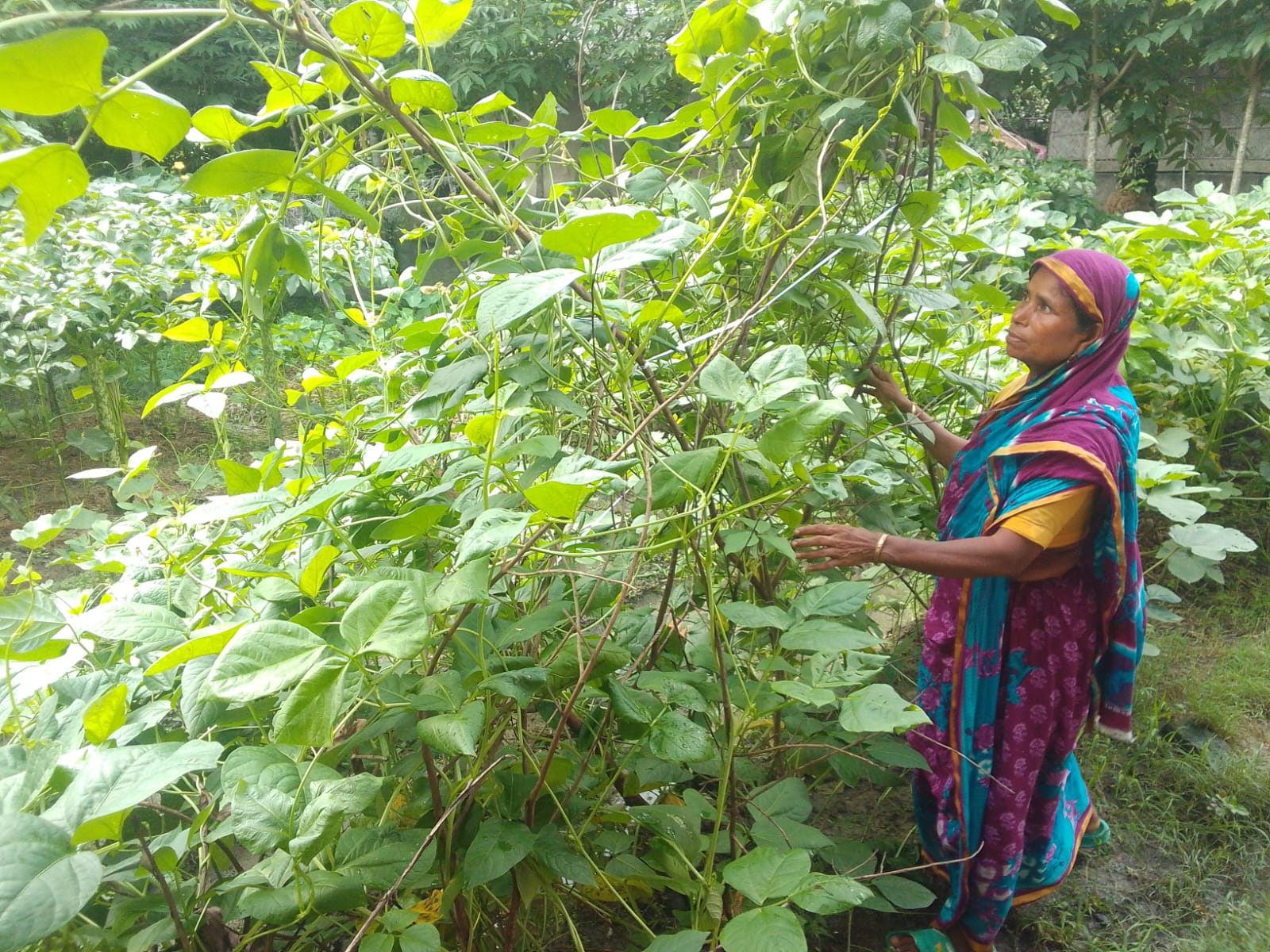
Shibani said, “My experience shows that every family can achieve success through proper planning and management. I try to practice organic farming by using manure from my own cattle and continue growing diverse crops in every season.”
Her homestead has become a learning site, regularly visited by farmers, development practitioners, and representatives of different organizations. With support from BARCIK, her house has been developed as a model “Shoto Bari” (Model nutrition house) initiative. She hopes to further strengthen her farm by receiving support for vermicompost production and protective netting for vegetable cultivation.
Despite increasing salinity and frequent climate-related disasters, women like Shibani Rani continue to protect biodiversity and strengthen local food systems through agroecological farming. Her story demonstrates how resilient, diversified homestead farming can enhance food security, conserve biodiversity, and inspire climate adaptation in Bangladesh’s vulnerable coastal communities. Supporting and scaling up such initiatives can help create more biodiversity-rich and climate-resilient homesteads across the country.