
By Ohidur Rahman from Netrakona Correspondent
A village discussion and public signature campaign advocating for pesticide-free agriculture was held at the Kailati Agroecology Learning Center in Kailati village under Netrakona Sadar Upazila on 15 July. The event, organized by the Green Coalition Committee with support from the Bangladesh Resource Centre for Indigenous Knowledge (BARCIK), aimed to raise awareness of the environmental and health risks associated with excessive pesticide use.
The discussion was attended by Upazila Youth Development Officer Nuruzzaman as the chief guest, alongside youth farmer-researcher Enamul Khan, caretaker of the Kailati Agroecology Learning Center, BARCIK Regional Coordinator Md. ohidur Rahman, organic farmers, and local youth.
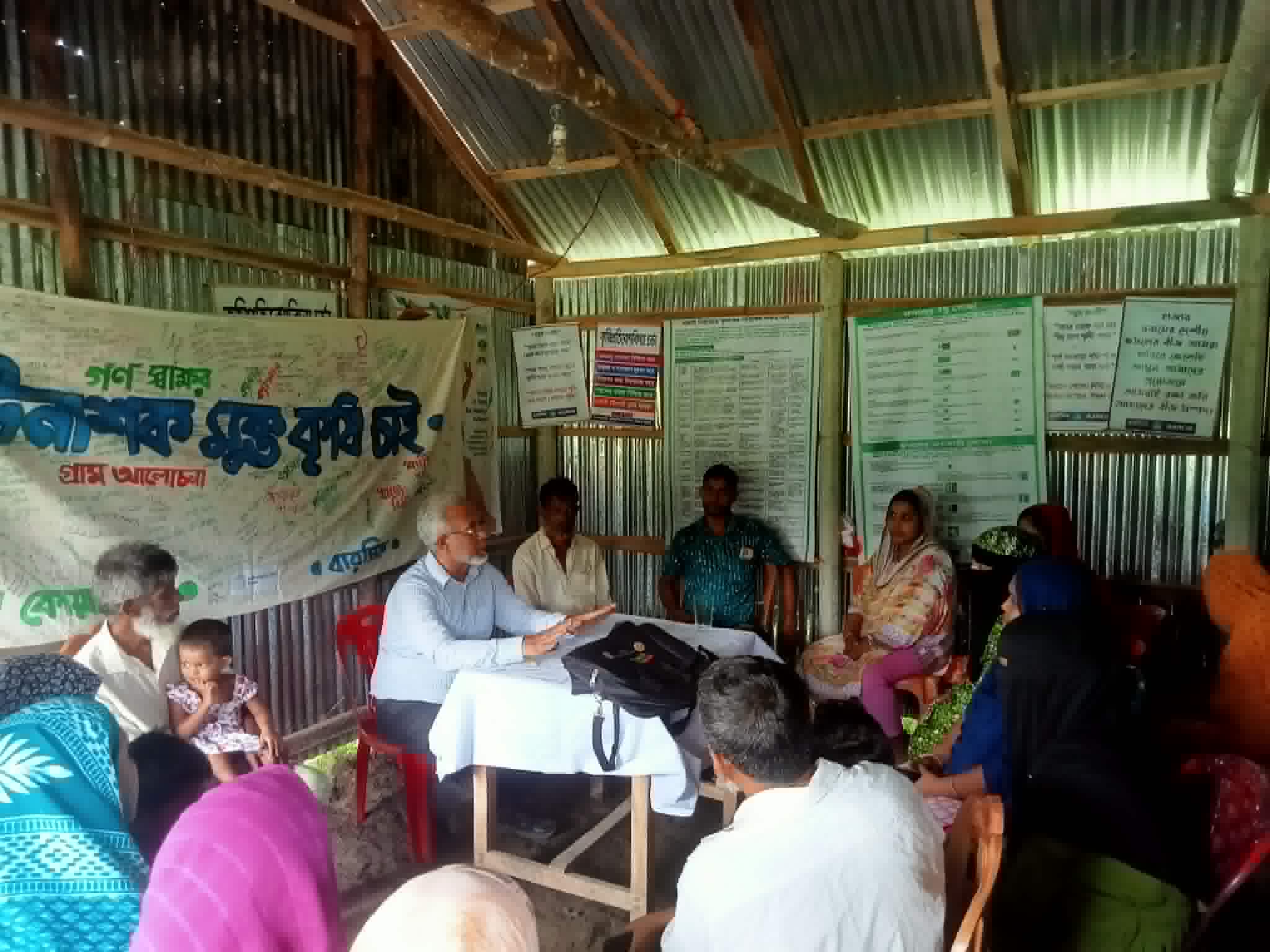
Speaking at the event, Md. Ohidur Rahman highlighted that indiscriminate pesticide use contaminates soil, water, air, crops, fish, and even breast milk, posing serious threats to ecosystems and public health. He emphasized the need to promote agroecological practices to protect biodiversity and ensure safe food production.
Local farmers shared their experiences, noting that excessive pesticide use has degraded soil fertility and increased health risks. Farmer Shahjahan Mia said that applying pesticides often causes dizziness and sleeplessness, while the soil has gradually lost its productivity.
Chief guest Nuruzzaman urged farmers to reduce dependence on chemical-based agriculture and adopt organic farming practices. He warned that continued pesticide use damages vital human organs and degrades soil, water, and air quality. He also encouraged villagers to establish biogas plants with technical support from the Department of Youth Development, highlighting their environmental and household benefits.
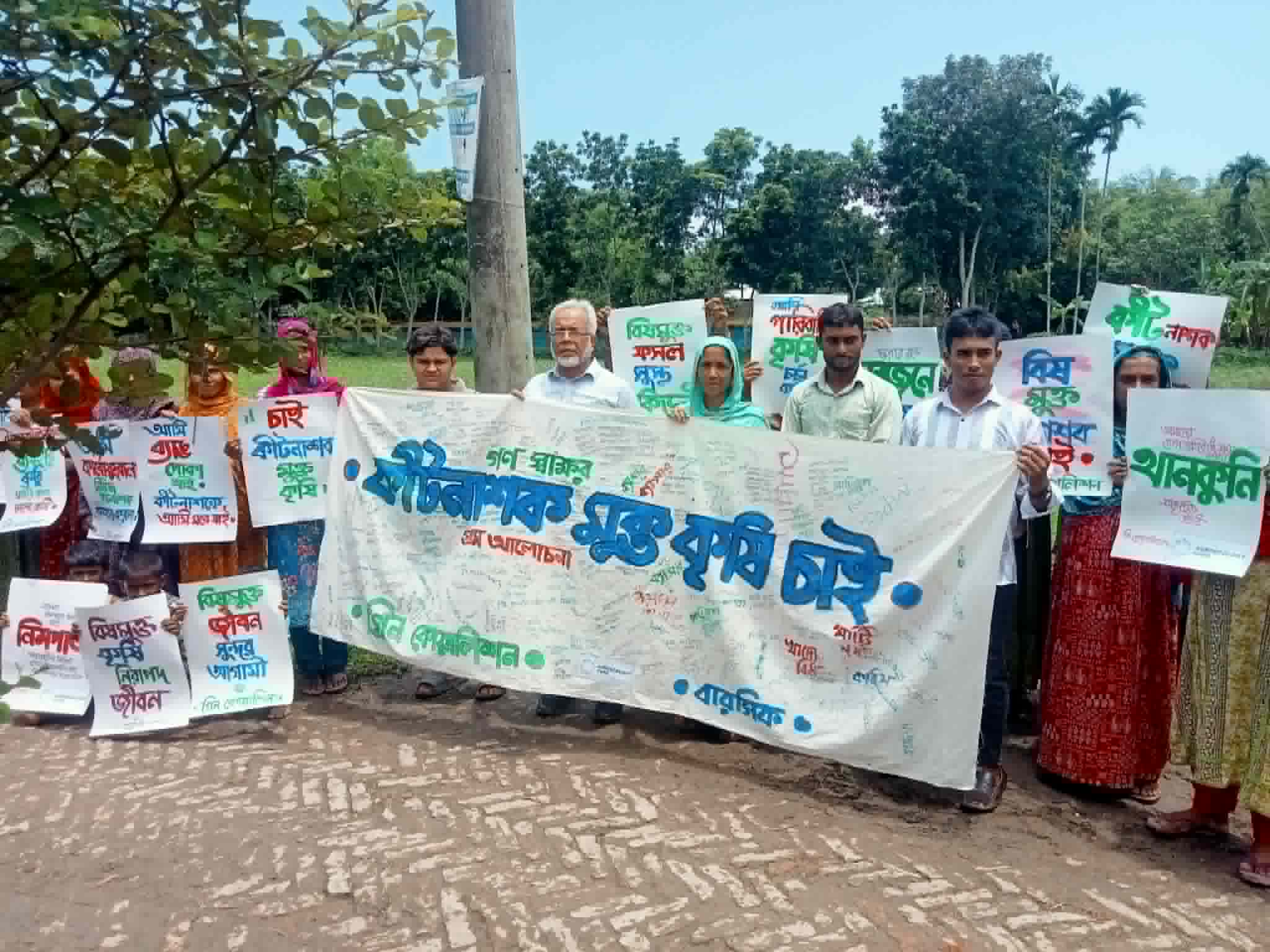
Participants expressed concern that several banned pesticides are still available in local markets and called for stricter enforcement to stop their sale and use. Farmers, teachers, and youth signed a public pledge supporting pesticide-free agriculture.
The programme concluded with a rally and a symbolic “Nature Bonding” activity to promote environmental awareness. Participants carried placards bearing messages such as “We Want Pesticide-Free Agriculture,” “Stop Soil, Water and Air Pollution,” “Ban Hazardous Pesticides,” and “Organic Farming for Safe Food.”