
By Atikur Rahman Atik from Rajshahi
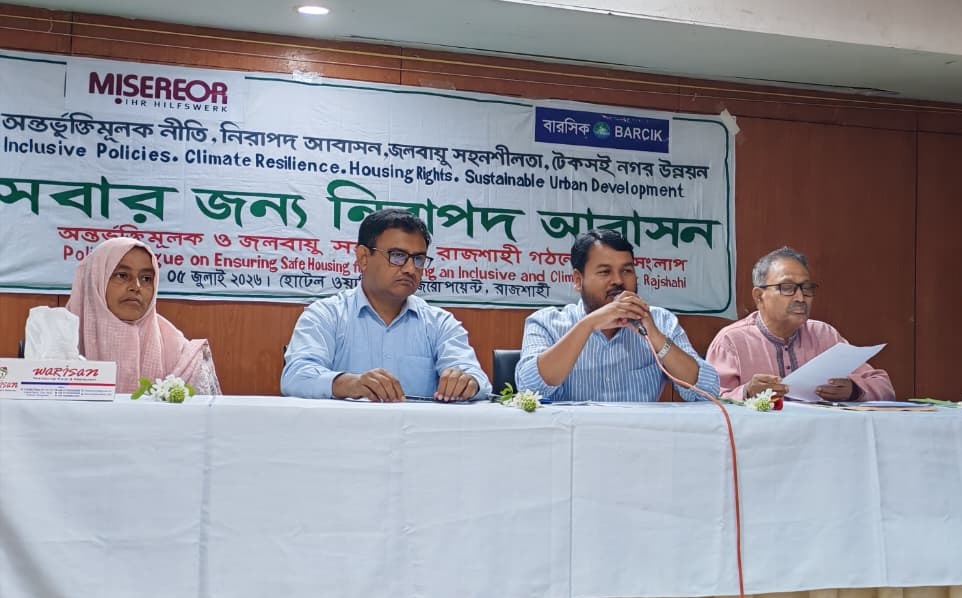
BARCIK organized an Urban Policy Dialogue at Hotel Warisan in Rajshahi recently calling for safe housing and the development of an inclusive, climate-resilient, and environmentally sustainable city for all.
During the dialogue, BARCIK’s Researcher and Regional Coordinator, Md. Shahidul Islam, presented a policy brief highlighting the urgent need to ensure safe and dignified housing for slum dwellers, low-income households, and marginalized communities in Rajshahi.
According to the policy brief, Rajshahi, with a population of over 800,000, still has a significant number of people living in unsafe and informal settlements. The Bangladesh Bureau of Statistics’ Slum Census (2014) identified 104 slums with more than 39,000 residents, a figure believed to have increased considerably over the past decade.
The policy brief emphasized that safe housing should be recognized not only as a development priority but also as a matter of human rights, social justice, and climate justice. It called for a participatory and climate-resilient urban housing policy for Rajshahi and urged coordinated action by Rajshahi City Corporation, Rajshahi Development Authority, government agencies, development partners, researchers, civil society, and the media.
Recommendations included introducing social housing for low-income families, developing climate-resilient infrastructure, protecting ponds, canals, and urban green spaces, preserving playgrounds and open spaces in every ward, expanding green livelihood opportunities for women and youth, and ensuring a safe urban environment for both people and biodiversity.
The dialogue was inaugurated by Mahfuzur Rahman Riton, Administrator of Rajshahi City Corporation, as the chief guest. He announced that coordinated initiatives involving the Ministry of Land, Rajshahi Development Authority, and other stakeholders are underway to address the housing crisis facing slum communities. He also pledged that no more ponds in Rajshahi would be illegally filled or encroached upon and stated that the City Corporation would consider acquiring privately owned ponds to ensure their long-term conservation.
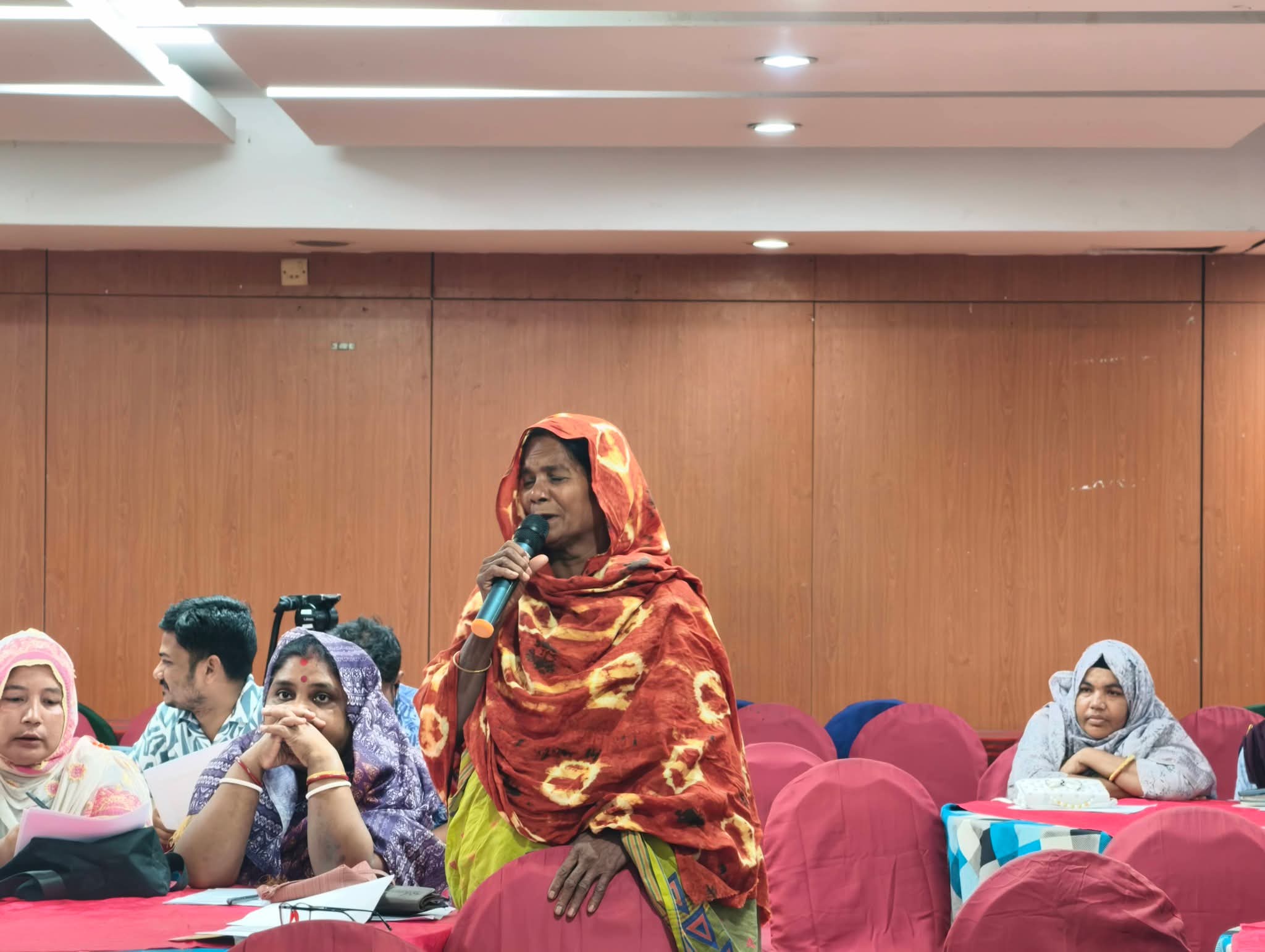
Representatives from the Green Coalition Rajshahi, Rajshahi Urban Poor Rights Implementation Committee, Save the Nature, Barendra Youth Forum, and residents from several slum communities participated in the discussion. Community representatives highlighted persistent challenges, including insecure housing, the constant threat of eviction, deteriorating living conditions, and restricted access to ponds and other public resources.
At the end of the dialogue, BARCIK presented the Rajshahi City Corporation Administrator with a seven-point strategic policy recommendation outlining key actions to promote safe and affordable social housing, climate-resilient urban infrastructure, conservation of water bodies and green spaces, protection of playgrounds and open spaces, green employment opportunities for women and youth, meaningful participation of slum residents in urban planning, and biodiversity-friendly urban development.