
By Ohidur Rahman from Netrakona
The widespread use of the banned China Duari fishing net in the haors, rivers, canals, and wetlands of Madan Upazila is posing a serious threat to aquatic biodiversity and the sustainability of inland fisheries. The nets are being used extensively in Talar Haor, Ganesher Haor, Bander Haor, Mohisher Haor, Jahangirpur Haor, Katlar Haor, as well as the Mogra and Saiduli rivers and numerous canals and wetlands.
Conservationists warn that these ultra-fine mesh nets indiscriminately trap fish of all sizes, including fry and fingerlings, along with shrimp, turtles, frogs, crabs, and other aquatic species. As a result, natural fish breeding is being severely disrupted, native fish populations are declining, and the fragile aquatic ecosystem of the haor is under increasing pressure.
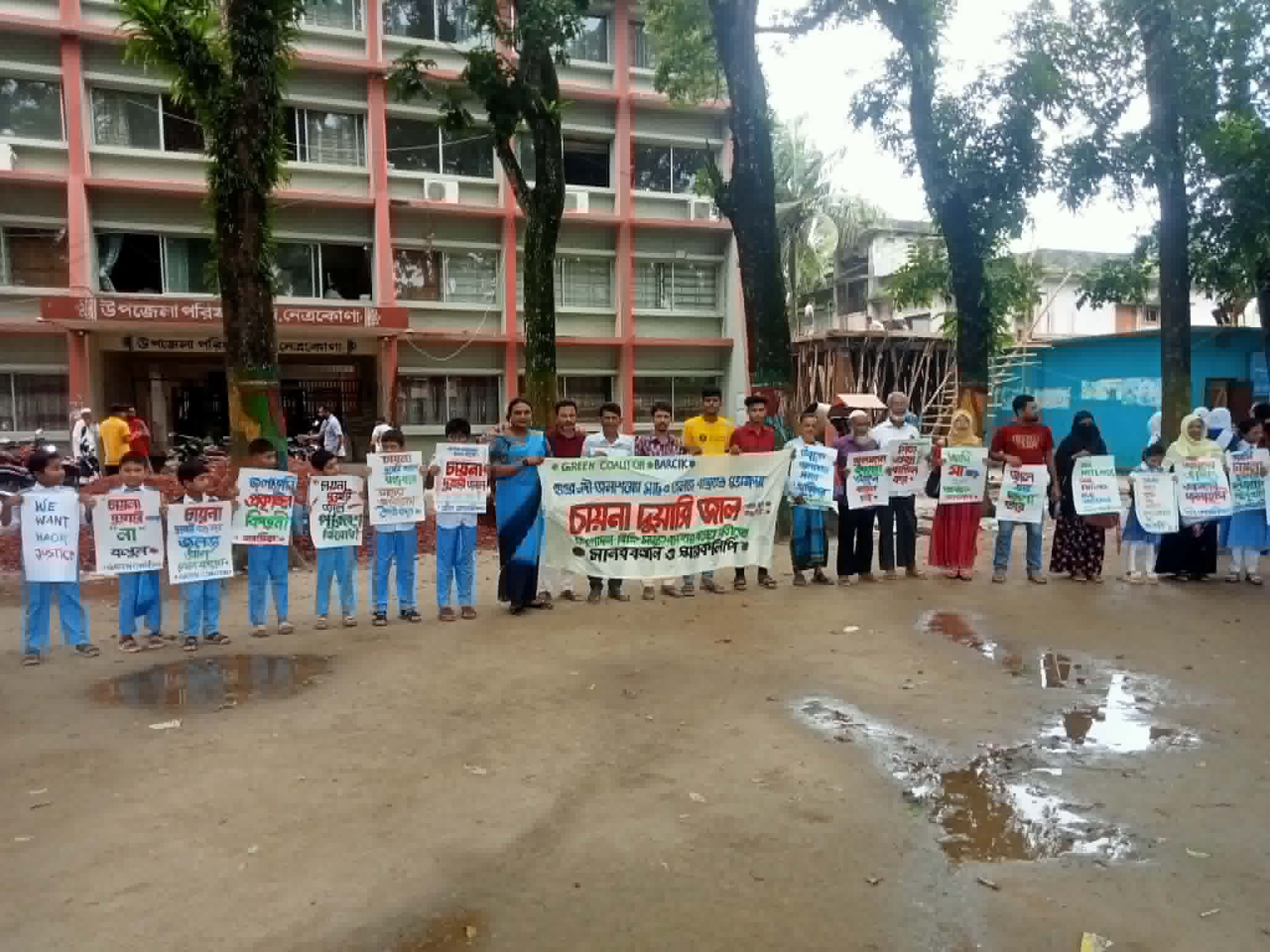
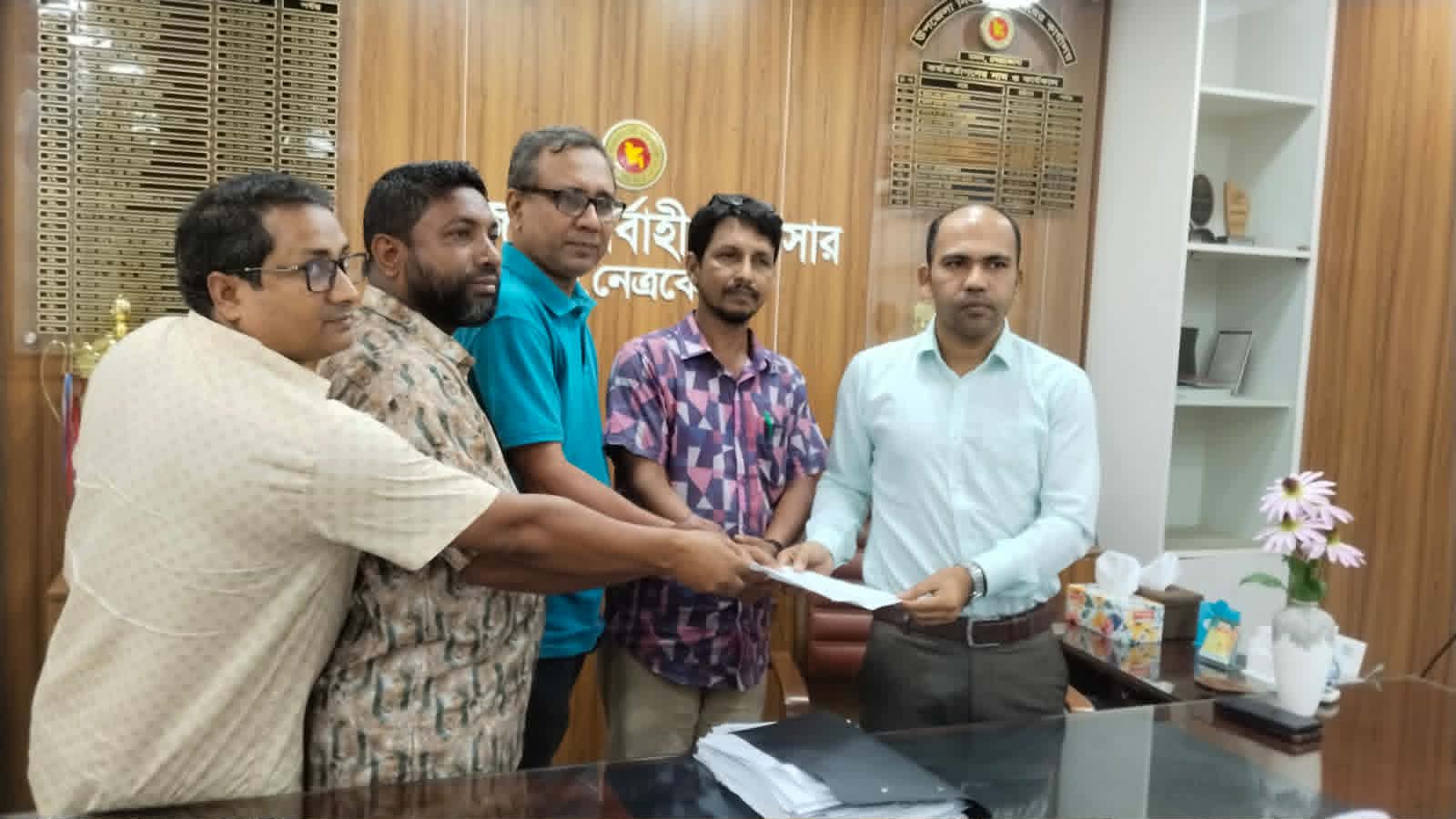
To protest the use of these destructive nets and demand their complete ban, BARCIK, in collaboration with the Madan Green Coalition Committee, recently organized a human chain at the Madan Upazila headquarters. Following the demonstration, environmental activists, fishers, farmers, youth representatives, local residents, and members of the transgender community submitted a memorandum to the Upazila administration.
Among those present were Green Coalition Committee Vice-President Nur-e-Alam Siddique, Madan Press Club General Secretary Ujjal Khandaker, Paritosh Pal, BARCIK Regional Coordinator Md. Ohidur Rahman, teacher Md. Ujjal Mia, journalists, and representatives of local youth and fishing communities.
According to local environmentalists, the haors and wetlands of the region once supported nearly 270 species of freshwater fish. However, wetland degradation, excessive pesticide use, dewatering of water bodies for fishing, the use of Rotenone poison, indiscriminate harvesting of fish fry, and destruction of aquatic vegetation have already driven more than 100 fish species to extinction or near extinction. The growing use of China Duari nets has further intensified the crisis.
Nur-e-Alam Siddique, Vice-President of the Green Coalition Committee, said, “These nets are destroying the natural breeding cycle of fish. If their use continues, fish populations in the haors will decline sharply, threatening the livelihoods of local fishers and undermining the country’s food security. The nets also uproot underwater grasses and aquatic plants that serve as essential habitats and food sources for fish, disrupting the entire aquatic food chain.”
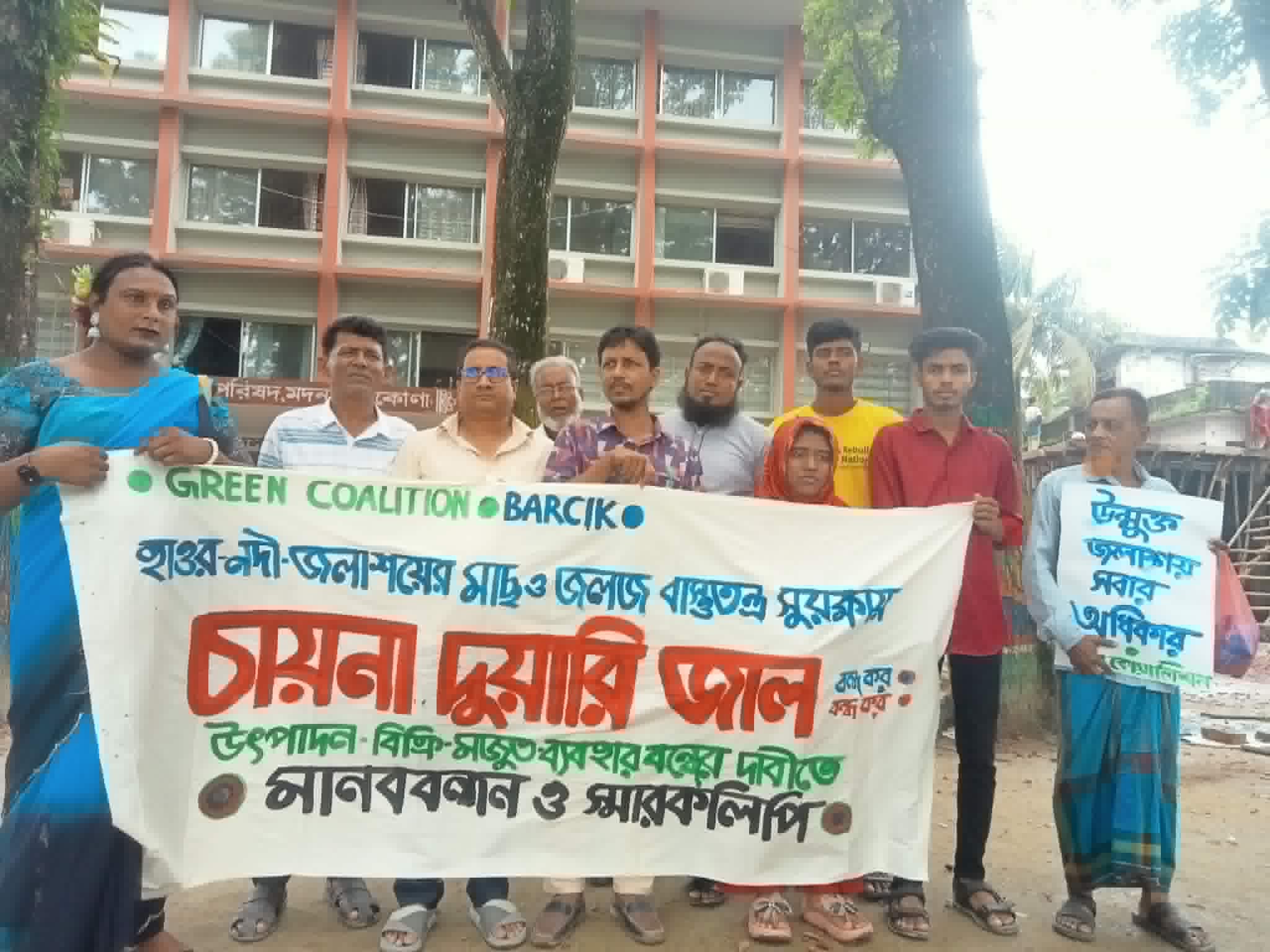
The participants made some demands that include: Strictly banning the use of China Duari nets in all haors, rivers, canals, and wetlands of Madan Upazila and ensuring effective enforcement of existing laws; Conducting regular drives to seize and destroy illegal fishing nets from markets and water bodies; Directing the local administration and the Department of Fisheries to carry out regular mobile courts and enforcement operations; Strengthening monitoring and supervision by the Department of Fisheries and Completely prohibiting the production, import, marketing, storage, and sale of China Duari nets.