
By S.M. Osman Goni from Shymanagar, Satkhira
On the occasion of World Wetlands Day 2026, a rally and discussion meeting titled “Coastal Communities’ Commitment to Wetland Protection” was organized by BARCIK, the Green Coalition, and the Sundarbans Youth Solidarity Team.
The event took place on 2 February, on the bank of the Chunkuri River near Harinagar Bazaar in Munshiganj, Satkhira. Participants in the rally displayed placards and festoons demanding the protection of wetlands, rivers, canals, beels, and other natural water bodies.
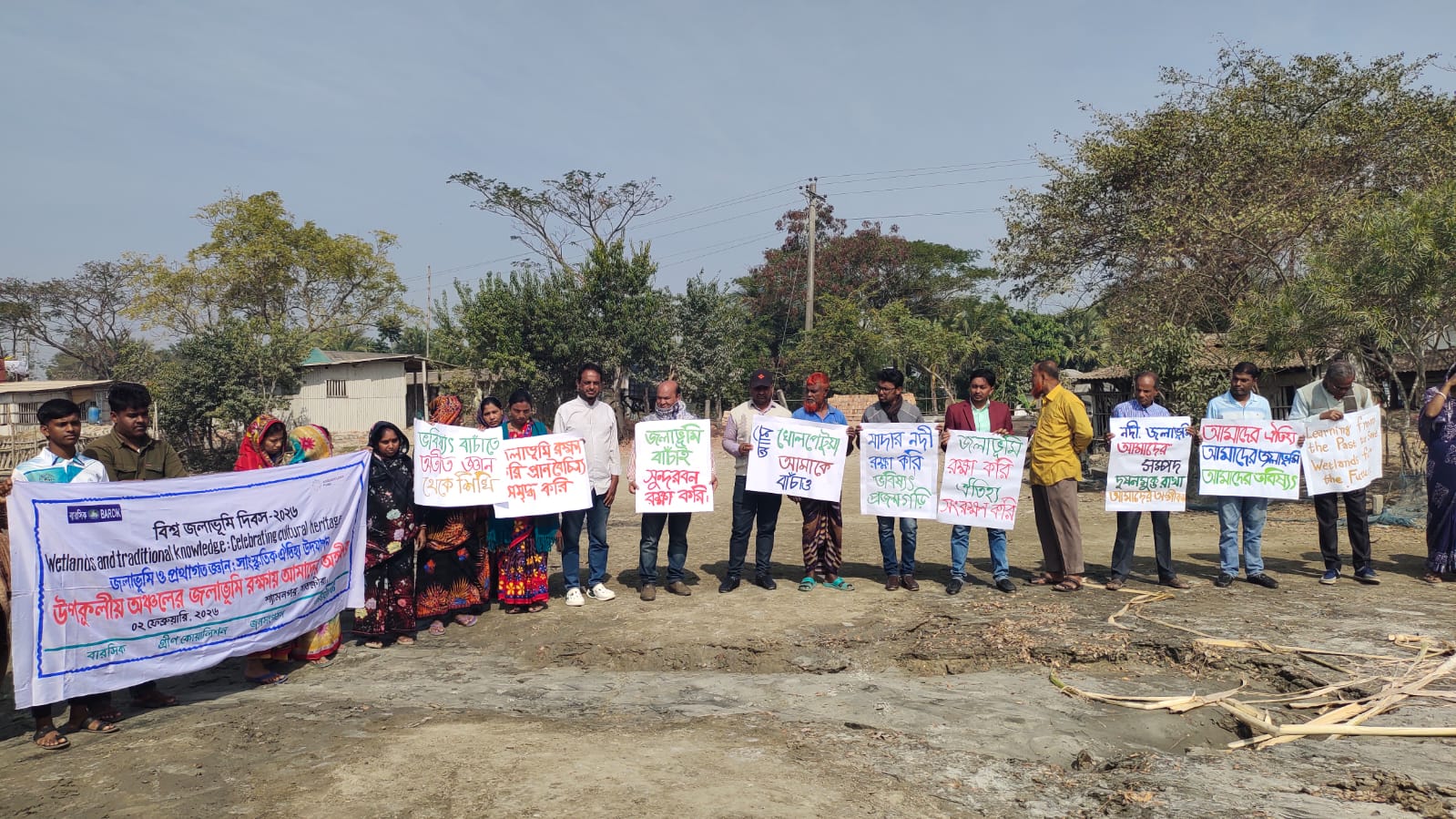
The discussion meeting was chaired by Dr. Jogesh Mondal, President of the Munshiganj Green Coalition. “Rivers, canals, beels, and wetlands are an integral part of our cultural heritage. If these ecosystems are destroyed, not only the environment but also the very existence of coastal communities will be at risk. Wetland protection must therefore be ensured through the active participation of local people-“ he said.
The discussion was moderated by S.M. Osman Goni, Campaign and Network Facilitator of BARCIK. Speakers included Ramakrishna Joardar, Associate Regional Coordinator of BARCIK; Biswajit Mondal, Programme Officer; M. Zillur Rahman, President of Ishwaripur Green Coalition; Mahfuzur Rahman Taleb, Senior Vice President of the Sundarbans Press Club; senior journalist Md. Ayub Ali; Sarma Rani, Supervisor of the Mathurapur Agroecology Learning Centre; farmer Nimai Mondal; and Sabuj Billah, General Secretary of the Burigoalini Unit of the Sundarbans Youth Solidarity Team, among others.
Ramakrishna Joardar said, “Coastal wetlands act as natural shields against disasters. Traditional knowledge and farmers’ lived experiences can play a crucial role in wetland management, and these must be properly recognized and reassessed.” While M. Zillur Rahman emphasized that protecting canals, beels, and wetlands directly ensures the survival of agriculture, fisheries, and livelihoods. He called for a united social movement involving local communities.
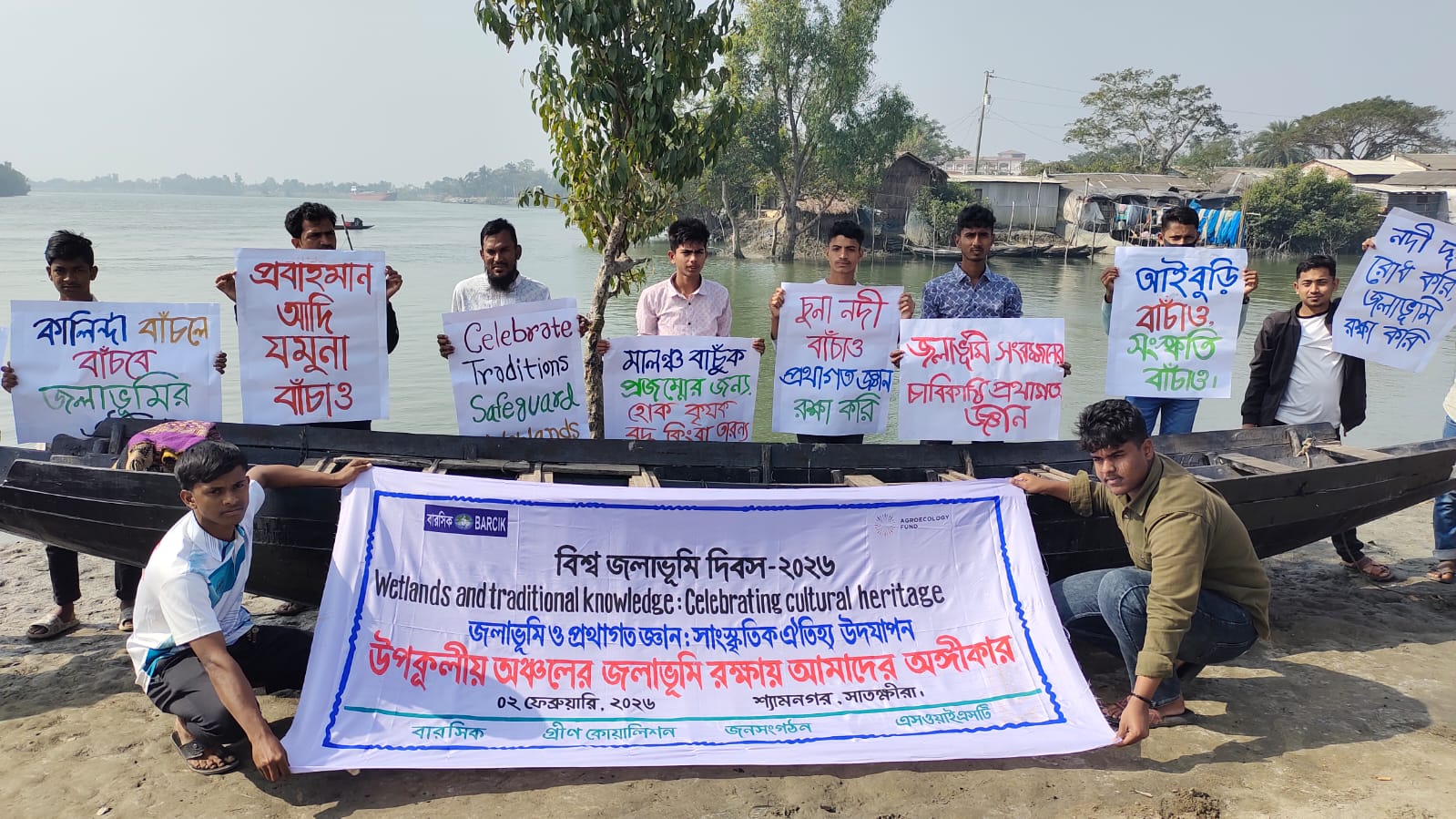
Farmer Nimai Mondal shared grassroots knowledge saying “We farmers know when to retain water and when to release it. If our traditional knowledge is valued, wetland protection will become much easier.” Youth leader Sabuj Billah added that active youth participation can significantly strengthen the wetland protection movement and emphasized the moral responsibility to preserve rivers and wetlands for future generations.
Participants collectively affirmed that wetlands are indispensable for livelihoods, food security, and ecological balance in coastal regions. They called for strengthened collective initiatives that utilize traditional knowledge and local experience to conserve wetlands.