
By Subir Kumar Sarker, from Manikgonj
Agriculture remains the primary source of livelihood for Bangladesh’s marginal communities. Since the Green Revolution, agriculture in the country has undergone major changes. In the name of increased production, irrigation, chemical fertilizers, hybrid seeds, and pesticides have expanded rapidly, causing severe damage to nature and the environment. Crop diversity has declined, and soil, water, and air quality have deteriorated.
Recognizing these ecological crises, BARCIK took initiative to revive traditional knowledge, protect local agricultural biodiversity, and strengthen strategies to address climate change. While the state has introduced initiatives such as organic and safe food production, homestead nutrition gardens, and the “One House, One Farm” programme, these limited efforts highlight the growing relevance of agroecology.
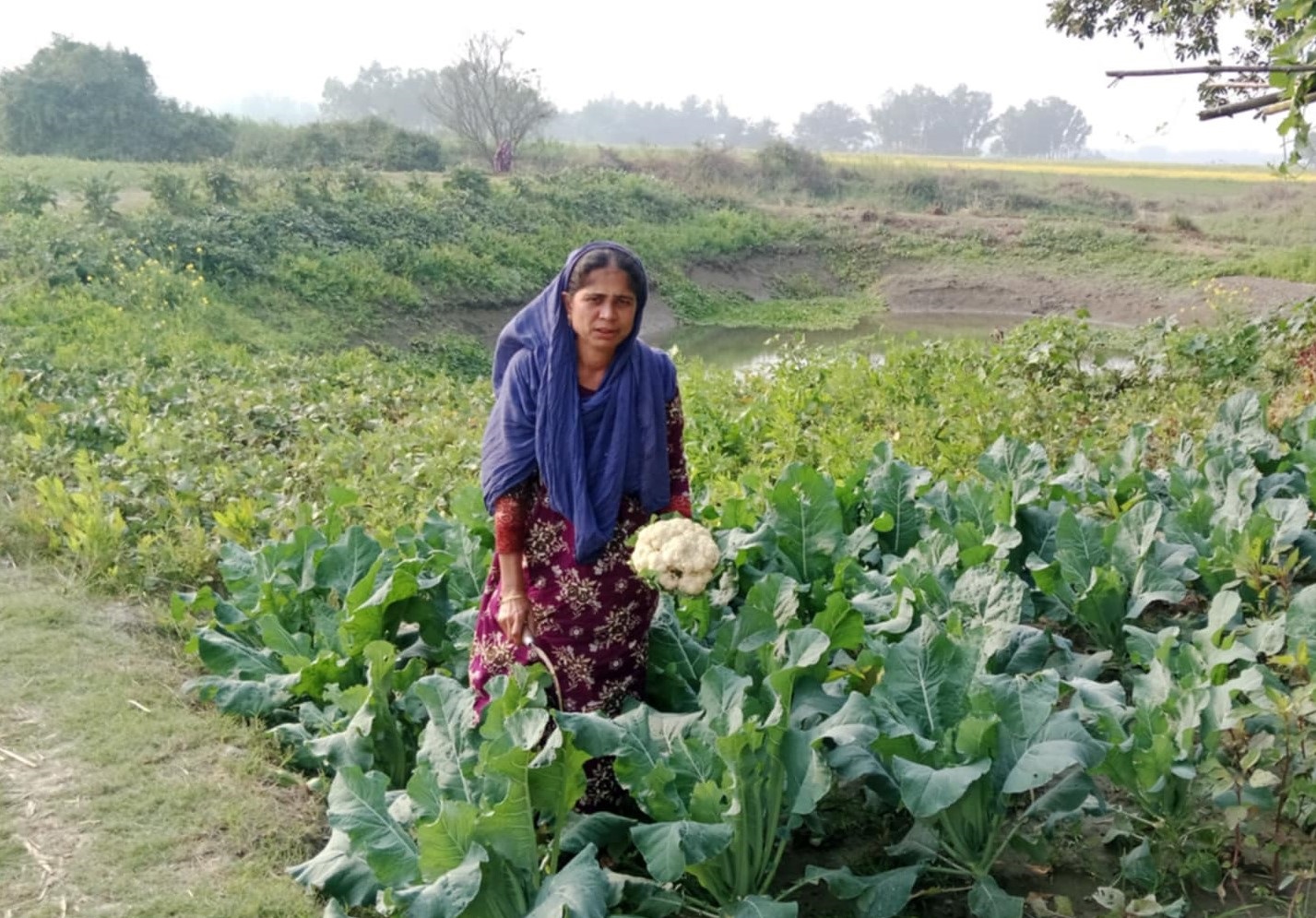
Placing food sovereignty at the center of its work, BARCIK has made agroecology and climate justice its core focus. Across diverse agro-ecological regions of Bangladesh, BARCIK promotes agroecology as an integrated framework combining science, policy, practice, and people’s movements.
A key strategy in this effort is the establishment of Agroecology Learning Centres. One such centre has been developed in Joynagar village of Manikganj Sadar Upazila, with support from BARCIK, led by the Joynagar Farmer–Women Farmers Organization and the Shotobari initiative. From this centre, an agroecological movement has begun to spread across the village.
Currently, 12 families in the village produce and use vermicompost, and all homestead lands are cultivated using organic methods. In deep-water broadcast Aman rice fields and Khesari fields, farmers apply no chemical fertilizers. While chemical inputs are still partially used in mustard, potato, onion, chili, coriander, and black cumin cultivation, organic practices are expanding gradually.
Twenty-three families have received vermicompost training, and 12 farmers (women and men) actively use vermicompost on their homestead plots. After harvesting deep-water Aman rice, farmers broadcast Khesari seeds during Ashwin–Kartik, eliminating the need for chemical fertilizers. Women, men, and youth all participate in agricultural activities.
Due to low-lying conditions, women play a crucial role in seed conservation and climate-adaptive cultivation growing vegetables in earthen pots, water hyacinth beds, rooftops, raised beds, mud mounds, and sacks, and cultivating garlic in muddy soils and ginger and turmeric in bags.
Most families no longer use chemical fertilizers in homestead plots, Aman rice, or Khesari fields. Limited use of irrigation, chemical fertilizers, and pesticides continues only in some Boro rice and mustard fields. Rising electricity, fuel, and fertilizer prices have encouraged farmers to reduce Boro cultivation and shift toward Aman rice, Khesari, and sesame.
Farmers increasingly use homemade organic pesticides, along with ash, cow dung slurry, scare devices, lime application on tree trunks, and other indigenous practices. While Bangladesh officially has three rice seasons Aus, Aman, and Boro farmers in Joynagar and Begomnagar primarily cultivate deep-water broadcast Aman rice, relying largely on native seed varieties preserved at home.
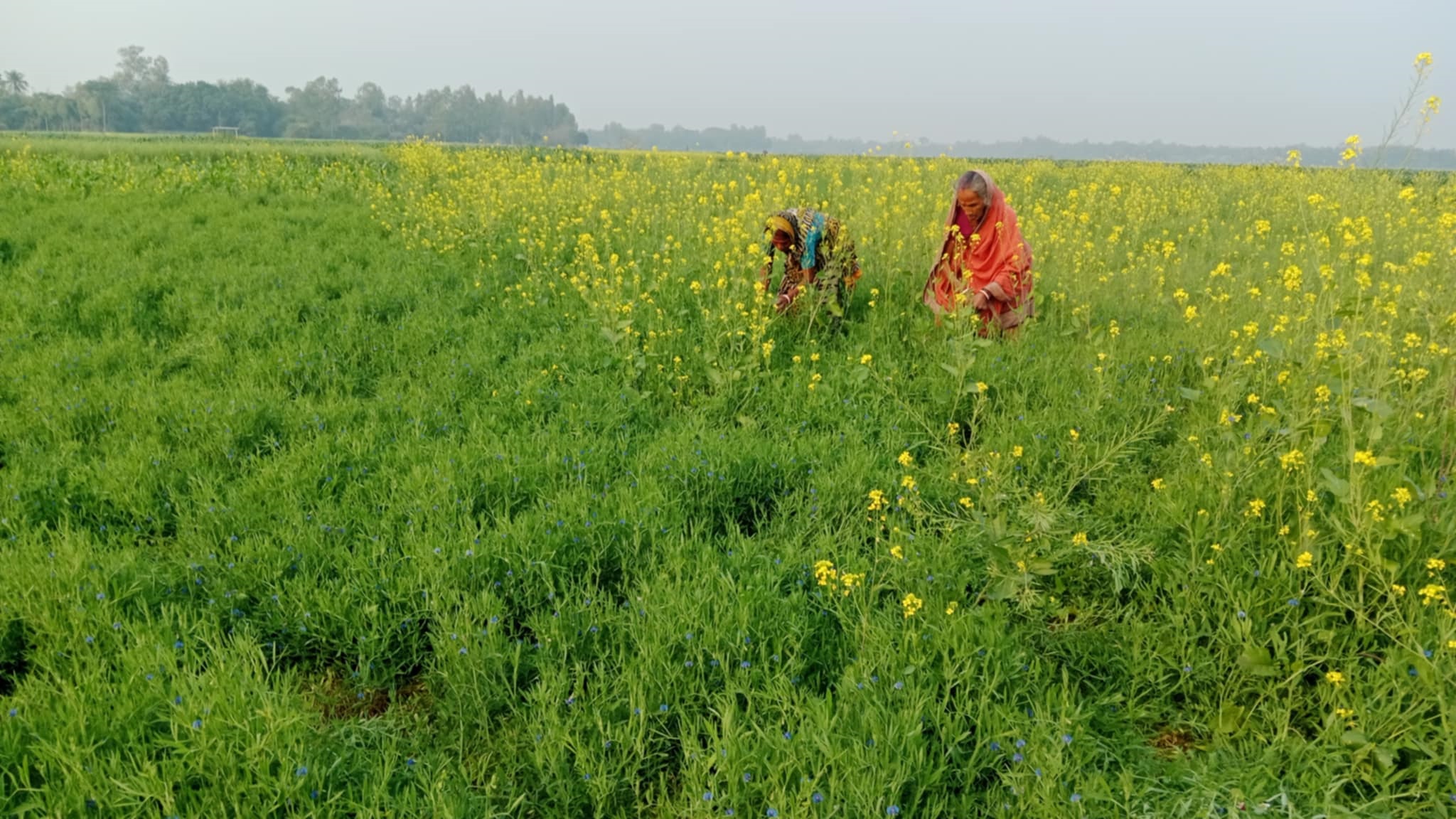
To ensure seed availability during the monsoon, farmers have established seed houses at home and through the Agroecology Learning Centre. Campaigns have also been organized for river and canal excavation to maintain water flow in deep-water rice fields.
Awareness activities on the harmful impacts of pesticides and chemical fertilizers have been conducted in villages, schools, and organizations through discussions, campaigns, art, leaflets, and rallies. Initially, six vermicompost units were supported, and now twelve farmers actively produce and use vermicompost. Women farmers Alpona Rani and Chanchala Rani Torfder have trained 35 farmers on practical use of organic pesticides, which are now widely adopted.
Although plastic use has not been fully eliminated, awareness campaigns promote alternatives such as cloth bags, bamboo and cane tools, and coconut and date-palm mats made and used by women.
In order to improve health and nutrition awareness, women organize fairs on uncultivated edible plants, encouraging younger generations. School-level activities at the Agroecology Learning Centre introduce students to the nutritional value and importance of wild edible plants through discussion and experience-sharing.