
By Khadija Akter Lita from Netrakona
As the environment and livelihoods rapidly change, many young people in Bangladesh are losing interest in agriculture. Market-driven, production-focused farming has pushed aside farmers’ preferences, local needs, soil health, biodiversity, and food safety. Native seeds are disappearing, biodiversity is shrinking, and rural culture and social bonds are weakening.
In this challenging reality, Md. Abdul Kadir (65) of Bishwanathpur village, Amtala Union, stands out. Born into a farming family, he cultivates 50 decimals of land (10 homesteads, 40 agricultural) to support his wife Ambia Begum and four sons. Despite his age, he remains the family’s main earner. For the past 10 years, he has also worked as a night security guard in Netrokona Sadar cycling about 10 km each evening and after then returning home in the morning to farm after a short rest.
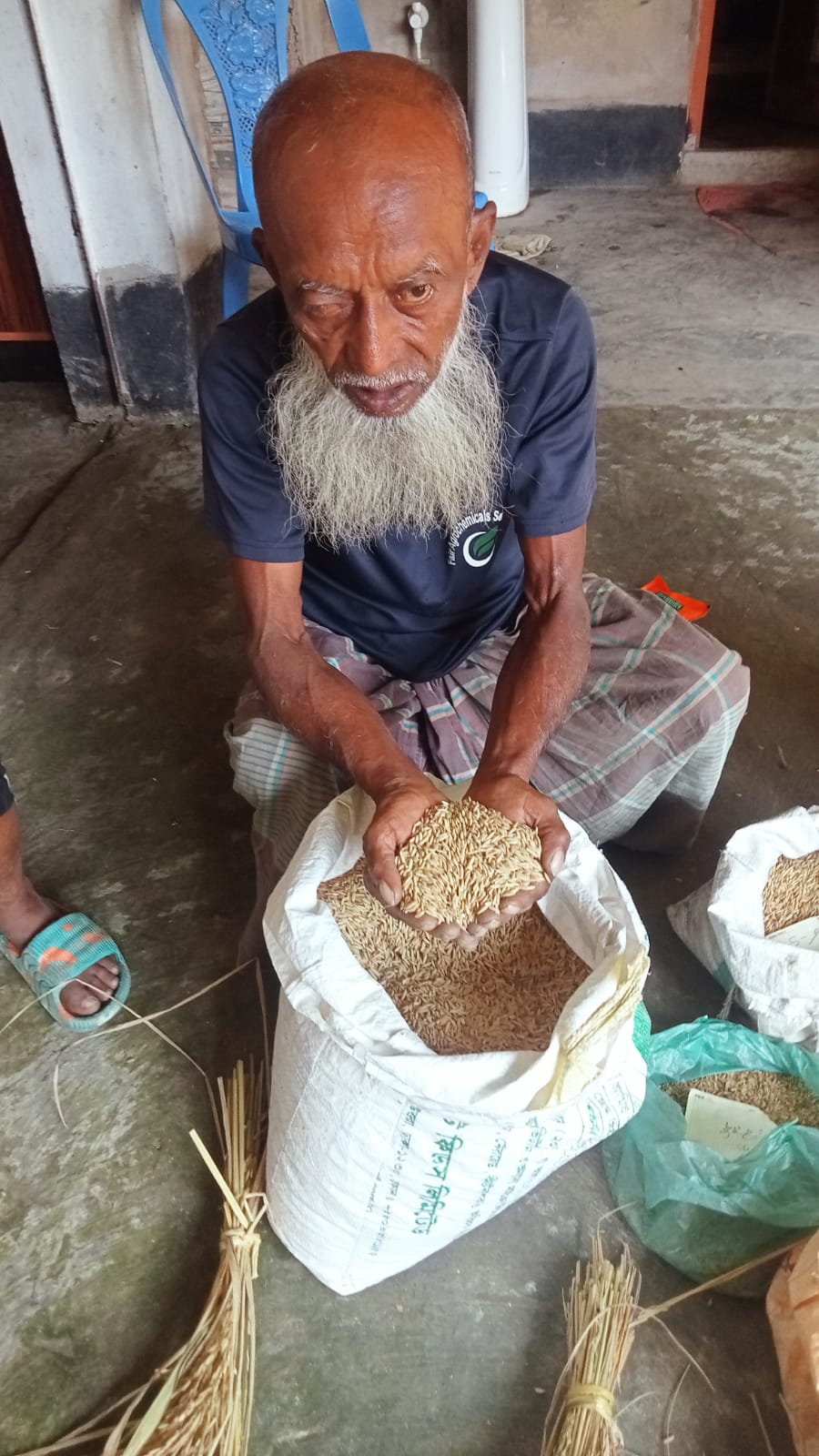
Concerned about the harmful effects of company seed dependency, Abdul Kadir began cultivating and conserving local rice varieties through small-scale experimental farming. For seven years, with support from BARCIK, he has raised awareness about seed conservation. As a result, traditional varieties such as Kabundulan, Hekim, Birai, Mashuri Paijam, and DS-4 are being grown again in his area.
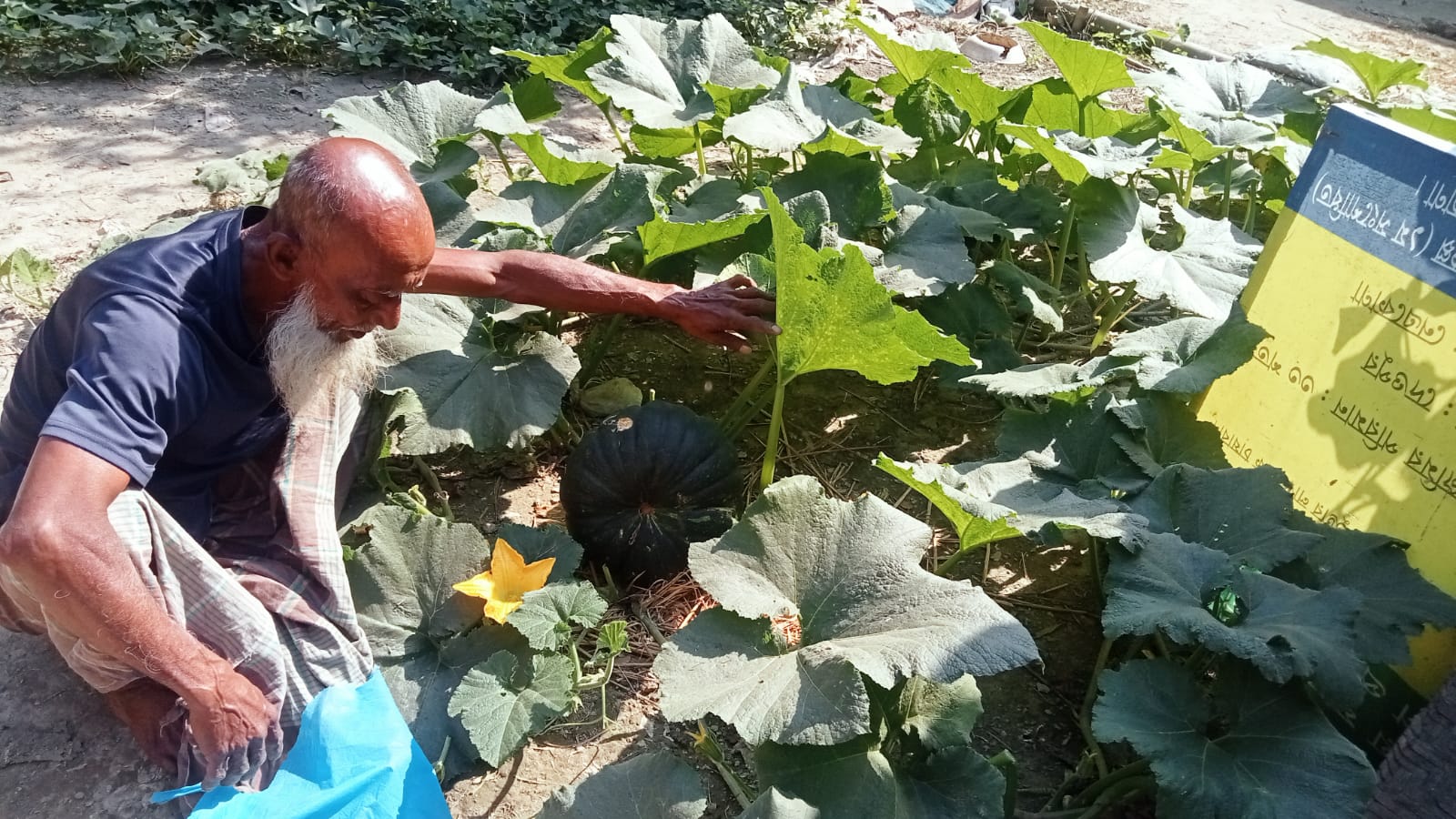
Rejecting chemical-intensive methods, Abdul Kadir grows diverse vegetables in an environment friendly way. The vegetables include beans, pumpkin, gourds, bitter melon, leafy greens, coriander, chili, and spinach etc. This helps him meeting his family’s needs and selling surplus produce earns him cash. He conserves his own seeds and shares them with neighbors, inspiring local youth to engage in farming.
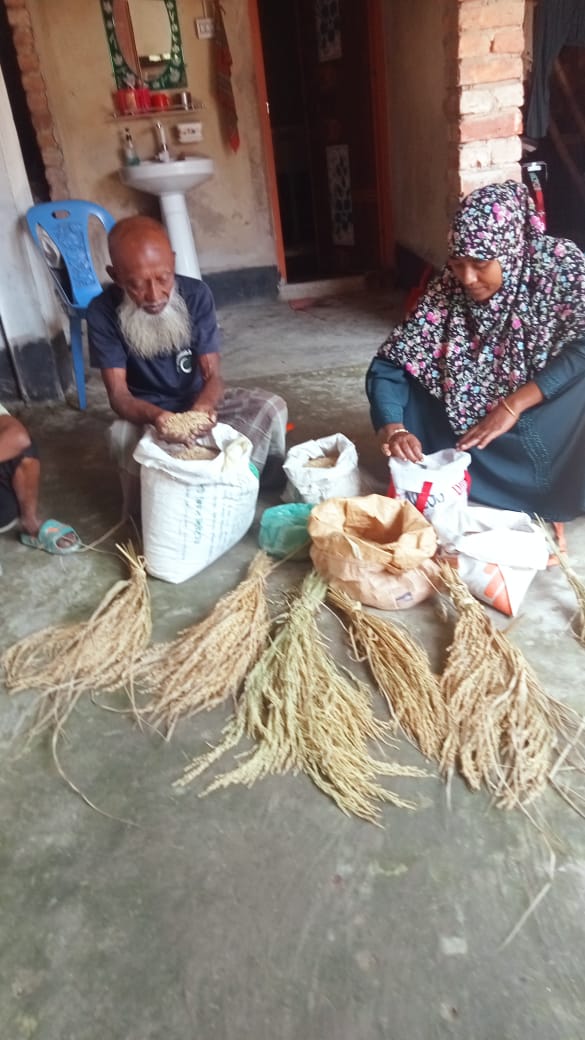
With his wife, he also rears ducks, chickens, pigeons, and cows. Animal waste is used as organic fertilizer in his fields, promoting sustainable agriculture and protecting biodiversity.
Abdul Kadir organizes marginalized farmers to claim their rights and access government services. Through his leadership, farmers in nearby villages now receive allowances, seeds, compost materials, and training on agroecology and pesticide-free farming from local institutions and the Department of Agricultural Extension.
Abdul Kadir also plants palm and indigenous fruit trees such as jackfruit, guava, hog plum, olive, and neem along village roads and ponds, mobilizing local youth in tree-planting efforts to protect the environment.
Through tireless work, Abdul Kadir supports his family, protects the environment, and strengthens community bonds. Farmers like him sustain society through sacrifice and hard work. They deserve recognition, security, and state support especially pensions for elderly farmers to honor their lifelong contributions.