
By Sattaranjan Saha from Harirampur, Manikganj
In Harirampur of Manikganj, seasonal monsoon waters from the Padma River and Ichamati River flow into the Bhatchala floodplain, depositing nutrient-rich silt on the sandy loam soil. This natural process enhances soil fertility, making the land highly suitable for diversified crop cultivation without the need for chemical fertilizers or pesticides.
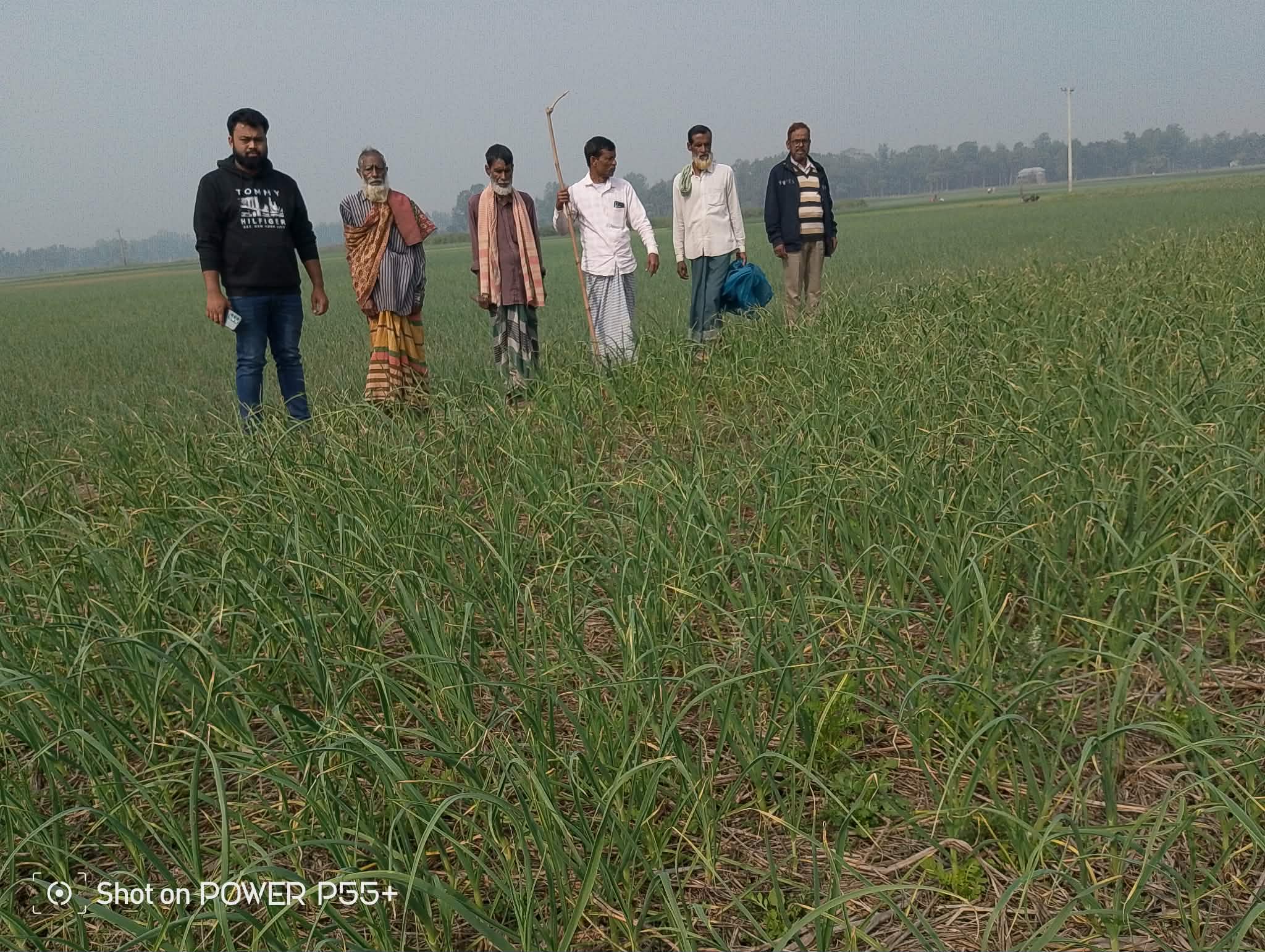
Farmers in the area grow a wide range of crops, including garlic, onion, coriander, mustard, sesame, pulses, jute, wheat, vegetables, and traditional Aman rice varieties. They carefully conserve their own indigenous seeds, drying and storing the best quality seeds for future planting. The fertile silted soil ensures good yields through organic practices, reinforcing farmers’ confidence in nature-based agriculture.
With support from BARCIK, local farmers regularly exchange experiences, seeds, and agroecological knowledge and practices. Recently, several farmers adopted no-till garlic cultivation using straw mulching. This technique conserves soil moisture, improves soil structure as the straw decomposes, reduces input costs, and produces safe food. Farmers mentioned that mulching increases productivity and lower irrigation needs and enhances long-term soil health.
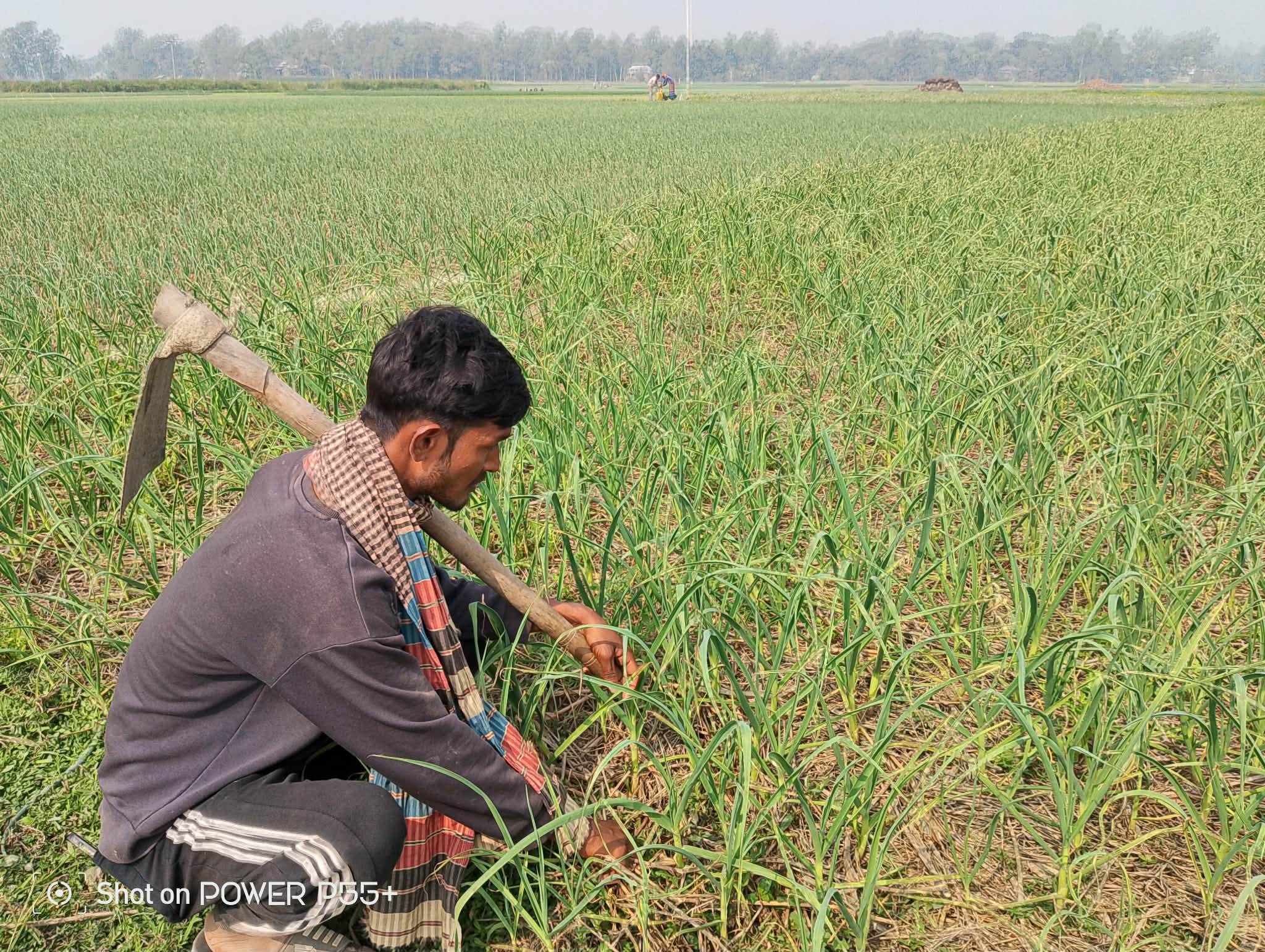
Seasonal flooding of the Bhatchala fields also supports native fish and sustains crop diversity, contributing to ecological balance. Through organic farming, seed conservation, and indigenous knowledge practices, farmers are protecting biodiversity while sustaining their agricultural heritage.