
By Anabila Sarker from Netrakona
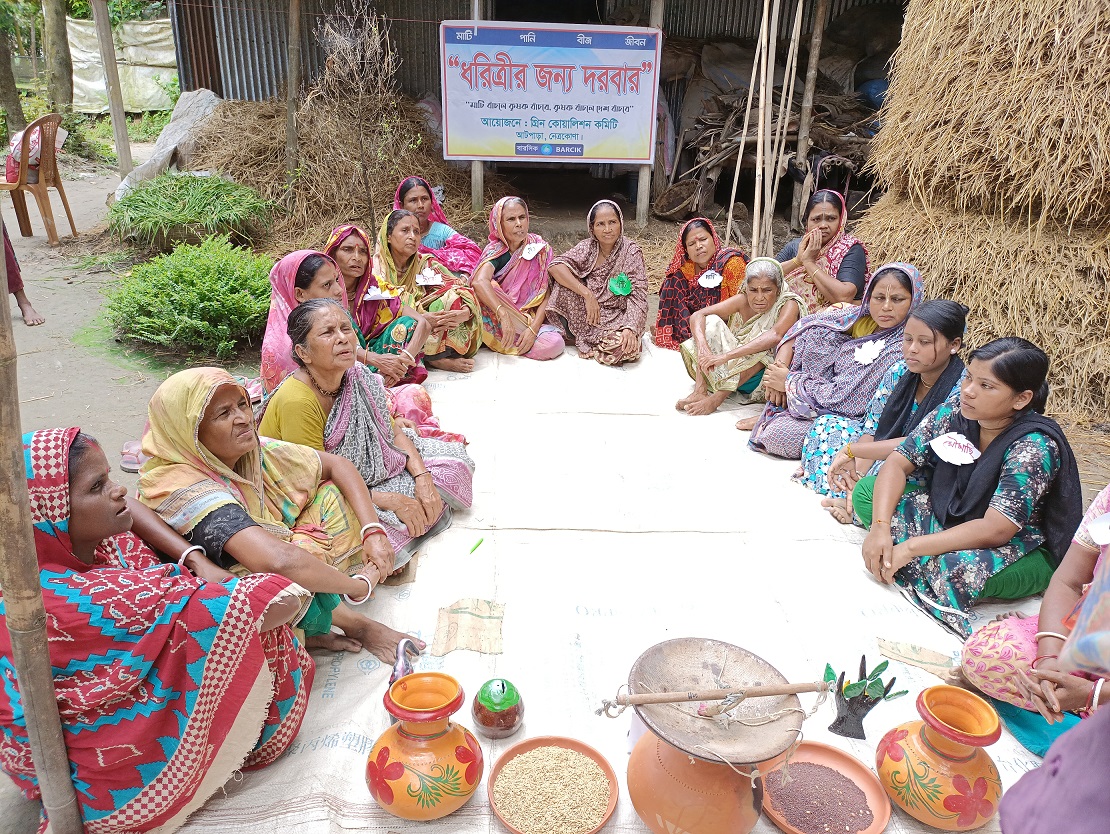
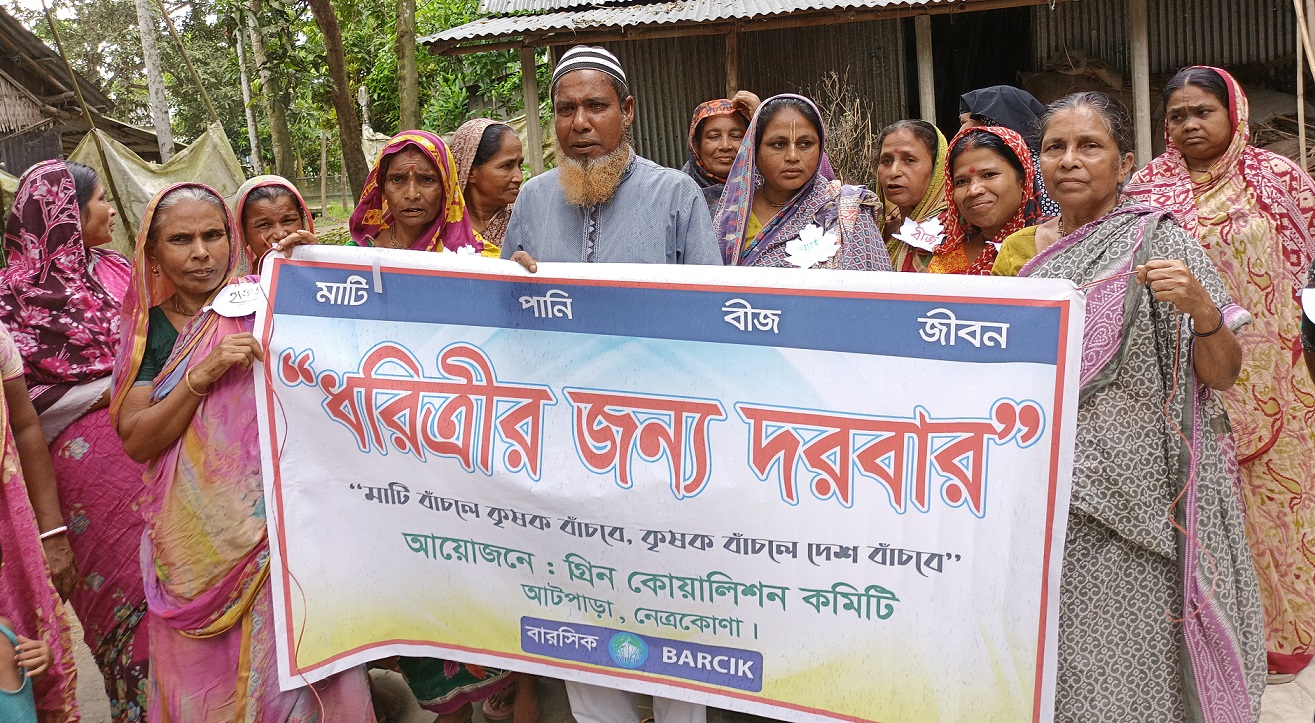
A unique participatory event titled “Earth’s Court” was held in Bakarpur village of Atpara Upazila, bringing together marginal farmers to reflect on their relationship with the Earth, soil, trees, biodiversity, and nature. The programme created a space for participants to share their experiences, memories, emotions, and aspirations related to the environment. Around 30 women and men farmers participated, along with members of the Atpara Green Coalition Committee.
A Symbolic Inauguration
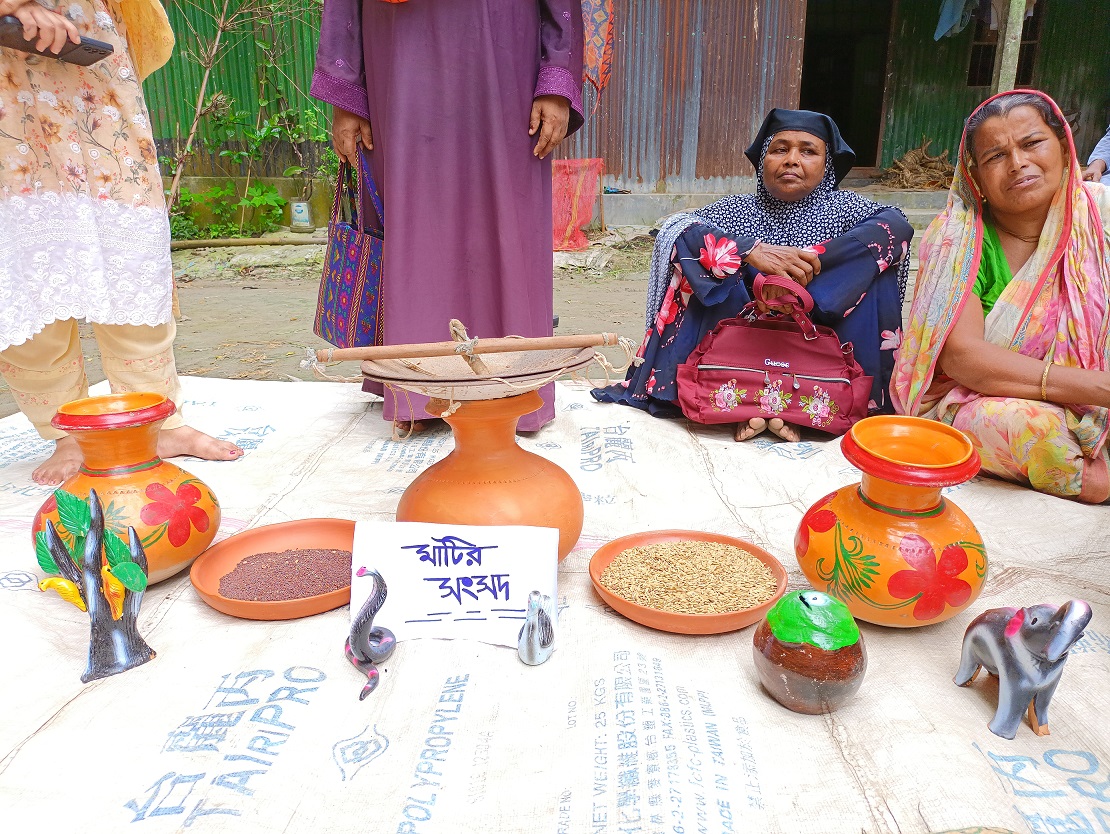
Instead of the traditional ribbon-cutting or lamp-lighting ceremony, the programme was inaugurated through the exchange of soil and indigenous seeds. Participants handed each other handfuls of soil and local seeds as a symbolic commitment to protecting fertile land, ensuring food security, and safeguarding life for future generations.
Voices from the “Parliament of Soil”
One of the most engaging sessions, titled “Parliament of Soil,” encouraged farmers to share their memories and observations about environmental change. They recalled that turtles, porcupines, monitor lizards, pythons, civets, crows, and many other birds and wild animals were once common in the area. Today, however, many of these species have become rare or disappeared due to habitat loss and ecological degradation. Participants repeatedly expressed a deep emotional connection with the land, saying:
Potters speak for the soil
Local potters attending the event highlighted the declining quality of clay used for traditional pottery. They explained that sandy soils have become increasingly common, making it difficult to produce durable and high-quality earthen products. According to their experience, clay-rich soil is the most suitable for pottery, while sandy soil is considered “damaged soil” because of its poor quality.
Trees and Soil are our money-making machines”
Farmers emphasized the economic value of natural resources, stating, “Trees are our wealth.” “The soil and trees earn our income.” “They are our money-making machines.” These reflections illustrated that soil and trees are not merely natural resources; they are the foundation of rural livelihoods, food production, and economic security. Protecting them means protecting people’s future.
Beyond the Environment
The discussions also addressed important social issues alongside environmental concerns. Participants exchanged views on child marriage, women’s health, family awareness, the well-being of future generations, and social responsibility. They emphasized that a healthy environment and a healthy society are inseparable and mutually reinforcing.
Gratitude and Self-Reflection
A particularly moving session focused on expressing gratitude to Mother Earth. Participants acknowledged that people have often harmed nature by cutting trees indiscriminately, degrading fertile soil, filling wetlands, and polluting the environment.
They pledged to become more responsible stewards of nature and to contribute actively to environmental conservation in their communities.
Celebrating Soil-Based Heritage
The programme also featured an exhibition of traditional earthenware, clay crafts, and pottery produced by local artisans. The exhibition reminded participants that soil is not only the foundation of agriculture but also an essential part of rural culture, heritage, craftsmanship, and local economies.
Conclusion
“Earth’s Court” was an innovative and thought-provoking participatory initiative that enabled farmers to express, in their own voices, their relationship with soil, trees, biodiversity, society, and the future. Their stories and experiences clearly demonstrated that environmental conservation cannot be separated from people’s lives, livelihoods, and well-being.
The event strengthened participants’ sense of responsibility, gratitude, and commitment toward protecting the Earth. It also reaffirmed that the knowledge, wisdom, and lived experiences of marginal farming communities are indispensable for building a sustainable, resilient, and environmentally just future.