
By Gunjon Rema from Kalmakanda, Netralona
Momota Begum, a homemaker and farmer in Nolsapra village of Kolmakanda, Netrakona, is helping preserve local agricultural biodiversity through traditional seed conservation. Alongside managing her household, she works with her husband, Abdul Kadir, cultivating diverse vegetables for family consumption and sale.
Momota learned seed selection and conservation from her late father-in-law, Tota Mia, who was associated with BARCIK. He taught her how to select healthy plants, collect seeds from mature crops, dry them properly and store them for the next season. She has continued these practices and passed the knowledge into her own farming activities.
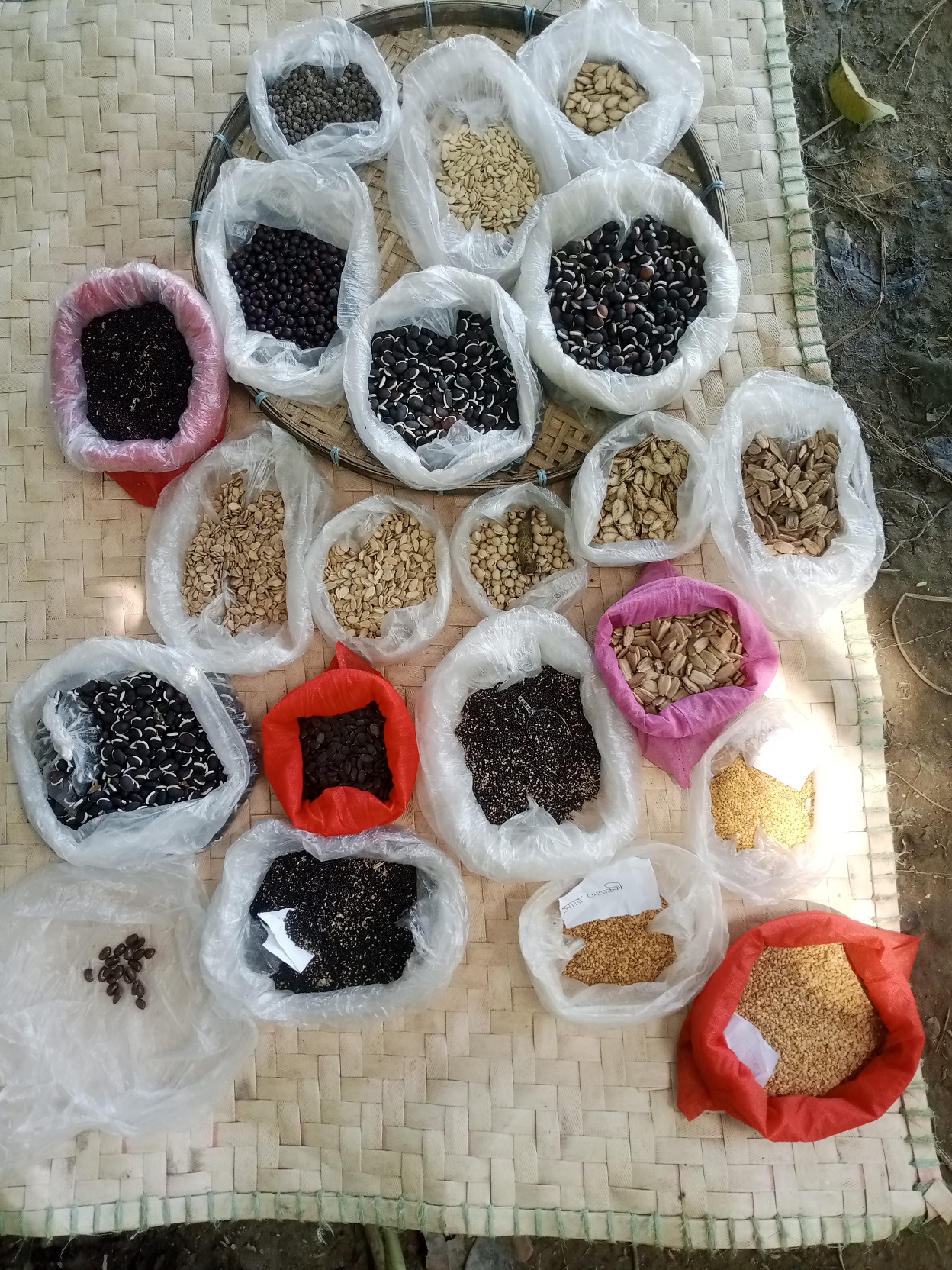
Her collection includes several varieties of pumpkin, bottle gourd, eggplant, beans, leafy vegetables, ridge gourd and other local crops. After meeting her household needs, she sells or distributes surplus seeds among neighbours, helping expand local seed exchange and reduce farmers’ dependence on commercial seed markets.
She said, “Every season I collect and conserve seeds for the next one. I want our local seeds to survive so that future generations can continue using them.”
Her seed-saving practices reduce seasonal production costs and support crop diversity and household nutrition. Selling surplus vegetables also contributes to family income.
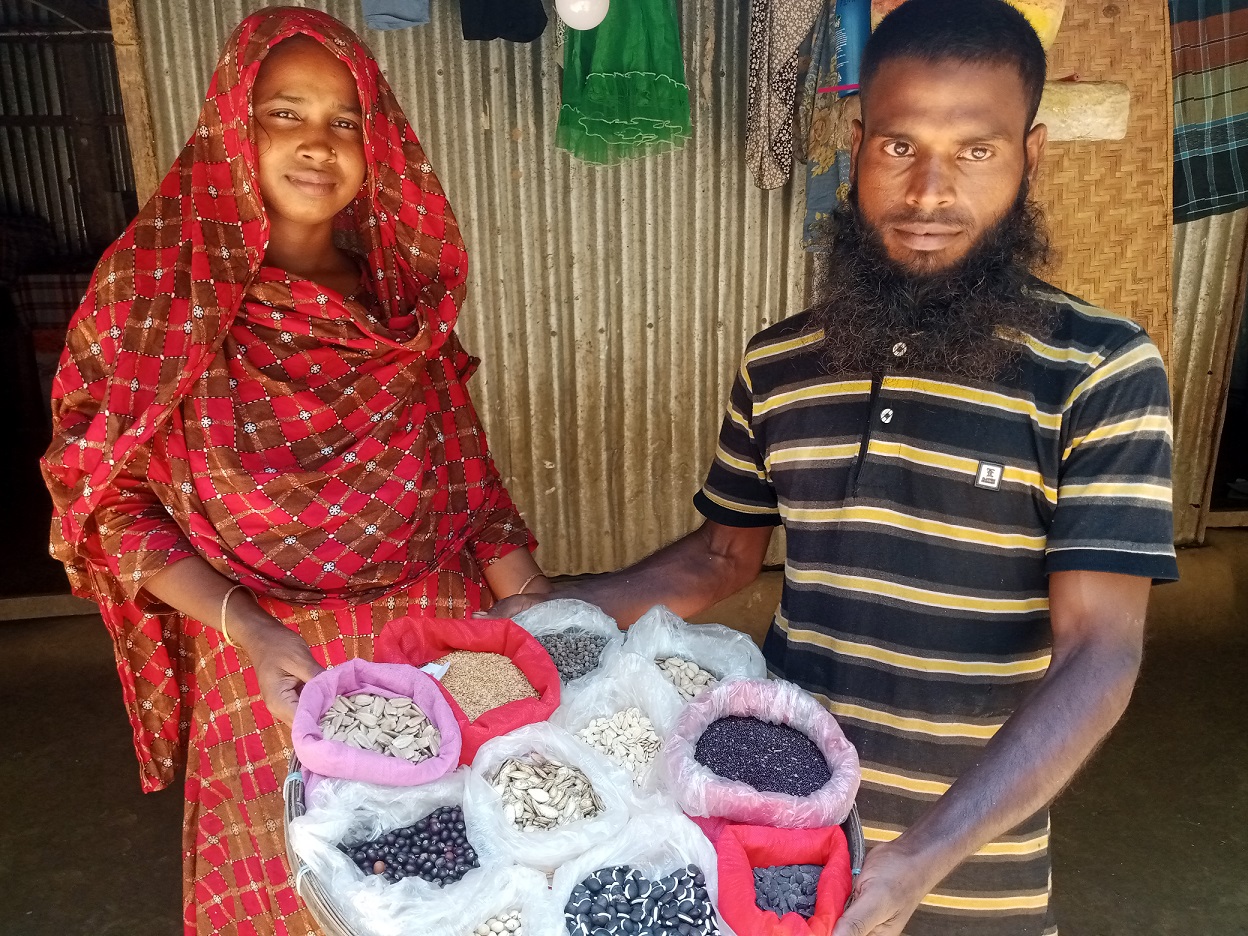
Her initiative has benefits beyond her household. By sharing seeds with neighbouring farmers, she is helping maintain locally adapted varieties that may prove valuable in responding to climate-related agricultural risks.
Momota’s experience also highlights the important role of rural women as custodians of agricultural knowledge and biodiversity. Her work shows that seeds are not merely inputs for crop production; they are repositories of farmers’ knowledge, resources and agricultural heritage.
Through conserving and exchanging local seeds, Momota is strengthening household self-reliance, food and nutrition security, and the resilience of local farming systems.