
By Atikur Rahman Atik from Rajshahi
Farmers, fishers, researchers, youth representatives and environmental activists have called for the immediate banning of paraquat and other highly hazardous pesticides in Bangladesh to protect public health, safe food and biodiversity.
The demand was raised at a human chain held recently at Karnahar Beel in Paba, Rajshahi, jointly organized by BARCIK, Barendra Youth Forum and Green Coalition. Participants warned that excessive pesticide use is creating serious risks to human health, agriculture and ecosystems.
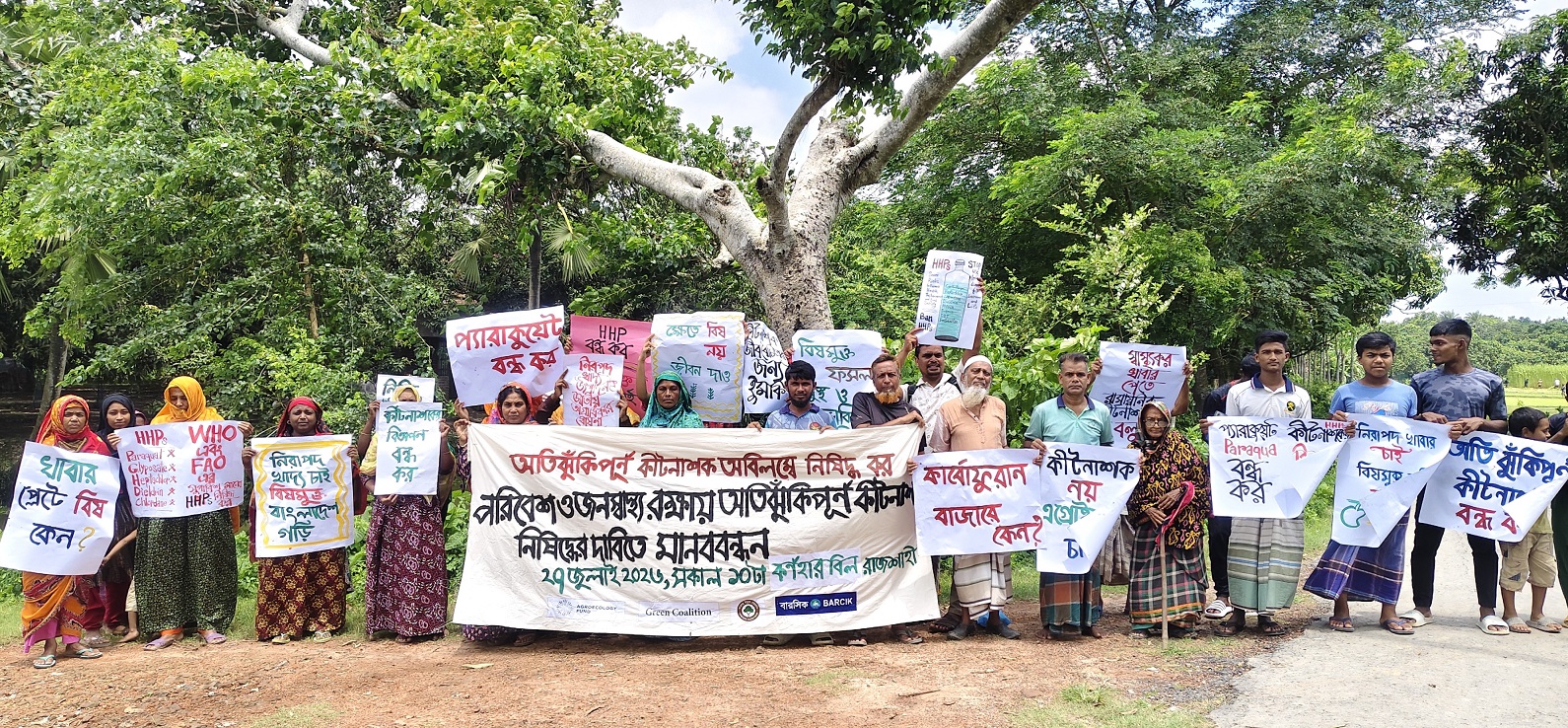
Speakers said paraquat and other highly hazardous pesticides can threaten farmers and consumers while harming fish, bees, pollinators, soil microorganisms and aquatic and terrestrial biodiversity. They stressed that the crisis affects the environment and food security, nutrition and rural livelihoods.
Citing a 2025 Pan Asia Pacific study, speakers said 53 of 96 pesticides examined in four Asian countries, including Bangladesh, were identified as highly hazardous. They also called for Bangladesh to strengthen implementation of its international commitments under the Rotterdam and Stockholm conventions.
The speakers stressed that banning paraquat is not anti-agriculture but a responsible measure to protect farmers, consumers and the environment. They urged greater public investment in safe alternatives, integrated pest management, biological pest control and agroecology, alongside training and market support for farmers.
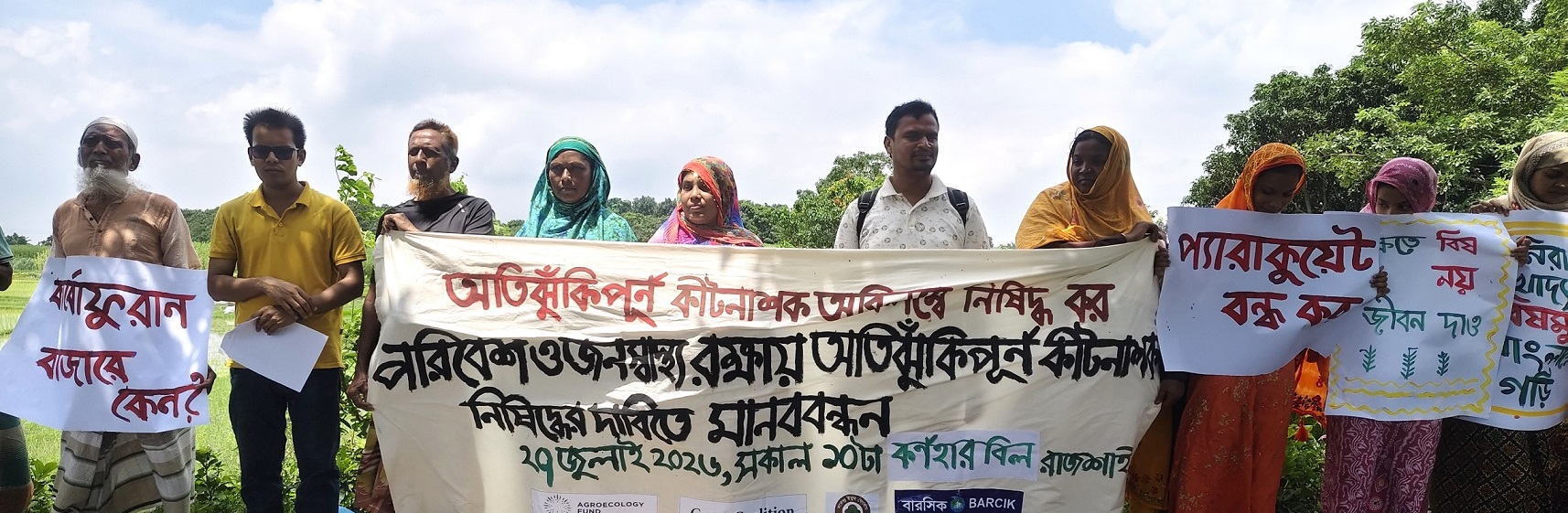
The gathering called for the phased banning of highly hazardous pesticides, scientific reassessment of registered pesticides, stronger national monitoring of pesticide residues in food, subsidies and training for safer alternatives, protection of bees and pollinators, a national poisoning surveillance system, and a national agroecological transition programme.
“Banning paraquat is not the demand of a single organization,” the speakers said, describing it as a national demand for the right to safe food, farmers’ health, biodiversity and the safety of future generations.
They urged the government to take immediate policy action against highly hazardous pesticides and make agroecology a central priority of national agricultural development.