
By Ohidur Rahman from Netrokona
It is because of the vast diversity of life that we exist so beautifully on this earth. Due to human greed, avarice, and luxury, many species of fauna beneficial to humans are becoming extinct. Climate change, destruction of environmental balance, destruction of animal habitats, food crises for animals, weak laws, poachers, reduced navigability of haors, wetlands, and rivers, excessive use of poisons on land, trade in wildlife, and cruel human behavior are causing this biodiversity, which is essential for nature and humanity, to disappear day by day.
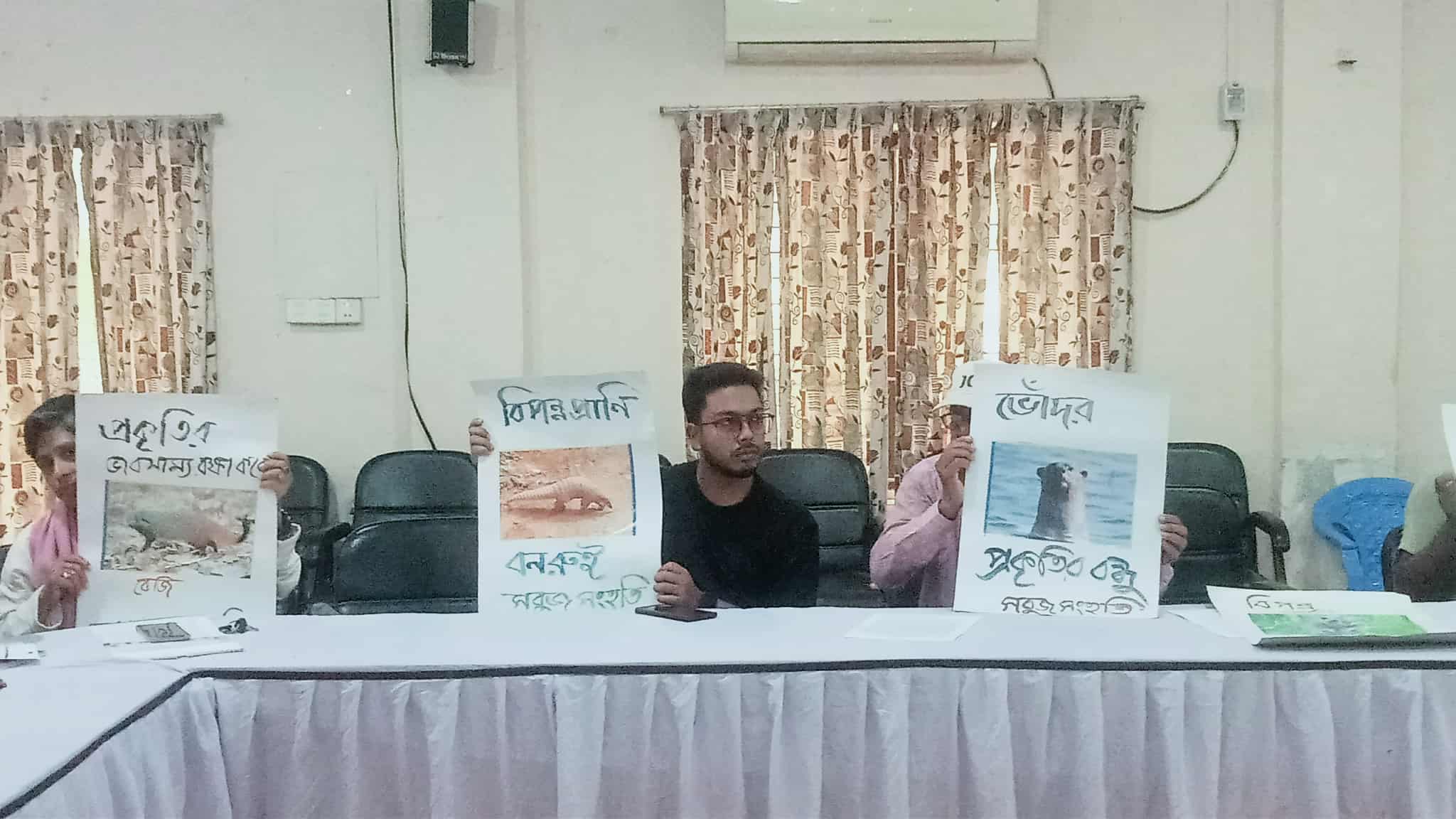
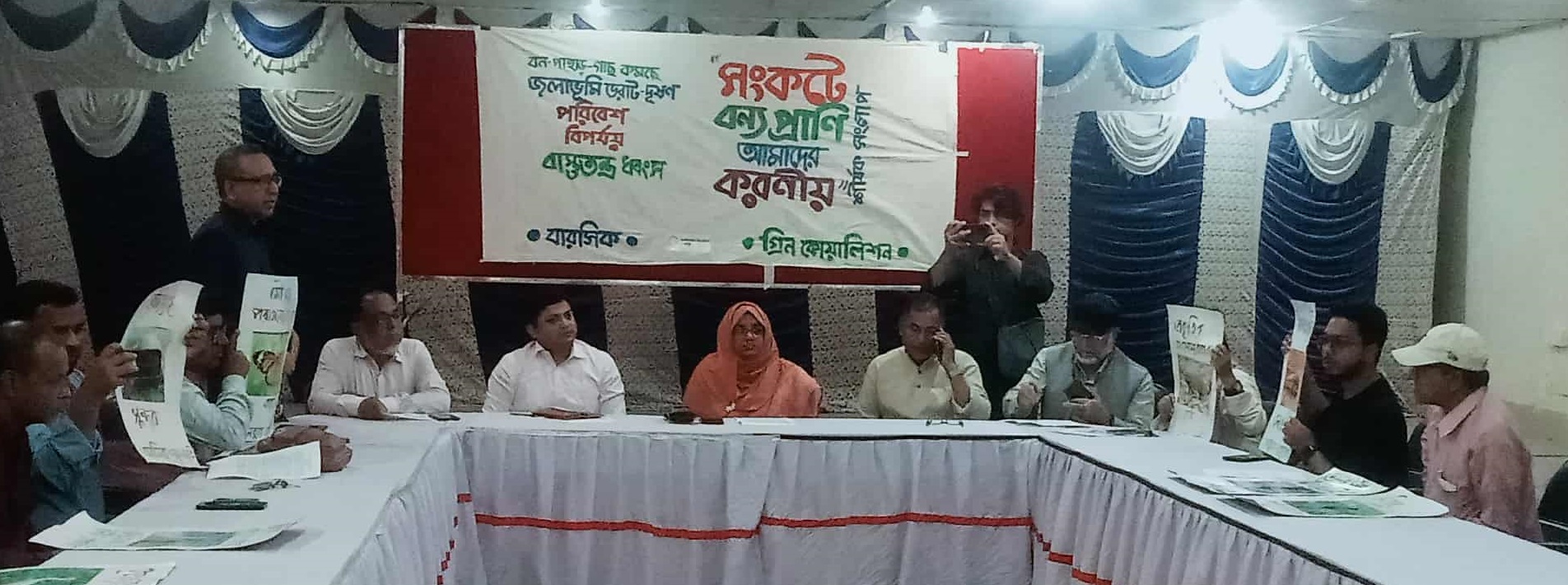
Keeping these issues in perspective, a dialogue was organized at the Netrokona Sadar Upazila Parishad auditorium to mark World Wildlife Day. The event was organized by the Netrokona Green Coalition and supported by BARCIK.
The Chief Guest of the dialogue was the Upazila Nirbahi Officer (UNO), Ms. Asma Binte Rafiq. Special guests included Mr. Abdullah Al Mamun, Assistant Director of the Department of Environment, Netrokona; Forest Officer Mr. Jasim Uddin; Youth Development Officer Mr. Nuruzzaman; Chairman of Kailati Union Parishad, Mr. Nazmul Haque; President of the Education, Culture, Environment, and Biodiversity Protection Committee and Assistant Professor, Mr. Nazmul Karir Sarkar; Vice-President of the Green Coalition Committee and journalist, Ms. Alpana Begum; journalist Mr. Hridoy Sagar; President of Save the Animals of Susang, Mr. Rifat Ahmed Russell; journalist Mr. Tanvir Hayat Khan, along with youths, adolescents, development activists, representatives from like-minded NGOs, farmers, teachers, writers, researchers, and many others.
At the beginning, a paper was presented by journalist Mirza Hridoy Sagar. During the discussion, the speakers said, “Our forests, hills, wetlands, and environment are being damaged and destroyed day by day. As a result, forest and aquatic animals are disappearing, and the ecosystem is being damaged.” He went on saying, “We must protect our relationship with nature through our coordinated efforts.”
He said that due to widespread killing, the call of the dove is now rarely heard. Animals like tigers, spotted deer, barking deer, wild dogs, otters, wild boars, jackals, clouded leopards, large Indian civets, monitor lizards, bats, owls, kites, hornbills, bears, deer, monkeys, leopards, jungle cats, porcupines, pangolins, wild cattle, pythons, foxes, turtles, etc., used to be found in the Garo Hills. Currently, the usual movement of these animals is not observed.” We need to sustain this diversity of life for our own sake.
The following demands were raised in the dialogue: eliminate the exotic invasive species present in Bangladesh and stop new imports; establish reserved forests in Netrokona to ensure wildlife protection; excavate and conserve wetlands such as rivers, haors, beels, canals, and ponds; take the discussions to the field level; plant fruit and medicinal trees on both banks of excavated canals; include environmental protection in youth training programs; prohibit tourists in forests; take initiatives to protect the birds of Govinda Chatla Beel; and properly enforce laws to protect wildlife.