
By Md Shahidul Islam*, from Rajshahi
Introduction
Once celebrated as the “land of rivers,” Bangladesh was once a paradise for native fish species. Rivers, canals, beels, haors, baors, chars, and wetlands together created a thriving aquatic ecosystem. However, over the years, this rich biodiversity has come under severe threat. The International Union for Conservation of Nature (IUCN) declared 54 fish species endangered in 2000. Later studies from Bangladesh Agricultural University (BAU) indicate that the number of endangered fish species has exceeded one hundred. According to government data, there are 264 species of freshwater fish, while the United Nations Environment Programme (UNEP, 2019) estimates a total of 569 species in Bangladesh.
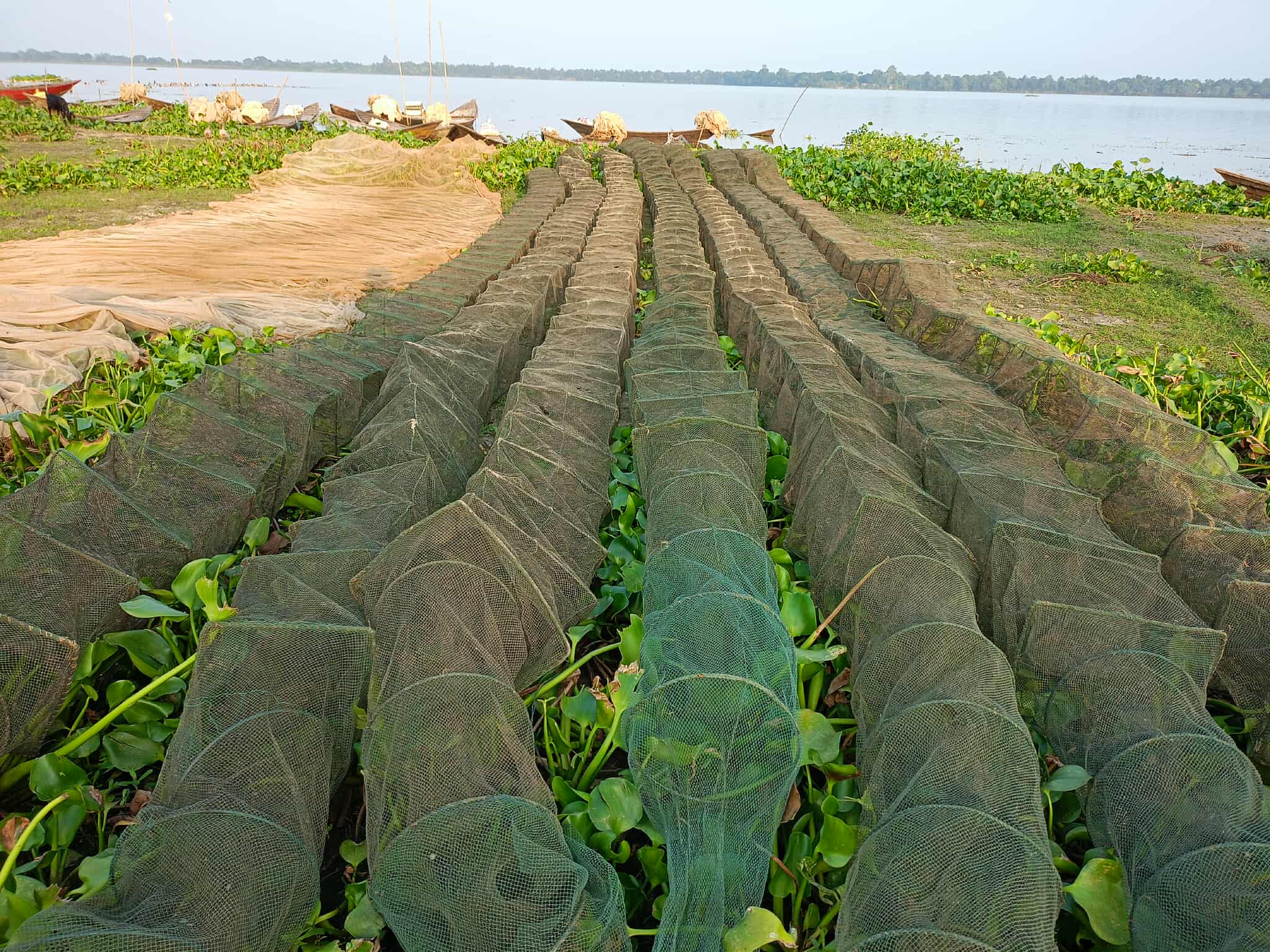
Despite these figures, there has been little comprehensive research on the disappearance of overall aquatic biodiversity. Alongside native fish species, Bangladesh’s wetlands have long been home to a vast range of aquatic plants, amphibians, turtles, birds, and other life forms that coexisted harmoniously for centuries. But this balance is now collapsing due to multiple human-induced intiatives and one of the most destructive of these initiatives is the widespread use of the “China Duari Jaal” or Chinese fishing net. Excessive use of chemical fertilizers and pesticides has further worsened the crisis. Unless the use of these destructive nets is banned, Bangladesh’s aquatic biodiversity faces irreversible devastation.
What is a China Duari Jaal (Chinese Fishing Net)?
In recent years, a new type of fine-meshed fishing net has gained popularity in Bangladesh. Similar to the banned “current net,” this China Duari Jaal is made of extremely fine nylon threads, making it nearly invisible underwater and capable of trapping even the tiniest fish. Originally used in coastal regions, its use has now spread to almost every wetland, canal, and river across the country posing a serious threat to fisheries, the environment, and local livelihoods.
Commercial fishers and contractors are its main users, while traditional fisherfolk tend to avoid it, aware of its destructive consequences. For example, Afaz Uddin, a former fisherman from Bilkumari Beel in Tanore, Rajshahi, said, “The China net destroys everything. It destroyes from fish eggs to fry and nothing remains for the future.”
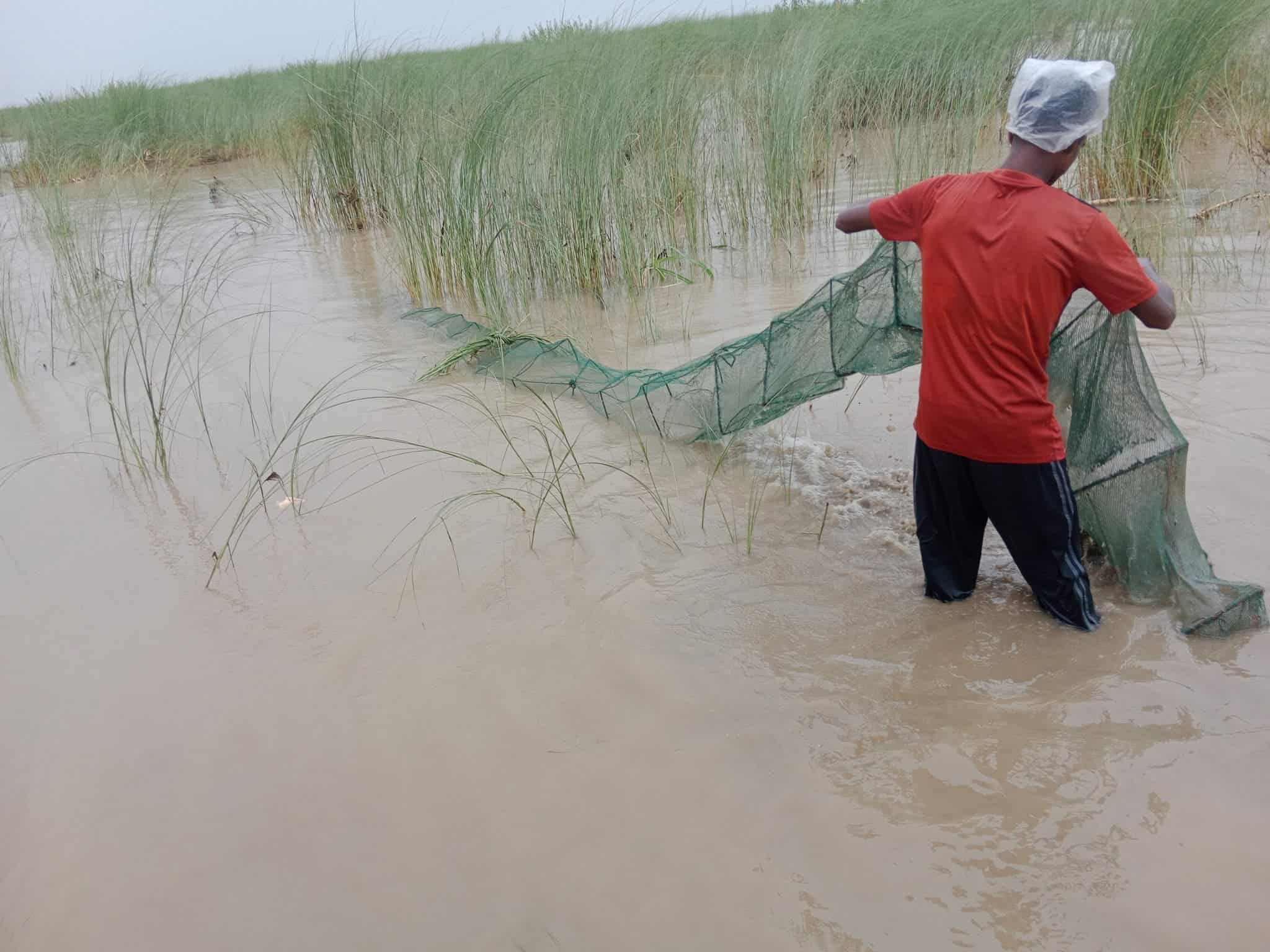
The net’s mesh is so fine that even the smallest aquatic organisms cannot escape once trapped. According to the Bangladesh Fish Conservation and Protection Act, 1950, mesh holes must not be smaller than 4.5 cm, but this net violates that standard. Locally, it is known by different names such as Duari Jaal, Current Jaal, China Jaal, Magic Jaal, or Dholuk. Despite its name, most of these nets are manufactured within Bangladesh, though the raw nylon fiber is often imported from China.
How Do Chinese Nets Cause Damage?
These nets are made from ultra-fine synthetic nylon fibers that are nearly invisible underwater. They indiscriminately capture fish of all sizes, including eggs, fry, shrimp larvae, and plankton which disrupts natural breeding cycles and accelerates the decline of native fish populations.
According to the Department of Fisheries (2023), nearly 30% of native fish species in Bangladesh have declined over the past two decades primarily due to destructive fishing practices and overexploitation.
Impact on Wetlands and the Environment
- Extinction of Native Fish Species
The China net captures aquatic life from all layers of water, disrupting breeding cycles of native species like pabda, koi, rui, katla, mrigel, shing-magur, gajar, and puti. The destruction of fish eggs and juveniles reduces fish production each season, pushing native fish diversity toward extinction. - Ecological Imbalance in Wetlands
Fishing with these nets blocks natural water flow, leading to siltation and oxygen depletion (eutrophication), destroying habitats for aquatic flora and fauna. Amphibians, turtles, and water birds also get trapped and die which collapse the entire food chain and disturbing the natural ecological balance.
- Livelihood Crisis for Traditional Fishers
Traditional fisher communities once depended on seasonal, eco-friendly fishing methods. The commercial spread of China nets has pushed these fishers to the margins, as wealthy contractors monopolize water bodies. Many genuine fishers are losing access to public water resources and being replaced by non-fishers, leading to deepening poverty and loss of cultural identity.
- Plastic Pollution and Environmental Damage
Since nylon-based China nets are non-biodegradable, discarded nets cause severe plastic pollution. They remain underwater for years, entangling fish, turtles, and migratory birds. In areas like Tanore and along the Padma River, fishers often find dead aquatic animals trapped in abandoned nets after the monsoon.
Legal and Policy Framework
Although not specifically mentioned by name, the use of Chinese nets is illegal under multiple Bangladeshi laws.
- The Fish Conservation and Protection Act, 1950 (amended 1995) bans the production, sale, import, possession, and use of nets with mesh smaller than 4.5 cm.
- The Fish Conservation Rules, 1985 prohibit poisoning water bodies, using mechanical barriers, and other destructive fishing methods.
- The Environment Conservation Act, 1995 makes any activity that harms biodiversity a punishable offense.
- The Bangladesh Water Act, 2013 prohibits any structure or activity disrupting natural water flow or aquatic ecosystems.
- The Biodiversity Act, 2017 ensures protection of genetic resources and indigenous fish species, in line with international agreements (e.g., the UN Convention on Biological Diversity).
Despite strong legal frameworks, enforcement remains weak, allowing this destructive practice to continue.
Socio-Cultural Perspective
The spread of Chinese nets is not merely a technological issue as it reflects a broader socio-cultural shift. Traditional fisher communities once observed local environmental ethics, such as seasonal fishing bans during breeding periods and maintaining community fish sanctuaries. These cultural practices protected aquatic life for generations. Today, commercial greed has eroded these traditions, replacing them with environmental injustice.
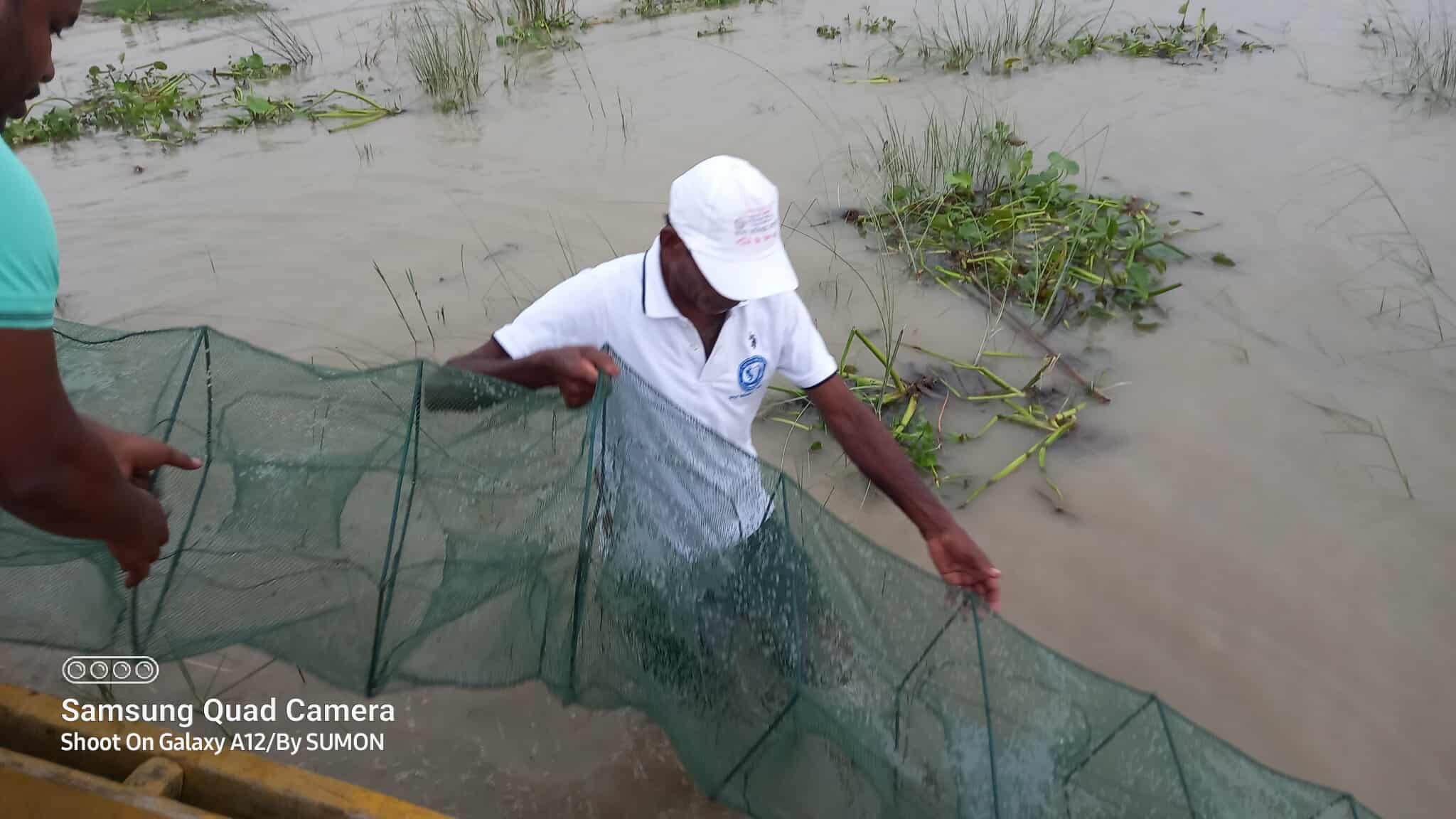
In earlier times, fishers used natural plant extracts like gab fruit and goran bark to strengthen nets, reflecting a harmony between livelihood and nature. Such traditional ecological knowledge is now fading taking with it the cultural essence of the proverb, “Machhe bhate Bangali” (Fish and rice make a Bengali).
Recommendations
- Enforce a complete ban on the production, sale, and use of China nets and current nets.
- Stop manufacturing, import, and marketing of these nets nationwide.
- Promote eco-friendly fishing technologies and community-based fishery management.
- Ensure access rights to water bodies for genuine fisher communities.
- Reform lease systems so that real fishers—not outsiders—can manage local water resources.
- Establish research and monitoring systems to restore native fish breeding and species diversity.
- Ban the use of Rotenone, a toxic chemical increasingly used to kill fish.
- Recognize indigenous knowledge and traditional culture as part of national fisheries policy.
Conclusion
Chinese fishing nets have become a silent killer of Bangladesh’s aquatic ecosystems. They are destroying not just fish populations, but the delicate balance between environment, economy, and culture. Saving our rivers and wetlands requires more than legal action—it demands moral responsibility and social awakening.
Aquatic life and native fish are not merely food sources; they are integral to Bangladesh’s identity, culture, and heritage. Unless destructive tools like the China Duari Jaal are removed from our water bodies, we risk losing the very essence of our aquatic civilization.
Surces and Methodology
- Field observation and interviews
- Department of Fisheries, Bangladesh (2023). National Fisheries Resource Status Report
- Bangladesh Environment Conservation Act, 1995
- Fish Conservation and Protection Act, 1950 (amended 1995)
- National Biodiversity Strategy and Action Plan, MoEFCC, 2016
- IUCN Bangladesh (2022). Red List of Freshwater Fishes, Volume 5
- Prothom Alo, 14 April 2021
* Md Shahidul Islam
Researcher & Regional Coordinator, BARCIK Barind Tract, Rajshahi