
By Shahidul Islam from Rajshahi
A river assembly titled “Save Rivers, Save Life, Save Bangladesh” was held to demand protection of rivers from pollution, encroachment, and loss of natural flow, especially in the drought-prone Barind region.
The event was organized by the Rajshahi Green Coalition, Barind Youth Forum, and BARCIK recently on the bank of the Barnoi River near Surjapur fishing village in Paba Upazila.
During the event participants raised concerns about pollution caused by untreated solid and liquid waste from Rajshahi city, which is severely affecting nearby rivers, wetlands, and water bodies. These environmental problems are threatening public health, agriculture, and food security.
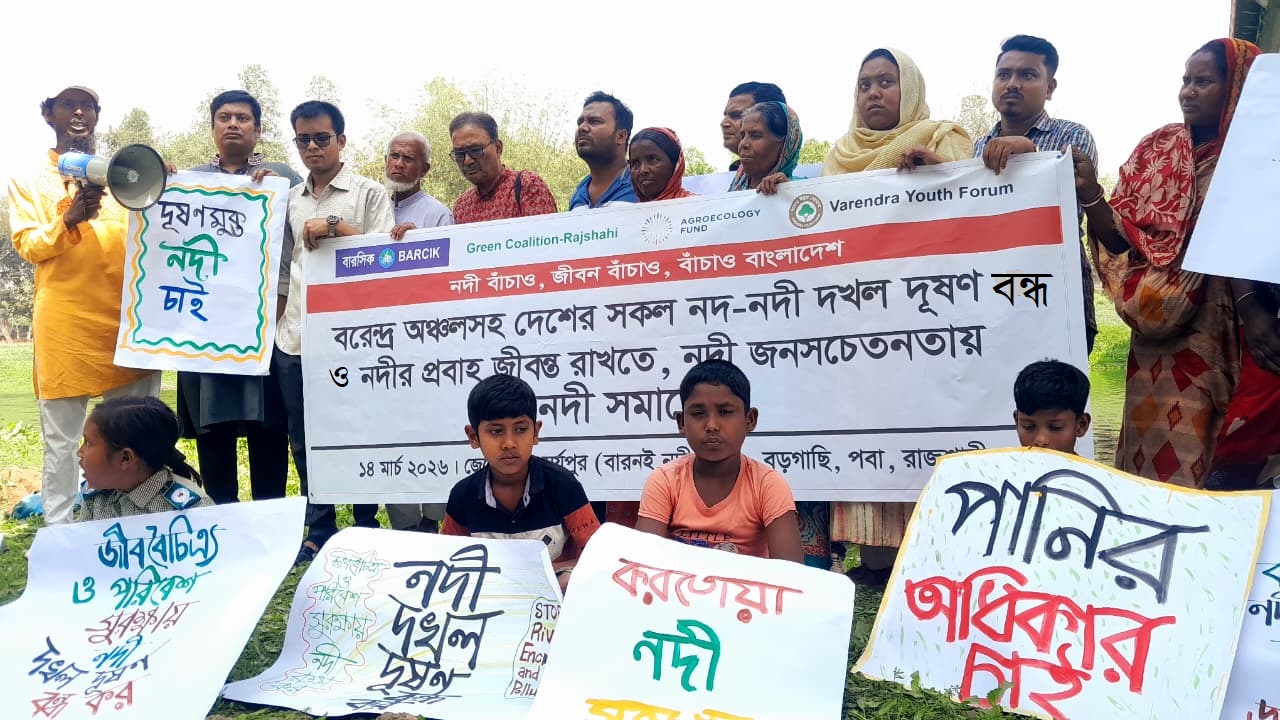
River researcher Mahbub Siddiqui said that many historic rivers in the region, including branches connected to the Padma, have gradually disappeared due to urban development and poor planning. Some rivers have even been turned into drains.
He warned that current dredging programs are labeling rivers as “canals.” This change in classification could make it easier for authorities to lease or privatize them, which may lead to further encroachment and loss of rivers.
Local residents also shared their experiences where fisher community member Joya Ghosh said polluted black water in the river causes skin diseases and other health problems. Maloti Rani explained that they previously raised ducks in the river, but now the water is too toxic and ducks sometimes die if they enter it. Farmer and cultural activist Jewel Raihan said fish have nearly disappeared from the river due to pollution from city drains carrying plastic and toxic waste.
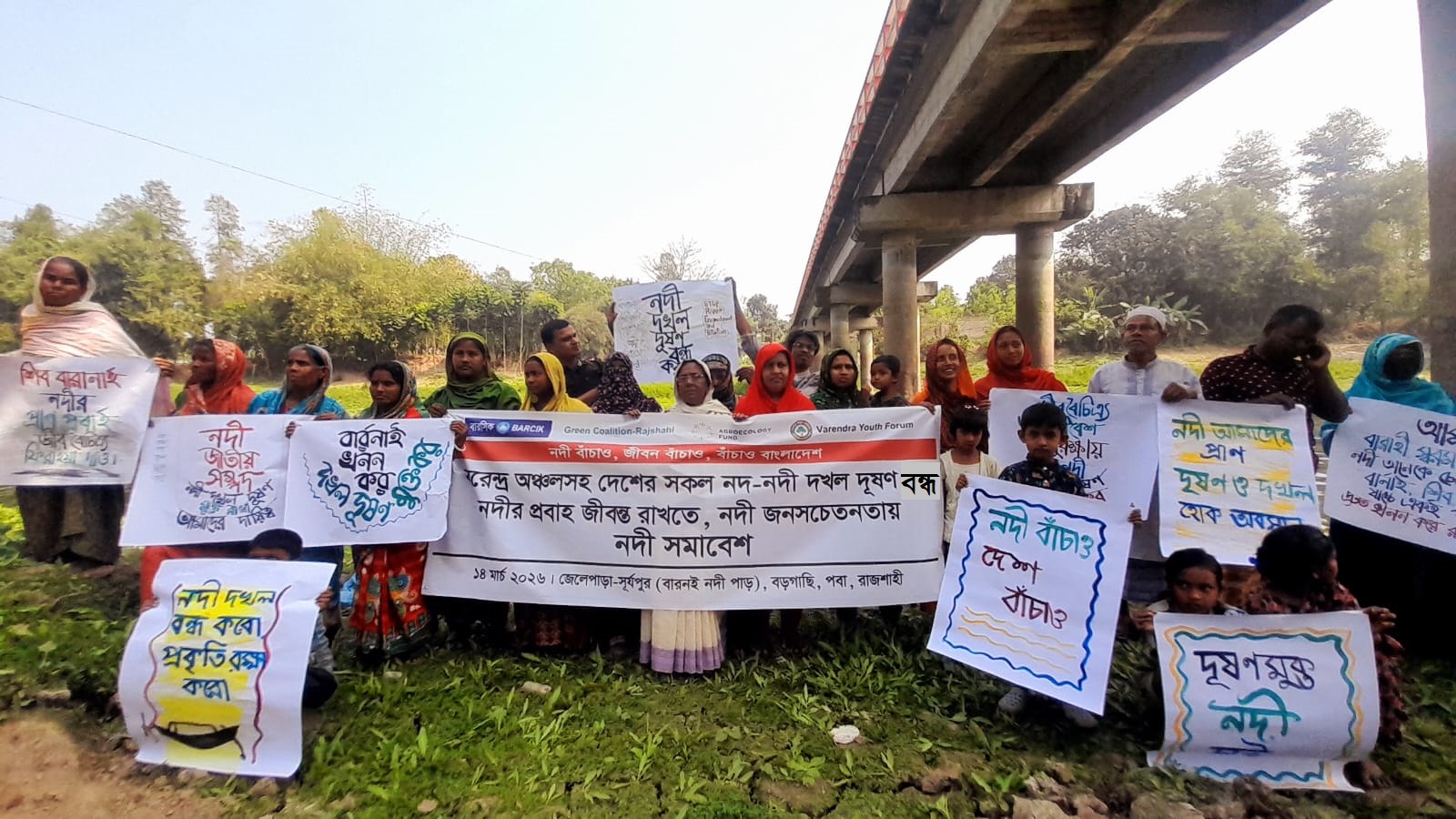
Award-winning farmer Nur Mohammad said that upstream dams and sluice gates have blocked the natural flow of several rivers that once helped supply water to the Barind region. Polluted urban wastewater is now damaging wetlands and agricultural lands, leaving many fields uncultivable.
However, a field observation report presented at the event highlighted that polluted waste from Rajshahi city is affecting several wetlands and even reaching the large Chalan Beel ecosystem. This pollution is destroying biodiversity, reducing fish populations, and harming agricultural production.
Participants also warned about health impacts such as skin diseases, water-borne illnesses, and respiratory problems caused by foul odors. Women, children, and elderly people are especially vulnerable.