
By Khadija Akter Lita from Netrakona
Most families in Bishwanathpur village of Amtala Union in Netrokona were once dependent on agriculture. However, climate change, unplanned farming systems, and unstable markets have reduced farmers’ interest in agriculture. Floods, droughts, and other climate-related disasters regularly affect rural livelihoods.
In the past, the village was surrounded by trees such as mango, jackfruit, coconut, betel nut, lychee, olive, and guava. Bamboo bushes and large trees provided fuelwood, while birds filled the environment with natural sounds. Villagers collected dry leaves and branches for cooking fuel, and there was little fuel shortage among rich or poor households. Community freely shared resources without financial or social barriers.
Over time, this traditional environment changed. Joint families became nuclear families, trees were cut down to build houses and collect fuel, and environmental degradation increased. As a result, many families now depend on costly LPG cylinders, which are often unavailable in local markets.
To address this crisis, Marzina Begum, an information facilitator at the Bishwanathpur Agroecology Learning Center, initiated efforts to promote biogas technology among families raising cattle, ducks, and poultry. With support from BARCIK and the local Youth Development Department, awareness activities were organized in the village.
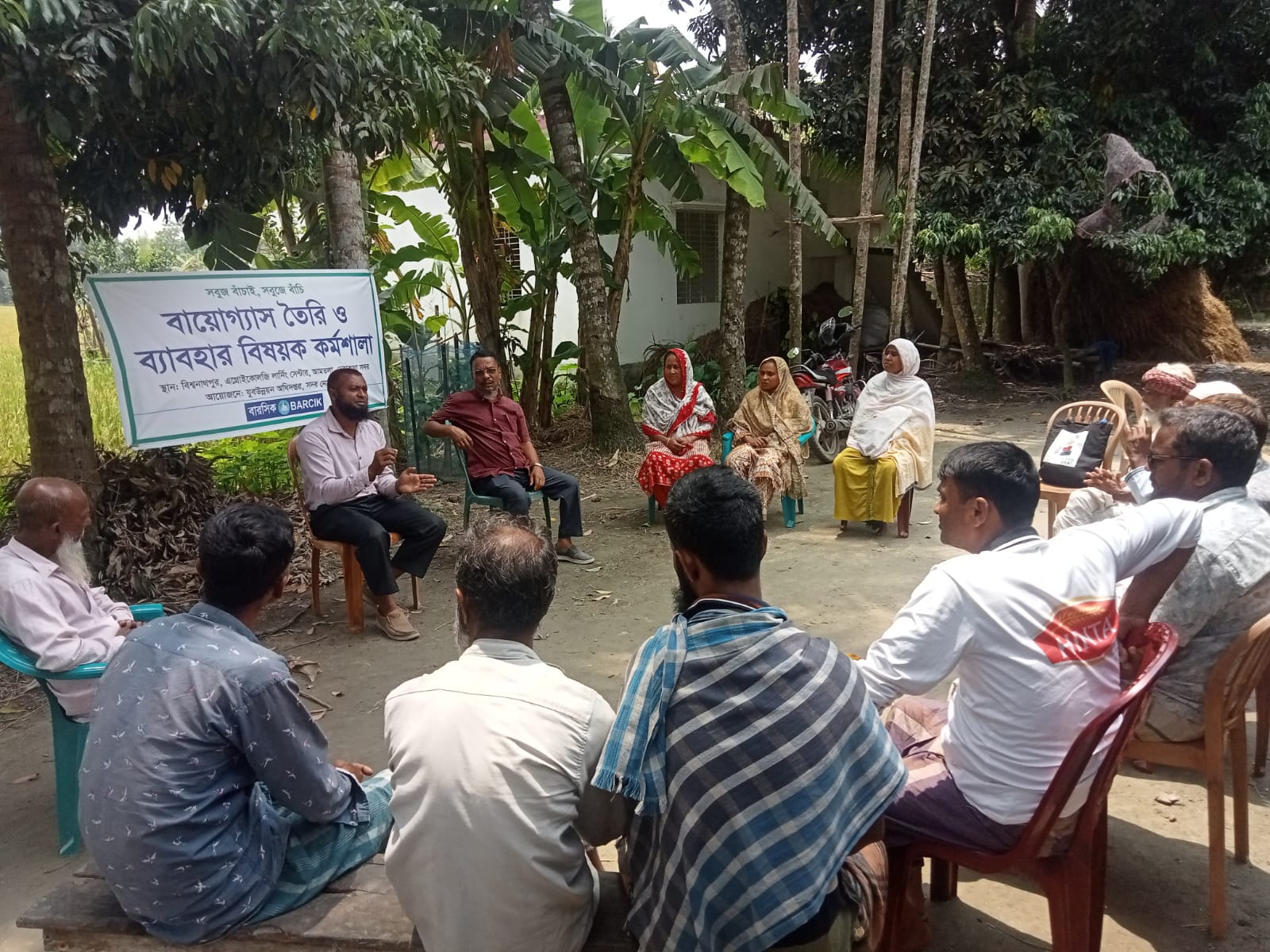
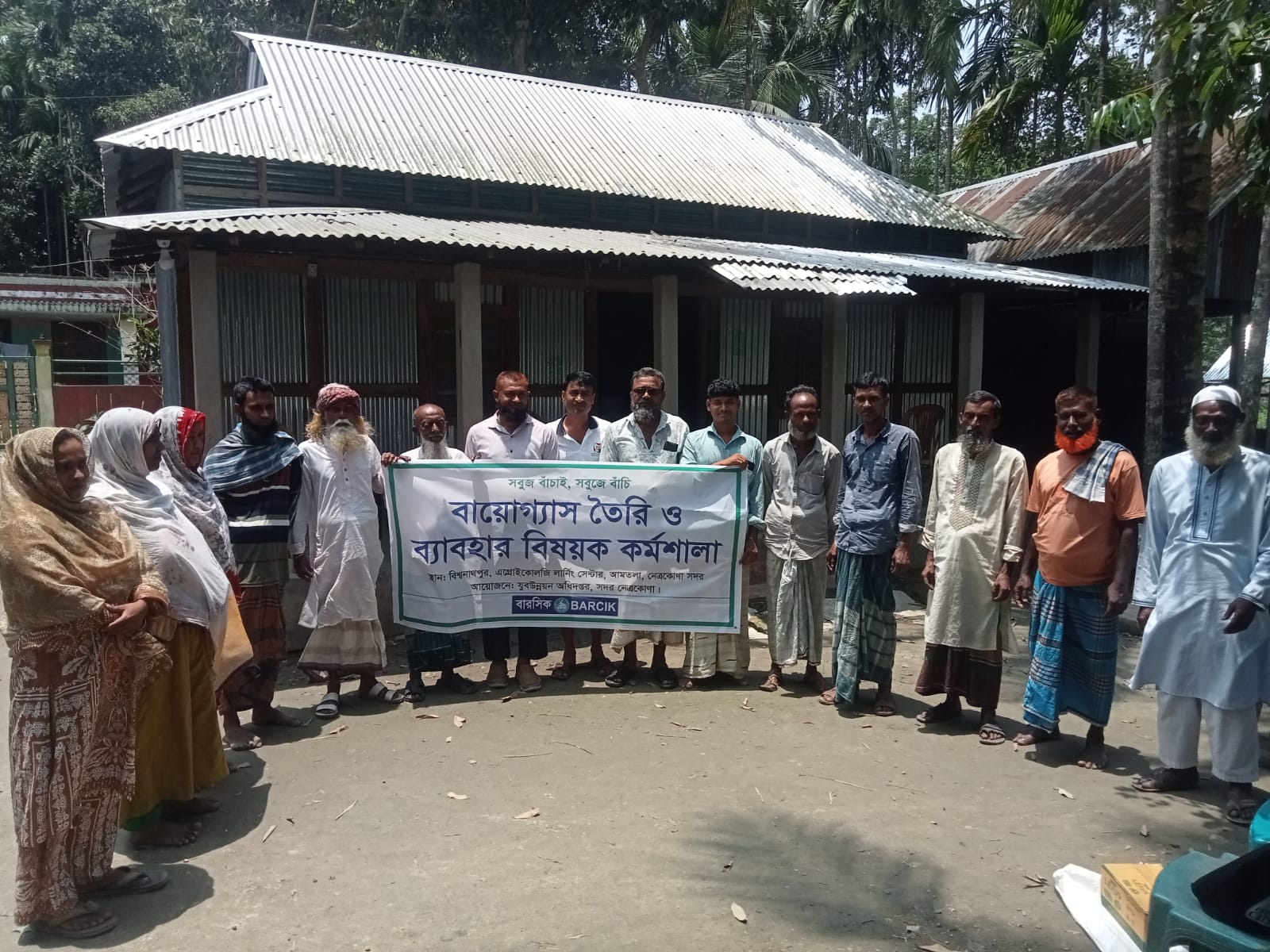
On 18 May 2026, a workshop on biogas production and use was held at the learning center with participation from 20 farmers. Engineer Md. Aminul Islam from the Youth Development Department explained the benefits of biogas, including reduced dependence on firewood, protection of biodiversity, lower household smoke pollution, and improved health for women and children.
He also said that biogas is a renewable energy source produced from cow dung and organic waste. The by-product can be used as high-quality organic fertilizer and fish feed. A biogas plant can remain effective for 10–15 years, making it highly beneficial for farming households.
After the workshop, 10 households were selected for potential biogas installation, with technical assistance to be provided by the Upazila Youth Development Office.