
By Shongkar Mrong from Netrakona
Bangladesh is an agriculture-dependent developing country where rice is the staple food. According to the Department of Agricultural Extension, Boro rice is cultivated on nearly 5 million hectares of land and contributes around 55% of the country’s total rice production. Haor regions play a major role in ensuring national food security because Boro is the main crop grown there.
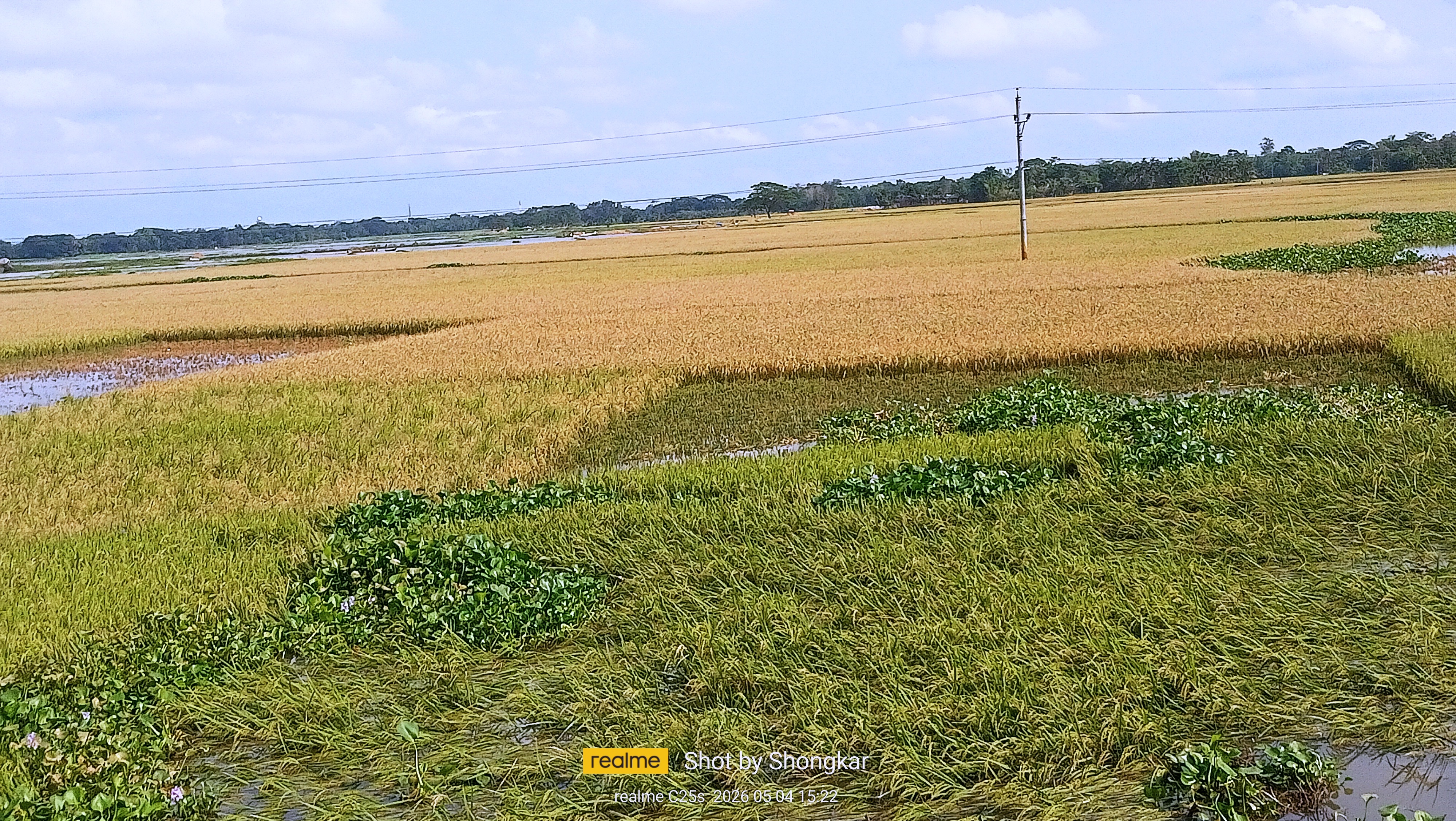
Despite challenges such as cold waves, floods, drought, and crop diseases caused by climate change, farmers in the haor areas continue cultivating Boro rice. Between 2018 and 2025, farmers were mostly successful in harvesting their crops except during periods of flash floods and hailstorms.
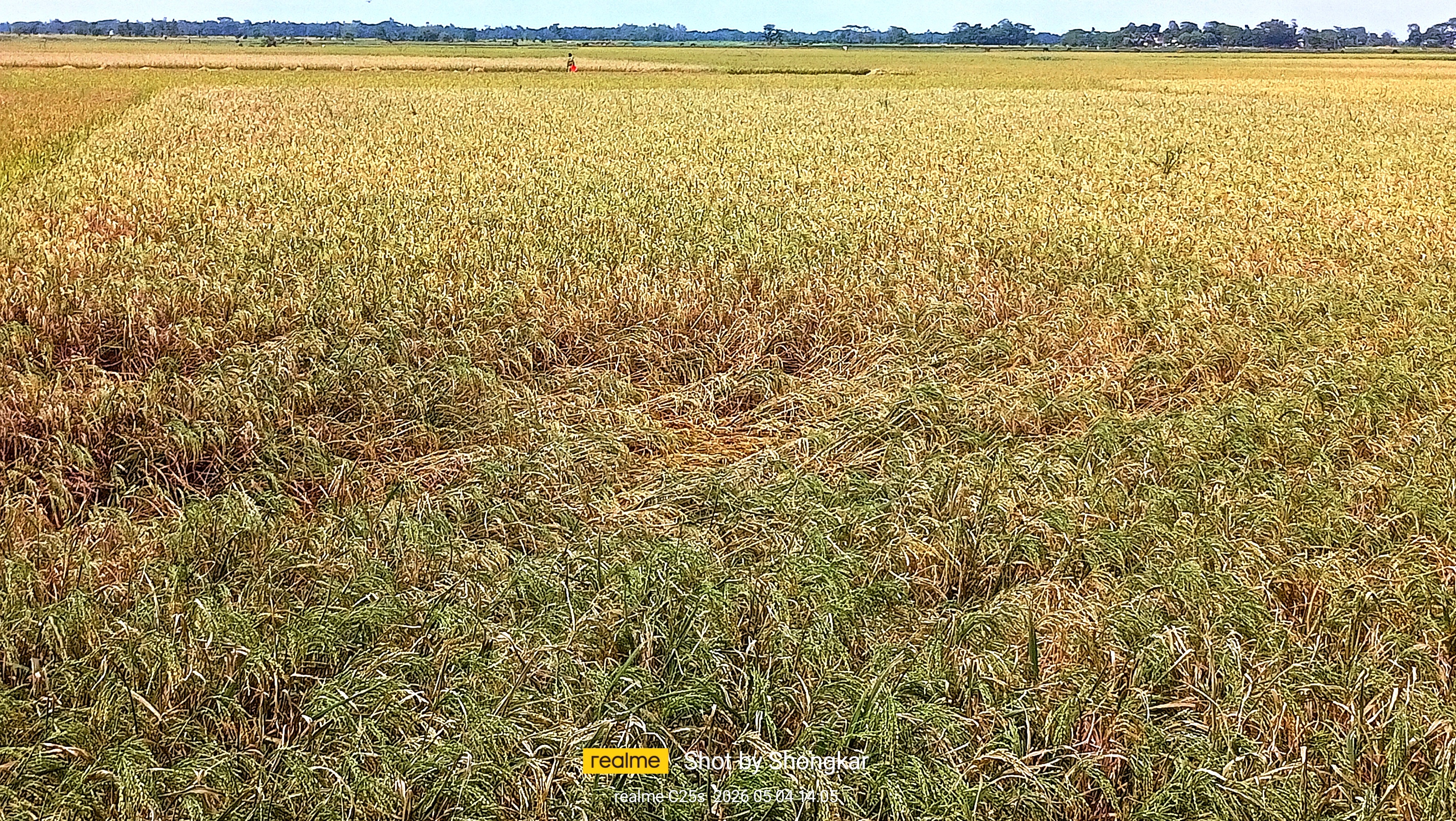
However, fungal blast disease has become a major threat to rice production. The disease mainly affects BR-28 and BR-29 varieties. Scientists from the Bangladesh Rice Research Institute developed blast-tolerant varieties such as BRRI-88 and BRRI-89, but outbreaks have continued in recent years.
During the 2026 Boro season, severe leaf blast infections were reported in Netrokona’s Atpara, Kendua, Madan, and Sadar upazilas. Farmers estimated yield losses of 30–40% in affected fields.
Types of Blast Disease
- Leaf Blast: Causes brown or gray eye-shaped spots on leaves, reducing photosynthesis and grain formation.
- Node Blast: Attacks plant joints, weakening stems and causing plants to fall easily.
- Neck Blast: The most destructive form, attacking the base of the rice panicle and turning grains empty and white.
Although weather conditions initially favored good production in 2026, early floods and blast disease damaged large areas of rice fields. Farmers reported that BR-88 and BR-89 were more vulnerable to leaf blast.
Causes of Blast Disease
- Hot days and cool nights
- Infected seeds
- Poor water management
- Excessive use of urea fertilizer
- Foggy conditions during fertilizer application
Recommendations
- Use balanced fertilizer
- Maintain proper water levels in fields
- Apply eco-friendly fungicides when necessary
- Cultivate diverse and blast-resistant rice varieties
- Train farmers on disease management and seed conservation
- Ensure easy access to blast-resistant rice seeds in haor areas
Farmers and agricultural experts believe that integrated action, climate adaptation, and sustainable farming practices are essential to protect Bangladesh’s future food security.