
By Mofijur Rahman and Al-Mamun, Shyamnagar, Satkhira
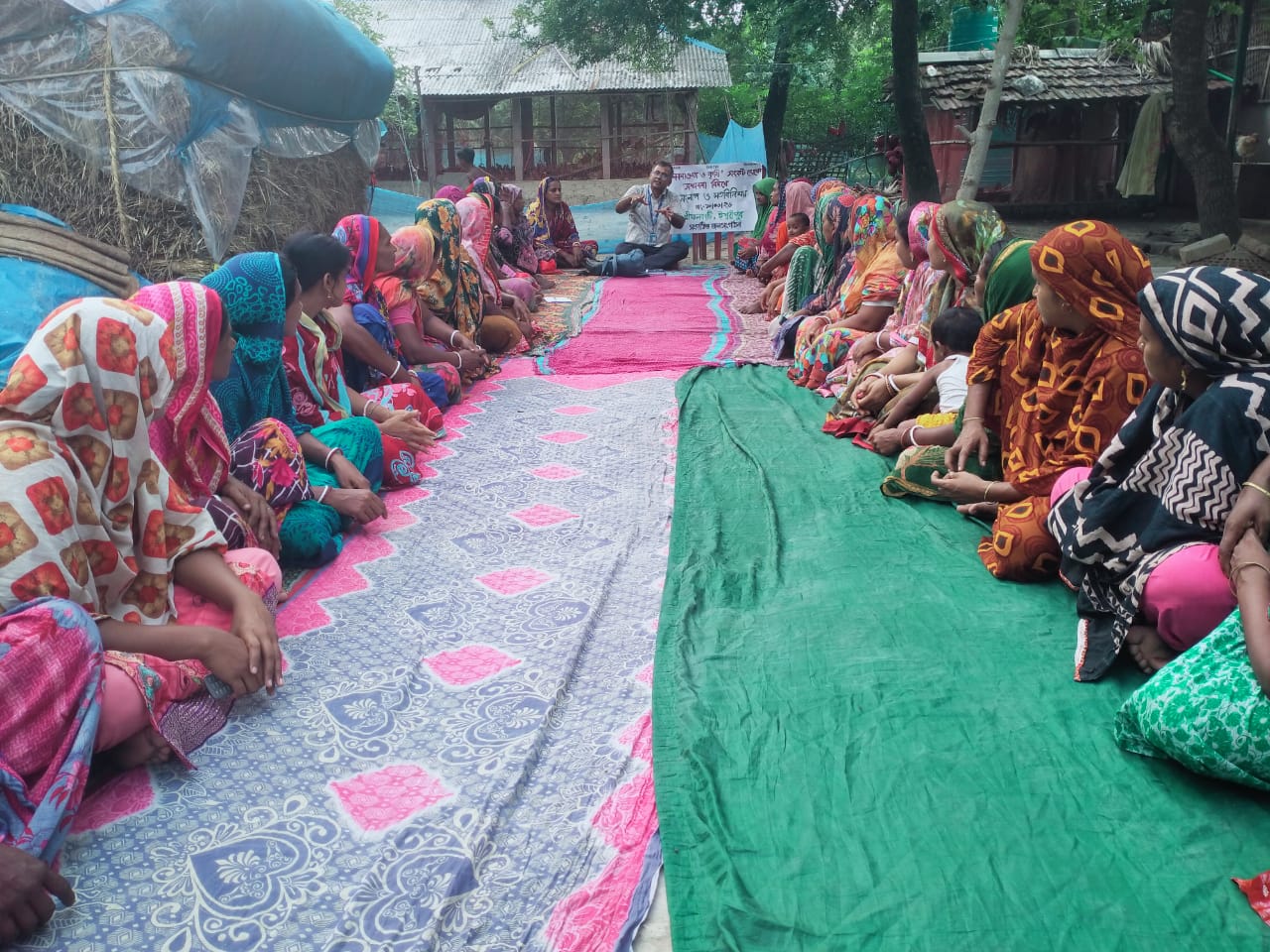
A dialogue titled “Salinity and Agriculture: From Crisis to Opportunity” was held recently at the residence of Zillur Rahman in Shrifalkati Village, Ishwaripur Union, Shyamnagar, to discuss the growing impact of soil salinity on agriculture, livelihoods, and food production in Bangladesh’s coastal region.
Chaired by Rokhsana Begum, the event brought together 50 local farmers who shared their experiences and discussed practical solutions for adapting to climate-induced salinity.
Participants highlighted that rising soil salinity has significantly reduced the production of rice, vegetables, and fruit crops. Farmers reported poor seed germination, stunted plant growth, and declining yields, while prolonged heatwaves and erratic rainfall have further increased soil salinity, making farmland less productive.
Farmer Kakoli Paik said that many traditional crop varieties once cultivated in the area can no longer survive under current conditions. Chandana Rani added that vegetable gardening has also become increasingly difficult due to saline soils and freshwater scarcity, affecting household nutrition and increasing production costs.
Despite these challenges, participants identified several climate-resilient farming practices. These included cultivating locally adapted salt-tolerant crop varieties, raised-bed vegetable cultivation, mulching, sack and carrot cultivation methods, applying organic fertilizers and vermicompost, harvesting rainwater, and using freshwater from ponds for irrigation.
Farmers who have adopted these techniques shared encouraging results, emphasizing that conserving and using indigenous seed varieties have strengthened agricultural resilience.
The discussion also highlighted the importance of agroecological practices, community seed banks, farmer-to-farmer knowledge exchange, and collective action in addressing salinity. Participants called for greater investment in water conservation, farmer training, and the promotion of locally adapted salt-tolerant crops.
In her closing remarks, Rokhsana Begum stressed that strengthening traditional knowledge, local seed systems, and agroecological practices is essential for protecting coastal agriculture and building climate resilience.