
By Gunjon Rema from Kalmakanda, Netrakona
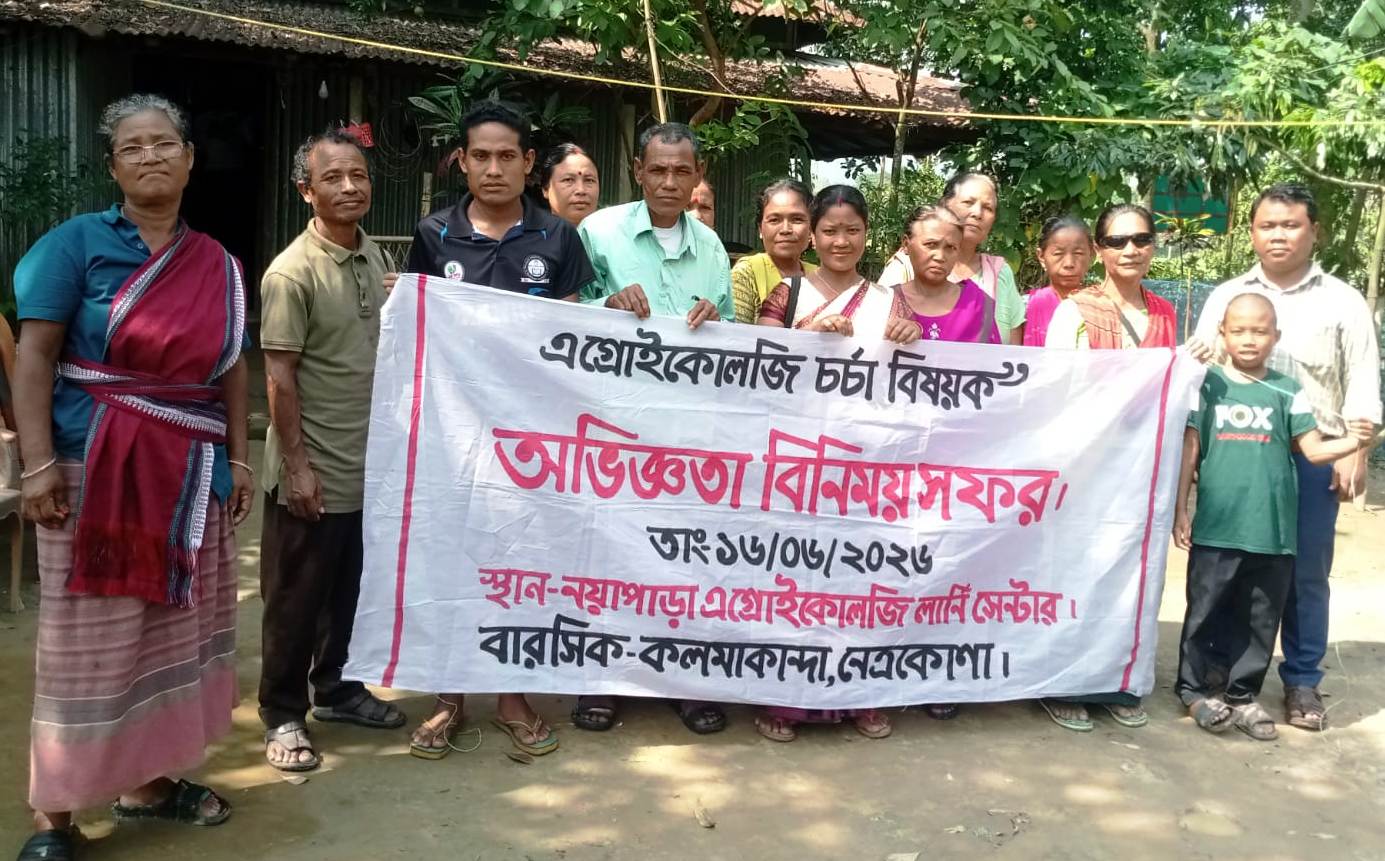
An agroecology learning exchange was held at the Nayapara Agroecology Learning Centre in Kalmakanda Upazila, bringing together ten progressive farmers from Bonbera, Kochugora, Gobindapur, Bhasankura, and Bogadubi villages.
The visit aimed to provide participants with practical knowledge of environmentally friendly farming techniques that they can adopt in their own communities.
Farmers toured demonstration plots featuring sack cultivation, raised-bed farming, trellis vegetable production, and container-based cultivation methods. They also observed low-cost irrigation systems, including wick and saline irrigation techniques, as well as the preparation and use of vermicompost, kitchen bio-liquid fertilizer, pit compost, and botanical pesticides.
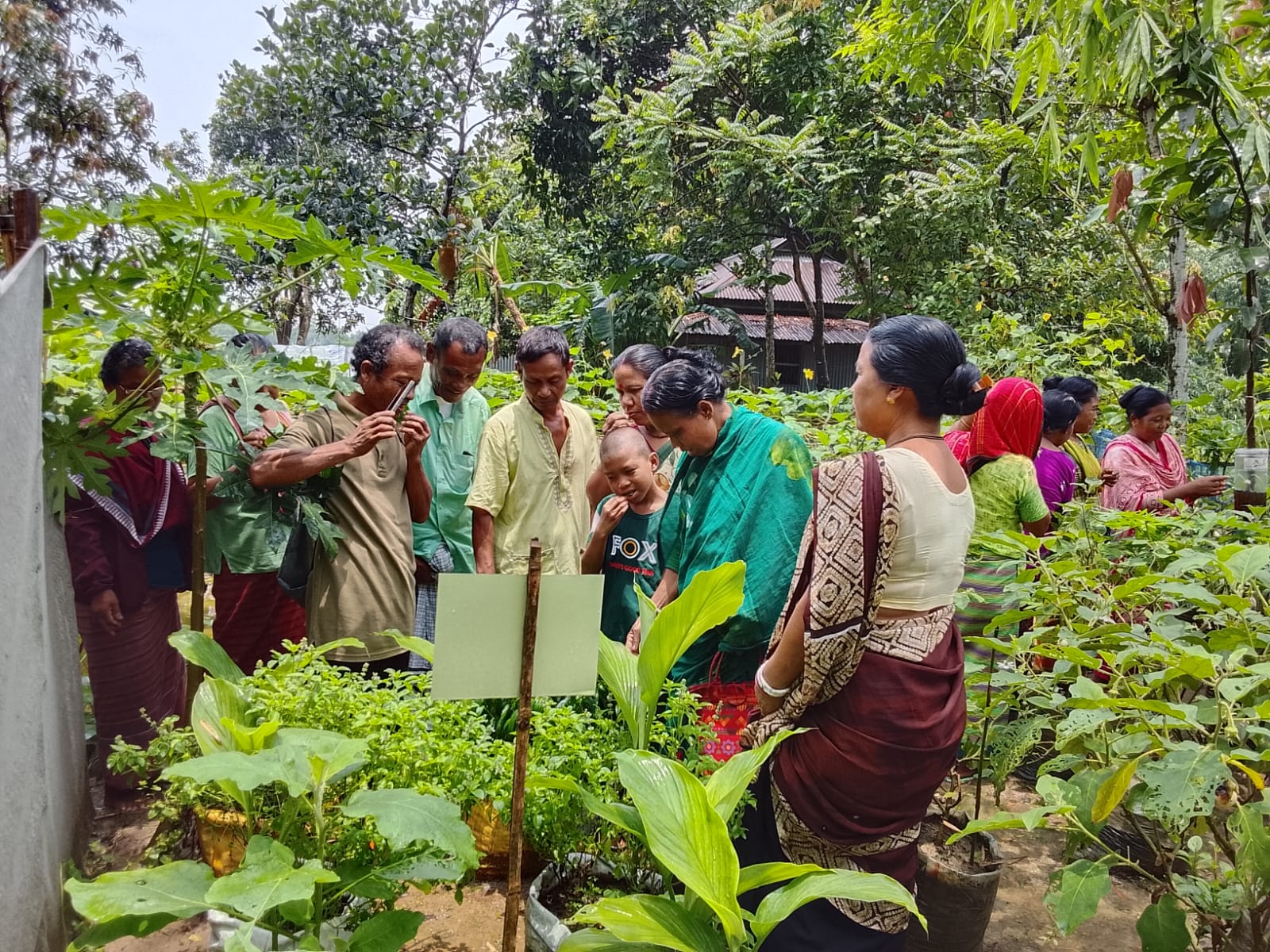
The visitors also explored the community seed bank managed by members of the Afsan Farmers’ Organization, where indigenous rice and seasonal vegetable seeds are conserved and exchanged.
During the reflection session, participants expressed enthusiasm about the practical techniques they had learned, particularly raised-bed cultivation, low-cost irrigation, vermicompost production, and homemade organic fertilizers.
Farmer Abdiel Kubi said the visit introduced him to cost-effective and environmentally friendly vegetable production methods that he plans to implement at home.
Mintu Rema, coordinator of the Agroecology Learning Centre, explained that the centre serves as a practical learning hub where farmers can observe, learn, and replicate sustainable farming practices using locally available resources.
Participant Lakkhi Hajong said she was particularly impressed by raised-bed vegetable cultivation and the preparation of botanical pesticides, noting that these methods could reduce production costs while ensuring safe food production.
The programme concluded with participants purchasing pesticide-free vegetables grown at the learning centre and expressing their commitment to applying agroecological practices in their own farms.