
By Rukhsana Rumi from Netrakona
Wetlands shape the lives and livelihoods of rural Bangladesh. Rivers, canals, beels, and haors sustain agriculture, culture, food, and recreation. Yet in Netrokona, these vital water bodies are rapidly disappearing, pushing nature-dependent communities toward market dependency and weakening social bonds.
Gobindachatal Beel, located in Kailati Union of Netrokona Sadar, is one such wetland that supports life across nearly 10 surrounding villages, including Kailati, Choto Kailati, Aurangabad, Chapan, and Sonura. Fed by the Mogra River, the beel remains central to local livelihoods.
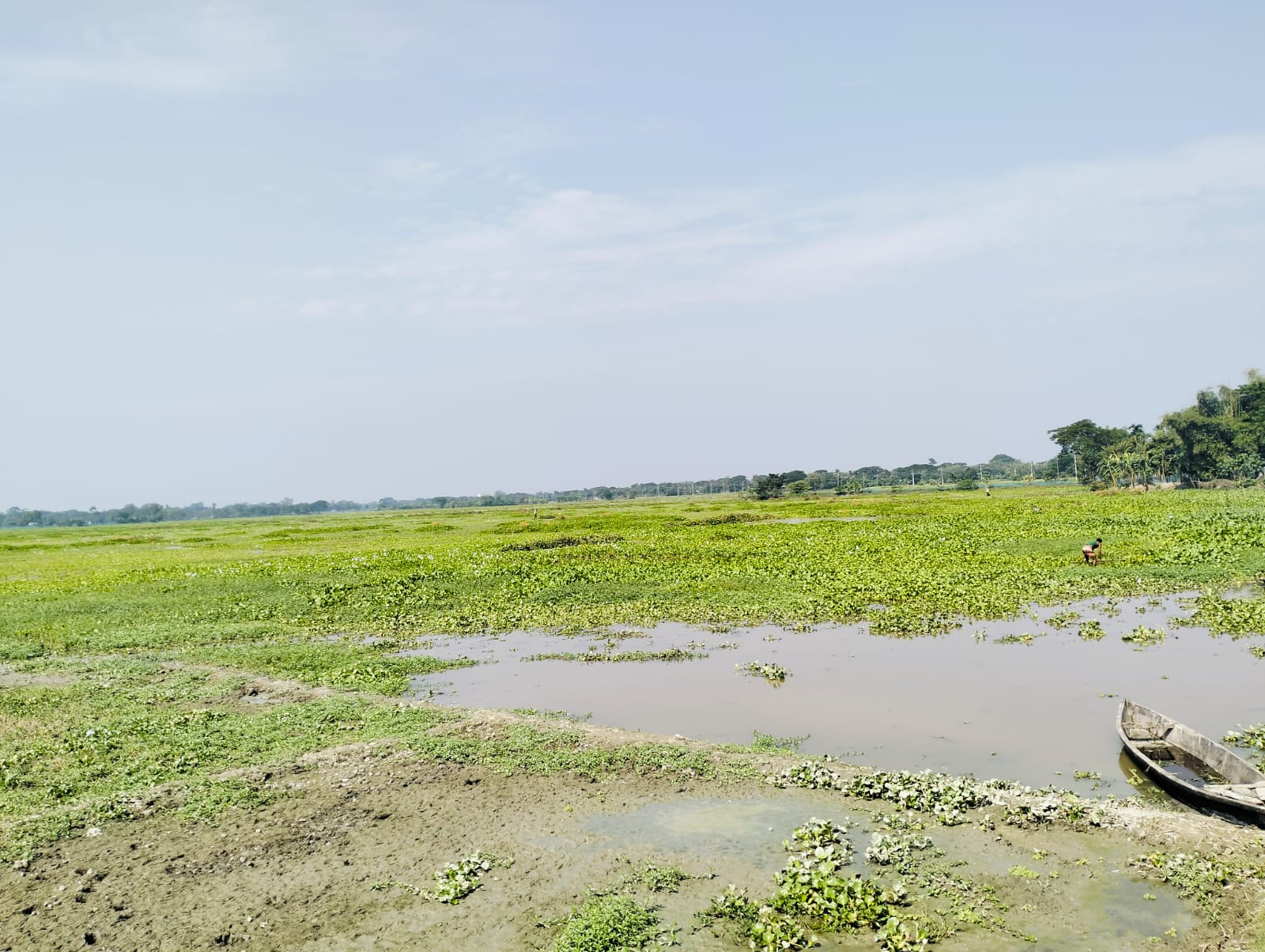
Its water enriches agriculture farmers raise seedbeds for seasonal rice along its banks and cultivate chili, coriander, and mustard during the dry season using beel water for irrigation. In the monsoon, wild edible plants like kalmi, helencha, water lilies, and lotus meet local nutritional needs, while aquatic vegetation feeds livestock. Fish are available year-round, meeting most household protein needs.
During monsoon, blooming lotus flowers draw hundreds of visitors. Boat rides on the beel create seasonal income for around ten local families. Every year in the month of Chaitra, a fair is held beside the beel during the Ashtami ritual bath, engaging hundreds of women in making and selling traditional crafts and homemade foods.
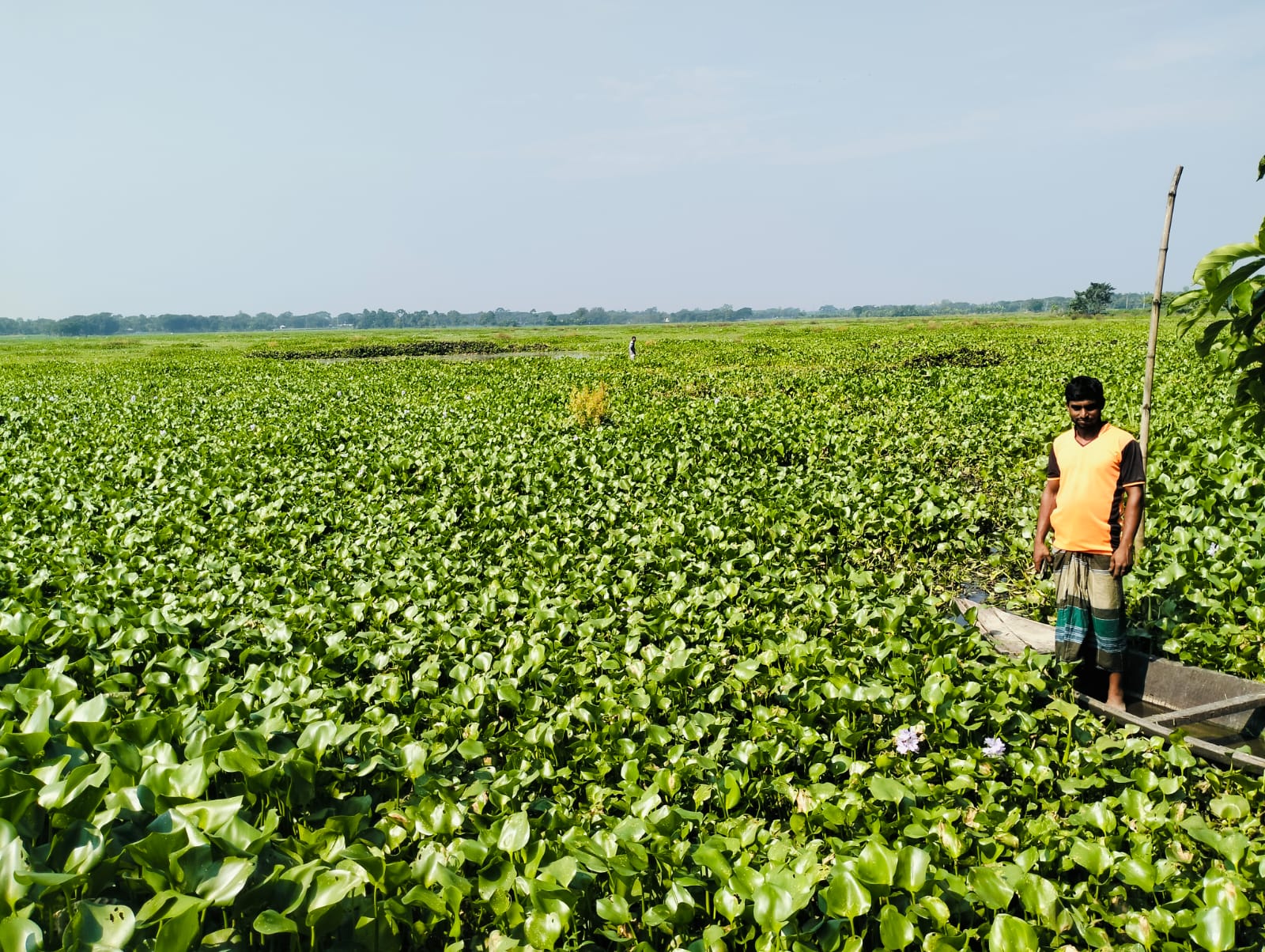
The beel also hosts an annual Polo Festival, attracting recreational fishers from across the district. Folklore surrounds the beel stories tell of a time when utensils left by the water overnight would mysteriously appear when needed, a magic believed lost due to human greed.
Though Gobindachatal Beel does not hold water year-round, it remains a blessing. If properly excavated and conserved, it could support year-round farming for nearly 30 villages, becoming a major source of food security and income once again.