
By Ohidur Rahman, from Netrakona
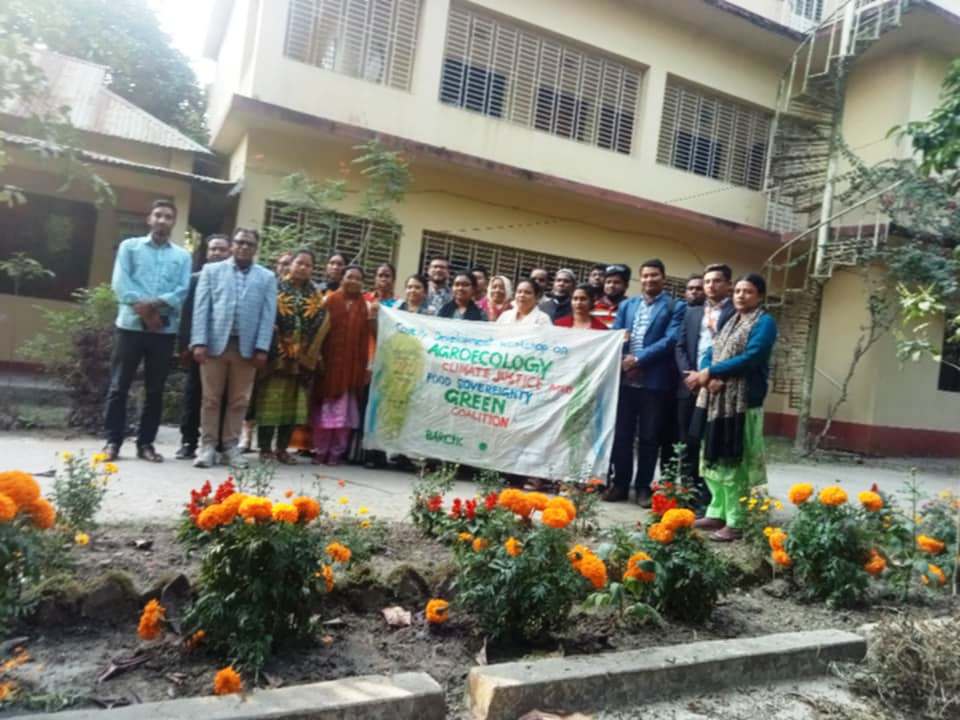
A two-day capacity-building workshop on Agroecology, Climate Justice, and Food Sovereignty was held at the Rameshwarpur Resource Center in Netrokona district. The workshop was organized by BARCIK with financial support from the Global Green Grants Fund.
A total of 35 participants from Madan, Kalmakanda, Atpara, and Netrokona Sadar upazilas took part in the workshop. Participants included farmers, journalists, youth, women, teachers, freedom fighters, social workers, environmental activists, and representatives from both government and non-government organizations.
The workshop was addressed by Md. Abdullah Al Matin, Assistant Director of the Department of Environment, Netrokona; Golam Mostafa, environmental activist and Principal of Rajur Bazar Collegiate School; journalist and environmental activist Alpona Begum; BARCIK Director Syed Ali Biswas; and BARCIK Netrokona Regional Coordinator Md. Ohidur Rahman.
In his opening remarks, Md. Ohidur Rahman outlined the objectives of the workshop and emphasized the urgent need to protect all forms of life in nature. He said that environmentally destructive activities must be reduced to safeguard soil, water, and air from pollution. He further stressed the importance of mutual coexistence between humans and nature, strengthening agroecological practices, ensuring environmental justice, and building collective social movements at local, national, and regional levels to address climate injustice and establish food sovereignty.
Speaking as a key discussant, Md. Abdullah Al Matin highlighted the initiatives of the Department of Environment to conserve biodiversity and protect natural resources in Bangladesh. He also briefed participants on existing environmental laws and national policies and expressed the department’s willingness to collaborate with BARCIK, civil society organizations, and environmental activists to promote sustainable environmental development.
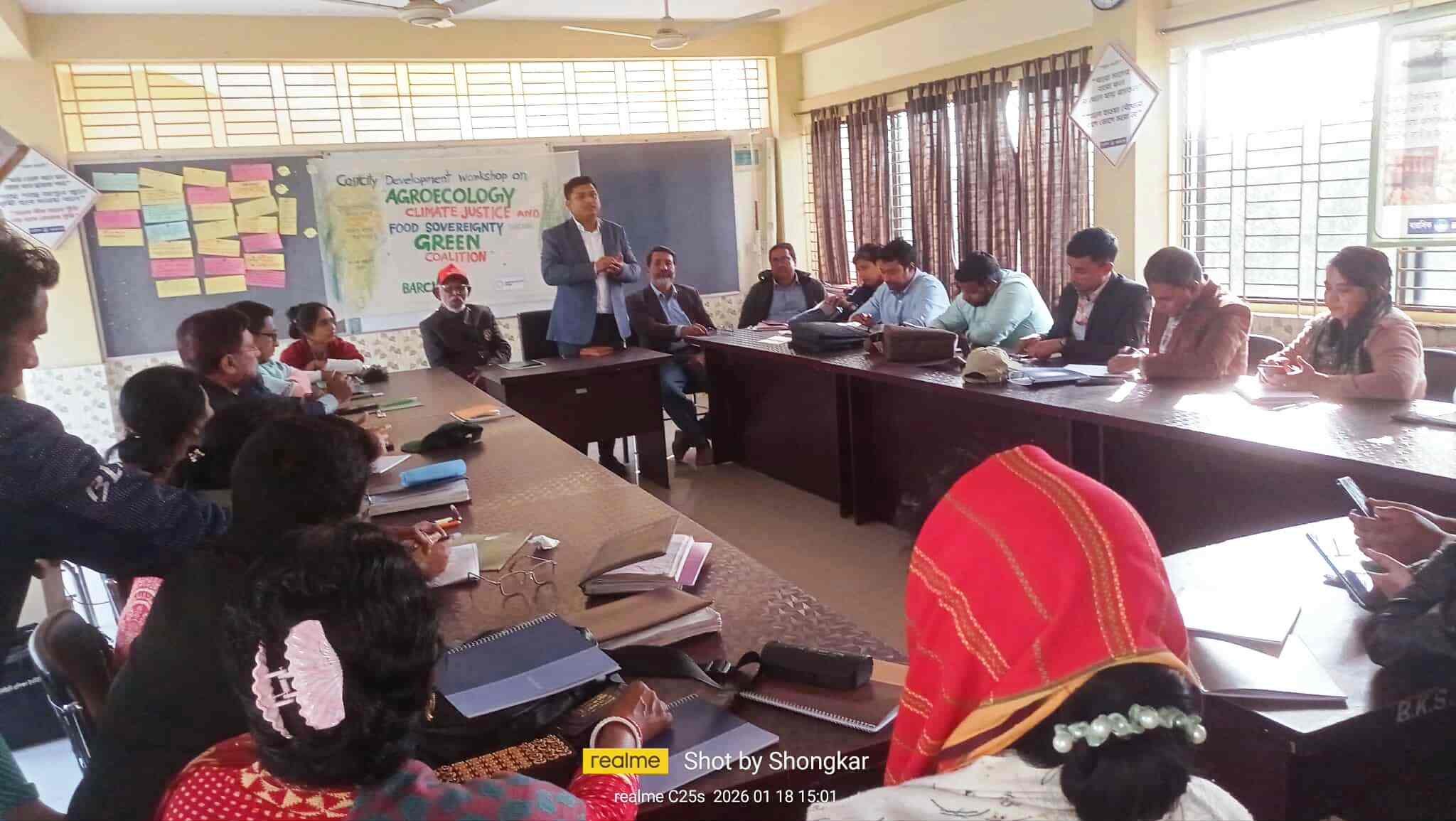
The workshop featured in-depth discussions on a wide range of issues, including the green movement and the role of green coalitions; agroecology and its contrast with chemical-based agriculture; biodiversity conservation; wetlands and their ecological importance; wildlife in Netrokona district; wetland degradation; protection of rivers, haors, ponds, canals, and beels; environmental laws and human rights; and region-specific environmental challenges.
Participants also discussed indigenous knowledge systems, local agroecological practices, family farming, agricultural land degradation, the impacts of commercial agriculture, pesticide hazards, climate justice, and the effects of climate change on agriculture and ecosystems. Special attention was given to identifying the most climate-vulnerable communities, responsible actors, and necessary actions to mitigate climate impacts.
At the concluding session, participants developed upazila-wise action plans for the coming year through group work. Members of the Green Coalition Committee identified local environmental, wetland, and agricultural challenges and outlined strategic actions to address these issues through collective and community-based initiatives.