
By Sultana Khatun from Rajshahi
Nodikanda village under Darshan Para Union in Paba Upazila, Rajshahi, is home to around 180 families, most of whom depend on agriculture. Due to seasonal flooding, many farmers struggle with crop production and rely on fishing or labor work during monsoon periods. Alongside men, women in the village contribute significantly through handicrafts, livestock rearing, and homestead vegetable cultivation.
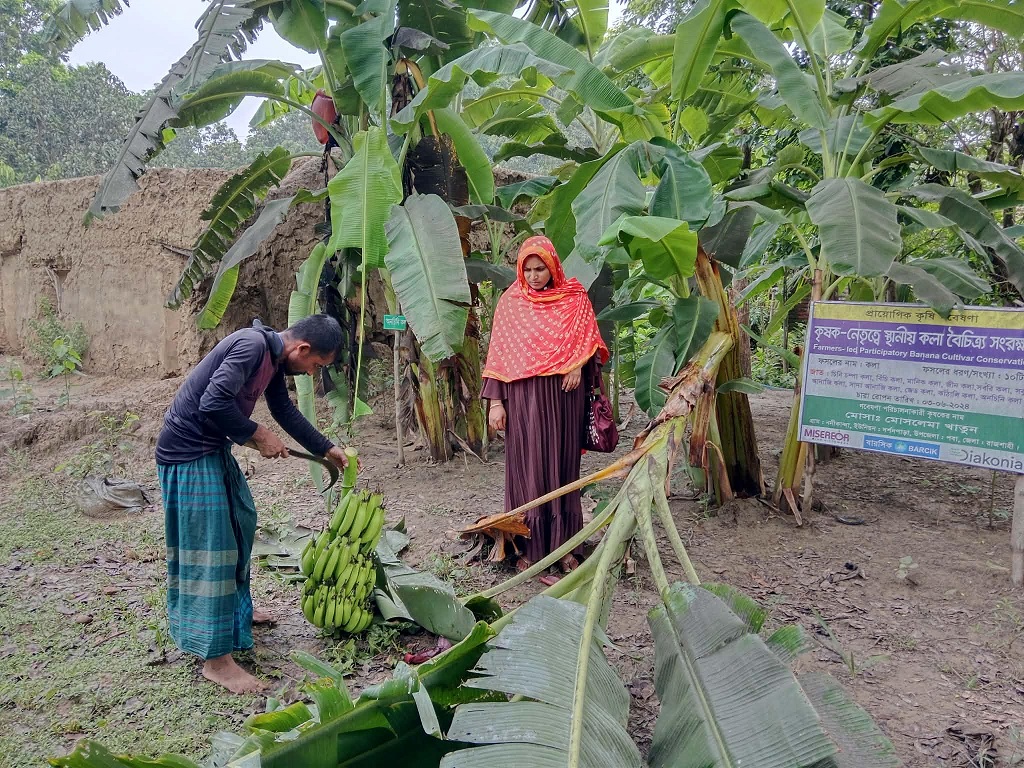
BARCIK started working in the village in 2020 and supported the formation of the “Nodikanda Women Development Organization.” In 2024, the organization initiated a participatory research activity on ten indigenous banana varieties. Saplings were collected from different regions through farmers’ exchanges.
The research plot is managed by local woman farmer Muslema Begum using fully organic methods without chemical fertilizers or pesticides. The varieties include Chinichampa, Manik Kola, Sabri, Kathali, Bicha Kola, and others. Community members became highly interested in the initiative, and several saplings have already been exchanged with local farmers and learning centers for wider expansion.
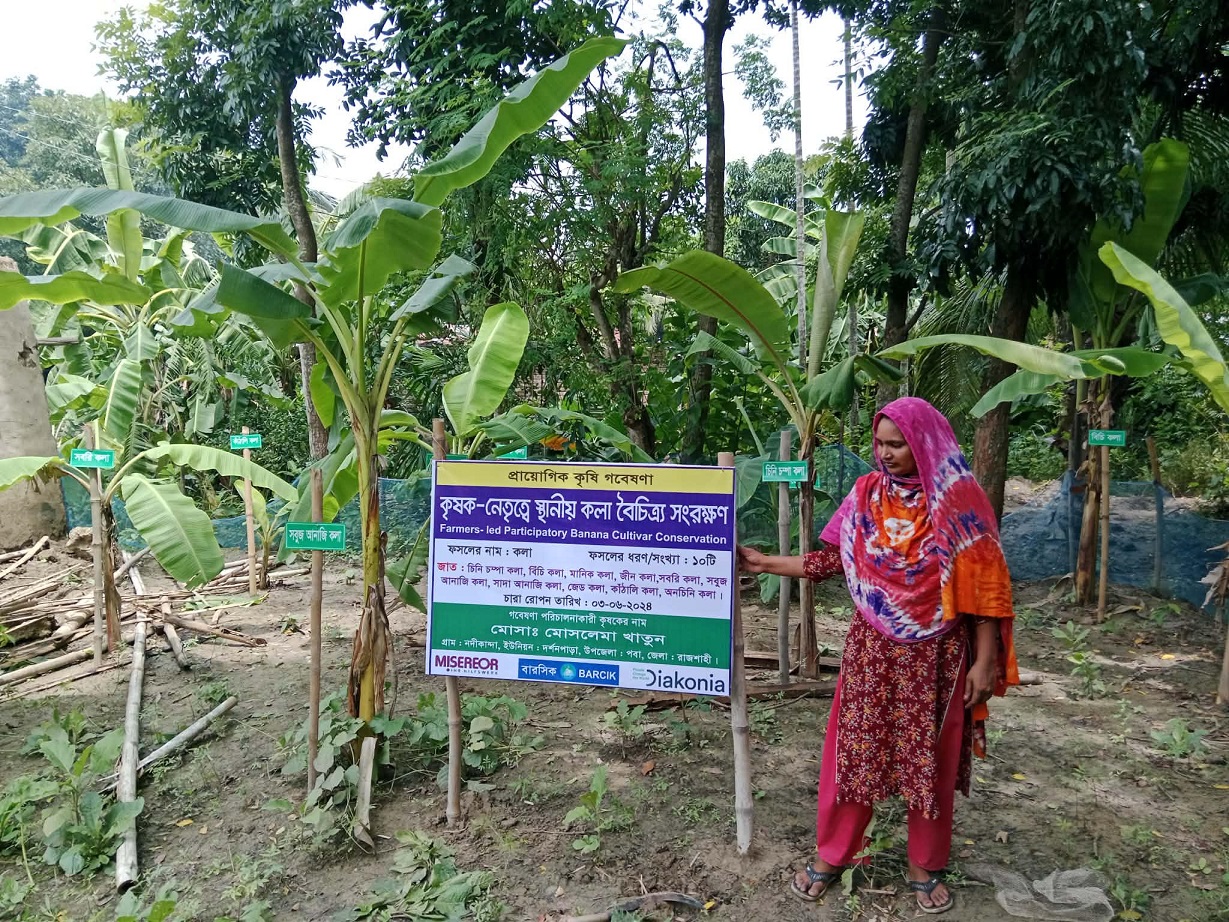
Muslema Begum shared that the banana plants are now producing fruits and new saplings, which will help further expand native banana diversity in the area. The initiative contributes to safe food production, biodiversity conservation, and climate-resilient agriculture through agroecological practices.