
By Rina Mahali from Rajshahi
In the drought-prone landscape of Tanore Upazila in Rajshahi district, where water scarcity often challenges agricultural livelihoods, a quiet transformation is taking place. At the heart of this change is Cicilia Hasda, a smallholder farmer from Ward No. 1 of Mundumala municipal and her husband, Michael Murmu. Together, they are redefining what it means to farm sustainably in a changing climate.
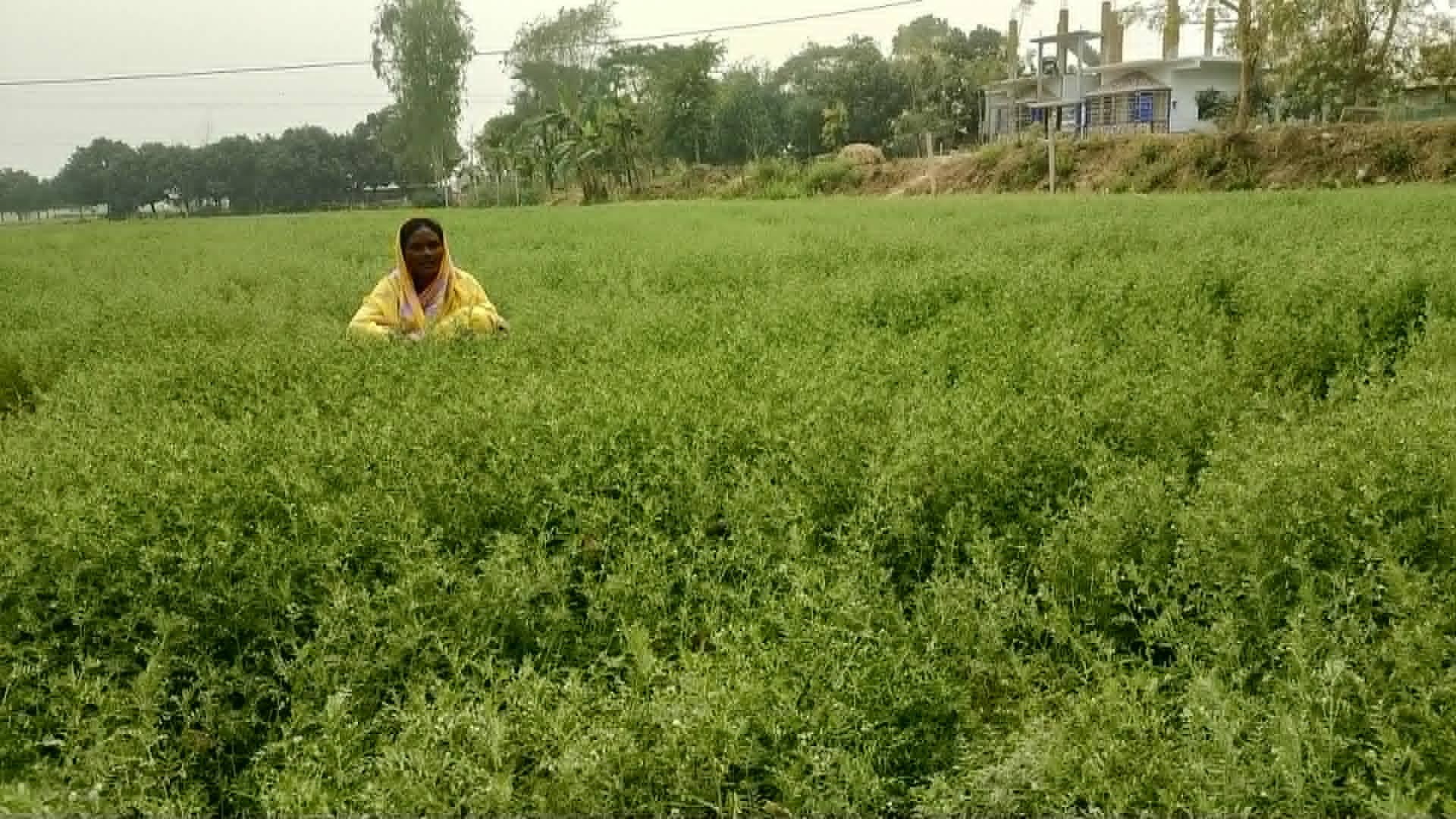
For nearly two decades, Cicilia and Michael have depended on agriculture as their primary livelihood. Without owning large tracts of land, they lease fields to cultivate crops such as rice and various Robi (winter) crops. Around their homestead, they grow an assortment of indigenous vegetables such as Malabar spinach, pumpkin, bottle gourd, and drumstick as well as fruit trees including hog plum, tamarind, mango, guava, and pomegranate. Their yard reflects both tradition and self-sufficiency.
Cicilia is also a member of the Mahali Para Bamboo and Cane Development Organization, a community-based group formed in 2020 through a joint initiative of local residents and BARCIK. This platform has played a key role in reshaping local agricultural practices.
Before engaging with BARCIK, Cicilia primarily cultivated Boro and Aman rice, along with mustard as her main winter crop. However, with growing concerns over water scarcity, she received training and advice on shifting toward water-efficient crops. Encouraged to diversify, she began experimenting with lentils, wheat, peas, sesame, and black cumin.
In 2021, she took her first step into lentil cultivation. Alongside this, she was trained in seed conservation techniques, an approach that would later prove transformative. By 2023, as her cultivated land expanded, she received additional lentil seeds as support. From that point onward, she no longer needed to purchase seeds; instead, she relied entirely on her own conserved stock.
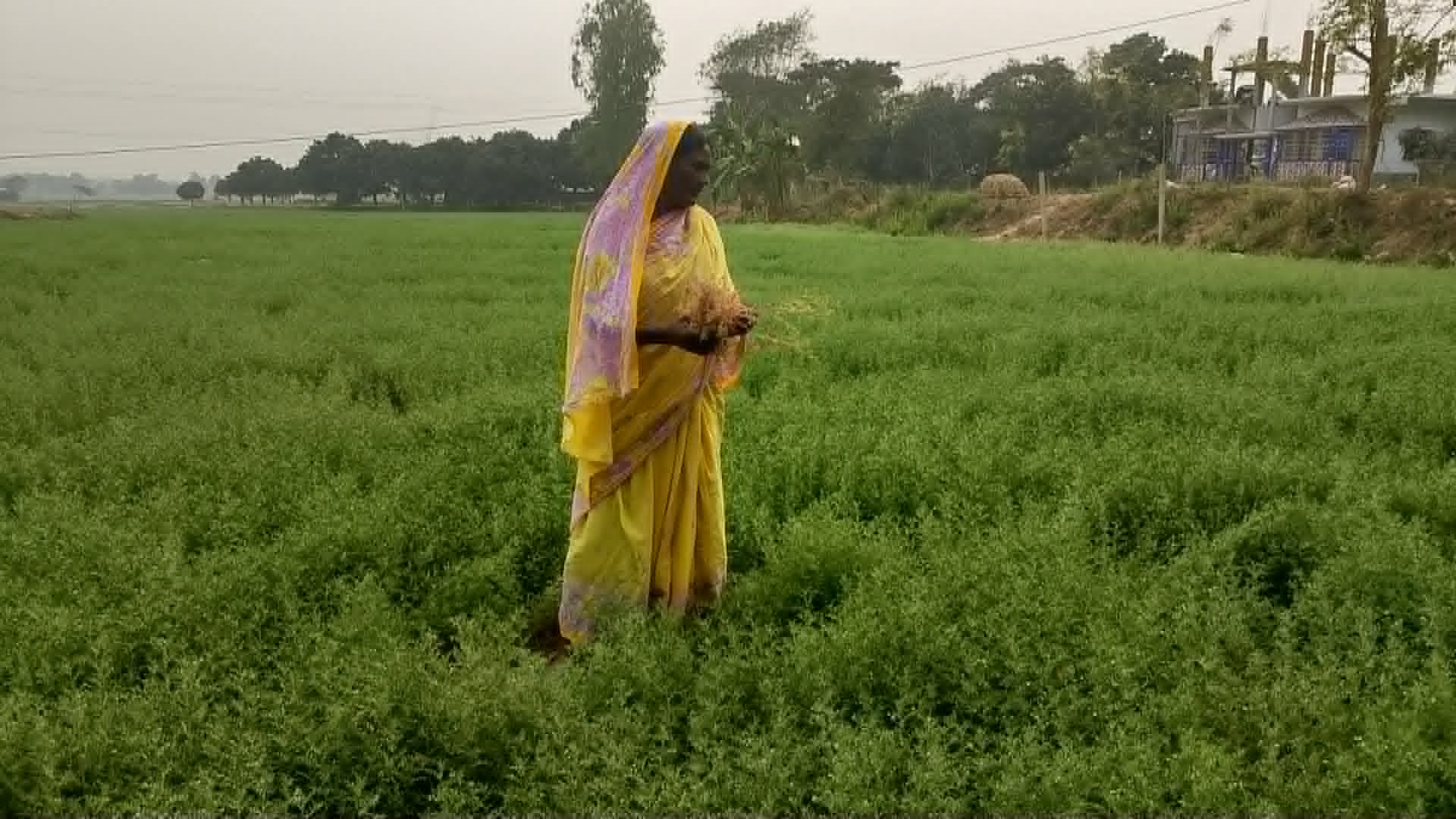
Her efforts reached a milestone in 2025. Using her own saved seeds, Cicilia cultivated lentils on five bigha of land. The harvest was impressive. She harvested 22 maunds of lentils. After sharing a portion with landowners, she sold lentils worth approximately BDT 40,000 taka and carefully conserved 40 kilograms of seeds for the next planting season.
The success brought her financial relief and a sense of pride and confidence. Inspired by her achievements, several neighboring farmers have begun considering similar shifts toward water-saving crops.
Reflecting on her journey, Cicilia said, “If we become aware, only then can we truly conserve water.”