
By Happy Roy from Netrakona
The wise Khona once said, “If it rains in Phalgun, crops will double.” Such traditional sayings guided farmers in ancient Bengal by predicting weather patterns. However, climate change has disrupted these natural rhythms.
In Netrakona district, rice cultivation during the Boro season covered approximately 185,320 hectares this year, with a production target of about 1.186 million metric tons (Department of Agricultural Extension). Initially, weather conditions were favorable, but excessive rainfall and hailstorms from February–March caused significant crop damage.
Traditionally, seedbeds are prepared in October–November, seedlings transplanted between November and January, and harvesting takes place from April to May. Proper irrigation and care are essential throughout. However, this year’s irregular rainfall has disrupted the cycle.
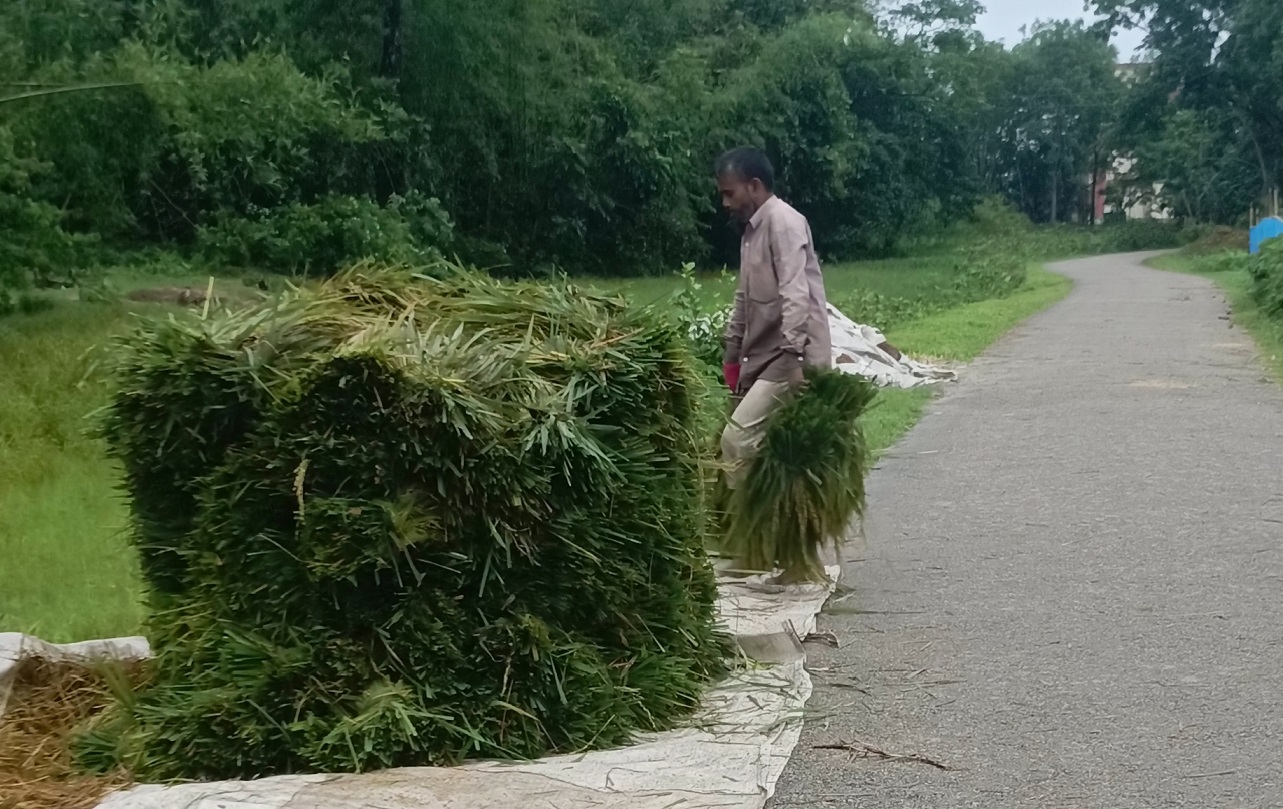
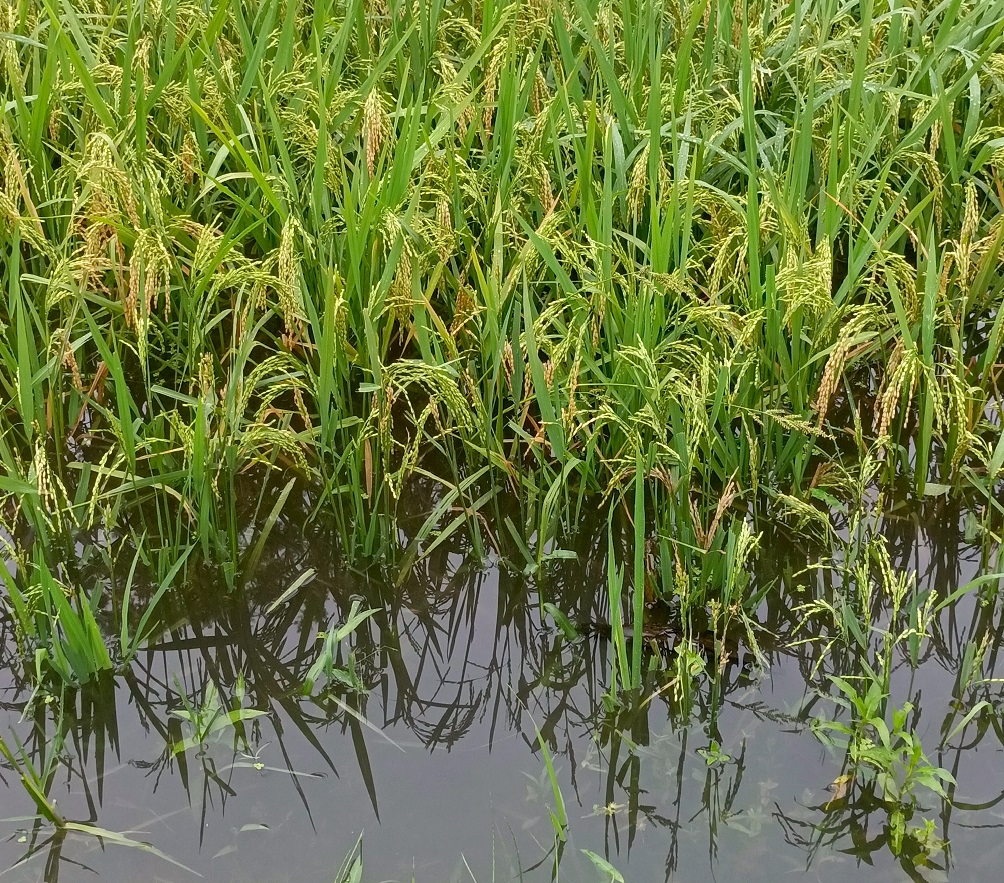
Excess water during the ripening stage damages crops, reduces yield, and increases disease and pest attacks. Waterlogging has made harvesting difficult and costly. Labor wages have increased significantly, while the market price of rice has dropped due to moisture content.
Farmers report that yields have nearly halved in low-lying areas. For example, where 7–8 maunds of rice per katha were expected, only 3.5–4 maunds were achieved. At the same time, harvesting costs have risen so high that selling even two maunds may not cover labor expenses. Waterlogged fields have also created health hazards such as leeches and skin irritation, discouraging laborers from working. Many farmers are forced to leave ripe crops unharvested.
Unpredictable weather conditions such as hailstorms, rain, and lack of sunlight have prevented proper drying of both rice and straw. Wet rice loses quality, sometimes sprouting prematurely, making it unsuitable for consumption. Straw, essential cattle feed, also rots if not dried properly.
While water is essential for agriculture, excess water can be equally destructive. Climate change has intensified floods, droughts, and erratic rainfall, severely impacting crop production and threatening food security.
Information provided by Ripon Mia (Sultangati), Md. Mamun Mia (Chakpara) and Tofazzal Mia (Atkapara).