
By Amreto Kumar Sarker from Rajshahi
Bangladesh’s first wetland-based wildlife sanctuary, Bill Jowana (locally known as Bill Kumari) in Tanore upazila of Rajshahi, is facing a serious ecological crisis. At least two bird species, five indigenous fish species, and five aquatic plant species have already disappeared from the wetland.
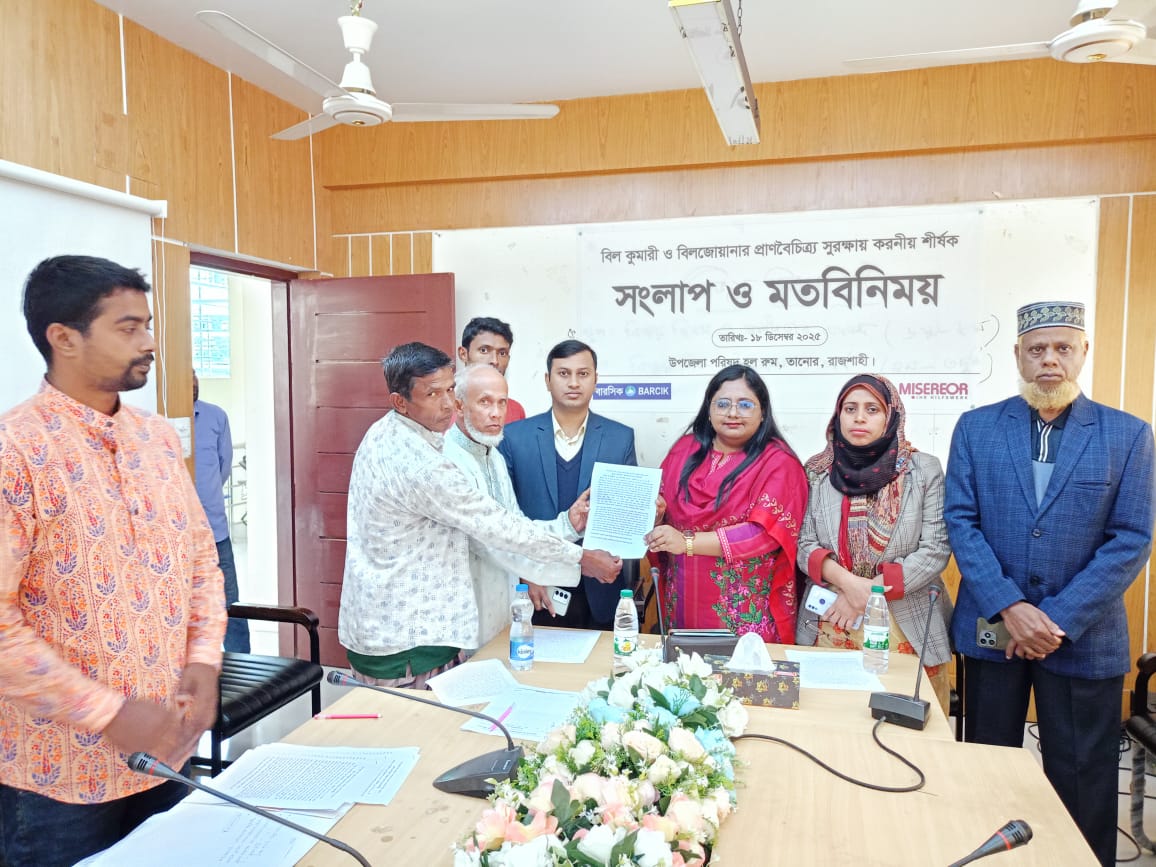
The issue was highlighted at a dialogue titled “Necessary Actions for Biodiversity Conservation of Bill Kumari and Bill Jowana”, held recently at the Tanore Upazila Hall Room. The event was jointly organized by the Gokul–Mothura Bill Kumari Fisher Cooperative, Green Coalition, and BARCIK.
Declared the country’s first wetland-based wildlife sanctuary by the Ministry of Environment, Forest and Climate Change, the 1.65-acre wetland was once a key biodiversity hub in the Barind region. However, water pollution, illegal encroachment, excessive pesticide use, unplanned fish farming, commercial agriculture expansion, and climate change have severely degraded the ecosystem.
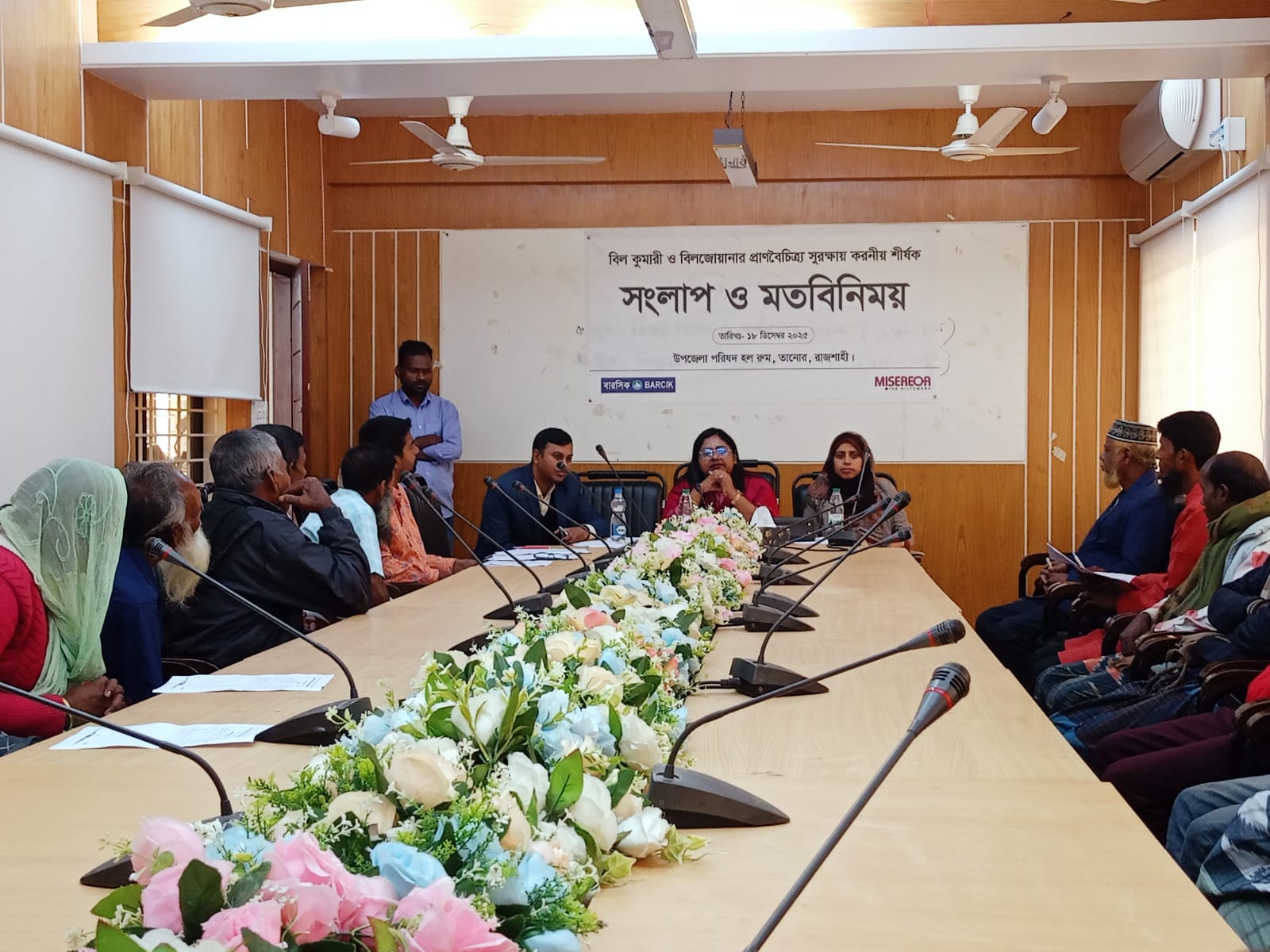
Local fishers and farmers said reduced water flow which was caused by river siltation, has led to the loss of native fish, birds, and aquatic food plants. Veteran fisher Huzur Ali (70) confirmed the extinction of two bird species, five fish species, and five edible aquatic plants once vital for local livelihoods.
Upazila Nirbahi Officer Naima Khan urged all to create community awareness ton protect the wetland alongside government action. She promised that regular mobile courts will be conducted to stop illegal fishing nets. Speakers also called for wetland excavation, stricter pollution control, and community-based management to protect biodiversity and livelihoods.