
By Atikur Rahman Atik from Rajshahi
Bilnepalpara village under Darshanpara Union of Paba Upazila in Rajshahi has been declared a pollinator-friendly area to protect pollinators, biodiversity, and agroecology.
The declaration was made on 20 May 2026, during a world Bee Day program organized by the Bilnepalpara Women’s Organization.
Participants of the event discussed on the critical role pollinators play in crop production, plant reproduction, biodiversity conservation, food security, and ecological balance. They also expressed concern over the rapid decline of pollinator species caused by excessive pesticide use and the destruction of natural habitats.
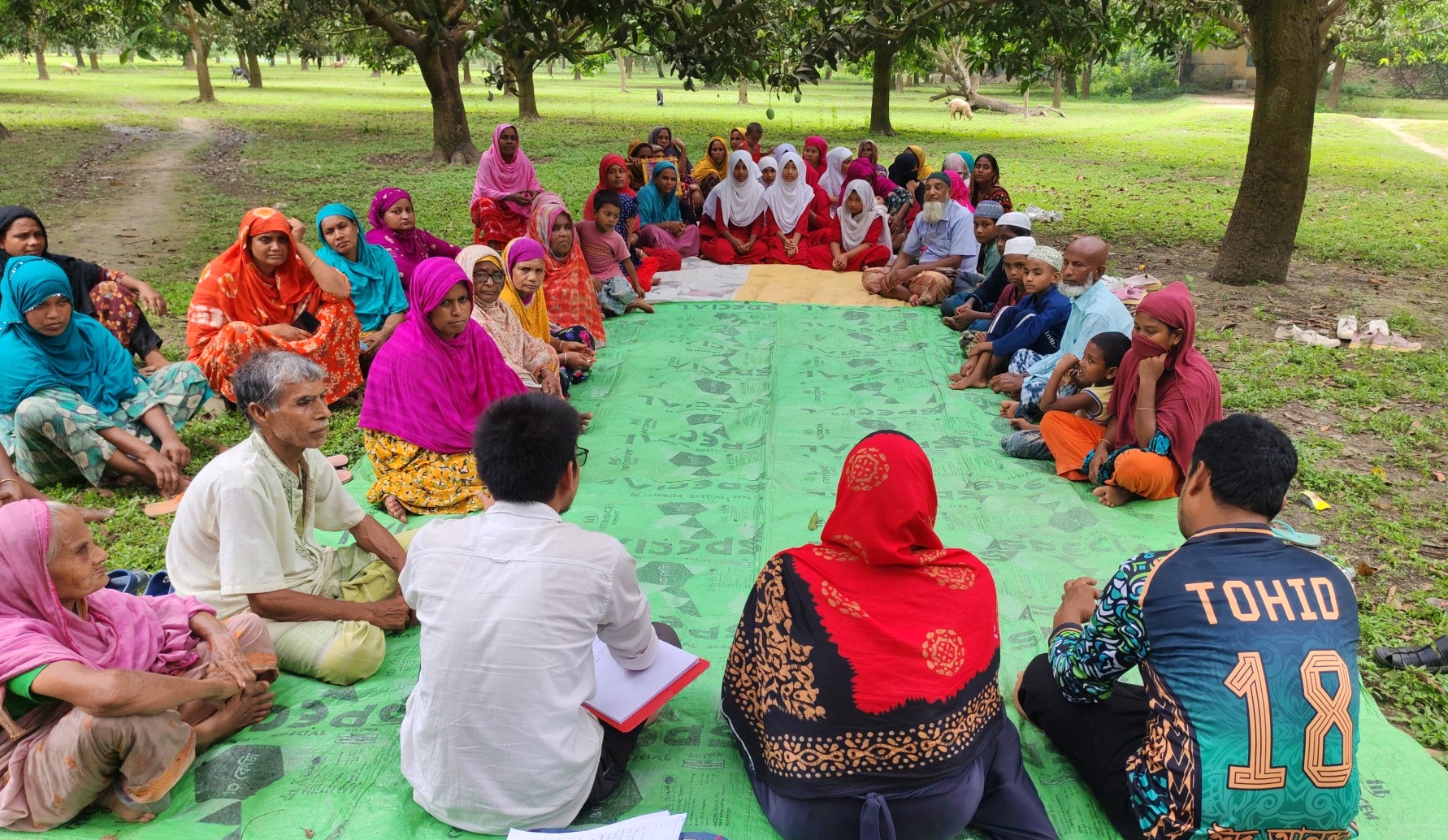
Farmers, women farmers, and local community jointly pledged to avoid the use of chemical fertilizers and pesticides in the area. They also demanded stronger government initiatives to reduce pesticide use nationwide and promote agroecological and indigenous farming practices across Bangladesh.
The program was jointly organized by BARCIK, Barendra Youth Forum, and the Bilnepalpara Women’s Organization. Farmers, students, youth, elders, and people from different professions participated in the event.
The discussion was moderated by Touhidul Islam, Associate Program Officer of BARCIK Rajshahi. Atiqur Rahman Atik, President of Barendra Youth Forum, said that more than 20,000 pollinator species have already been documented worldwide, while scientists believe many more remain unidentified. He warned that indiscriminate pesticide use, especially during flowering periods, is directly poisoning pollinators and creating a wider ecological crisis.
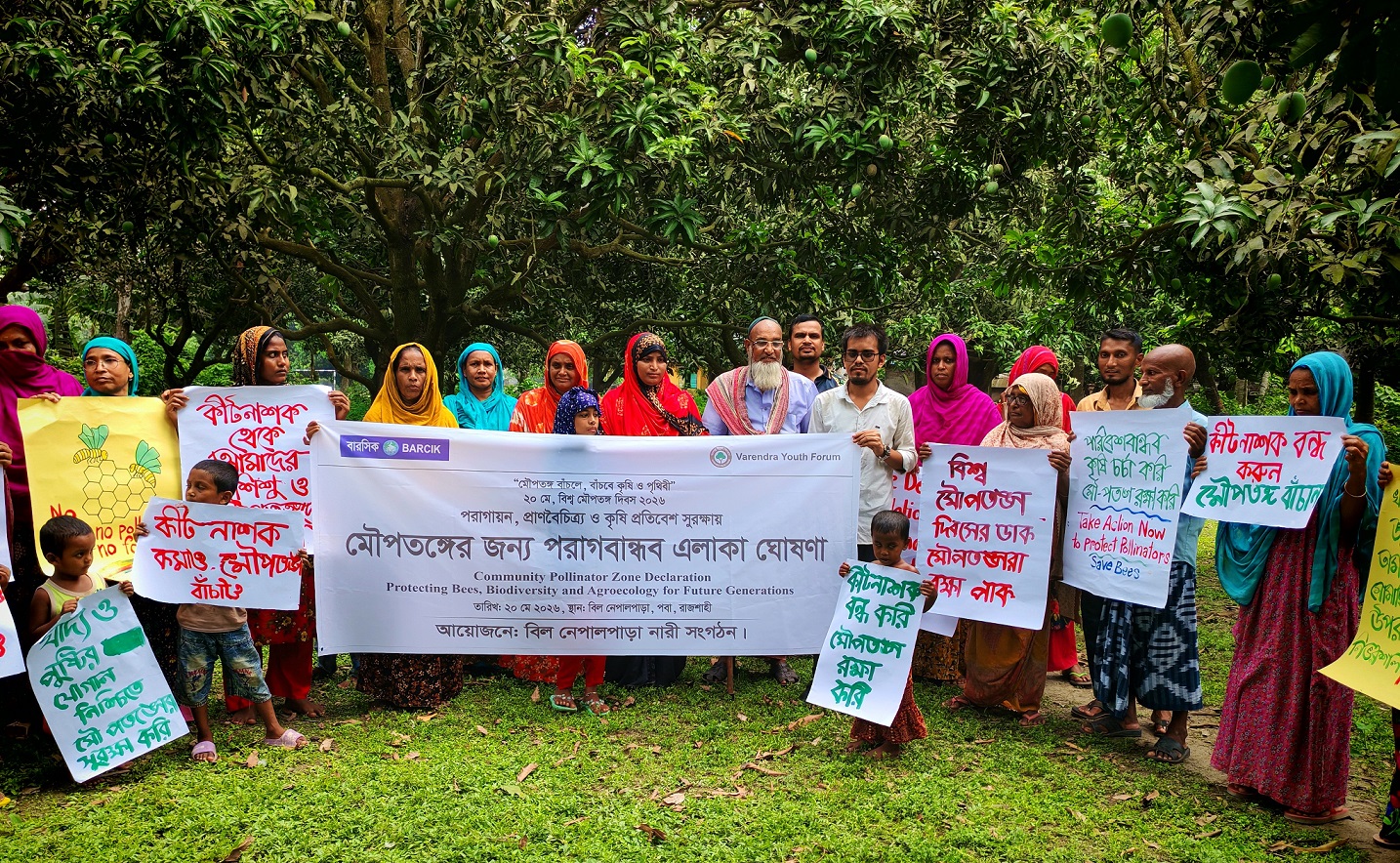
Farmer Golapjan Begum (62) recalled that bees, wasps, hornets, and many beneficial insects were once commonly seen around homes and fields, but are now rapidly disappearing. She mentioned that crops were previously cultivated without chemical fertilizers or pesticides.
Farmer Abdus Salam (60) emphasized that declining pollinator populations are reducing crop production and harming farmers. He urged the government to support organic pest management, natural farming, and provide incentives for farmers transitioning away from chemical agriculture.
Farmer Sultana Khatun said that their village has long practiced agroecology through a community seed bank and agroecology learning center, where farmers are trained in organic pest control methods.