
Md. Abdur Rob from Netrakona
Climate change and natural disasters are constant challenges for people living in the Haor region. Farmers survive by using local knowledge, traditional farming practices, and natural resources to adapt sustainably. While modern methods are used in Boro rice cultivation, local resources such as canals, ponds, aquatic plants, and organic materials are widely used for vegetable and crop farming on homestead and higher lands. These environment-friendly practices help families to meet their food and nutrition needs and increase income by selling surplus produce.
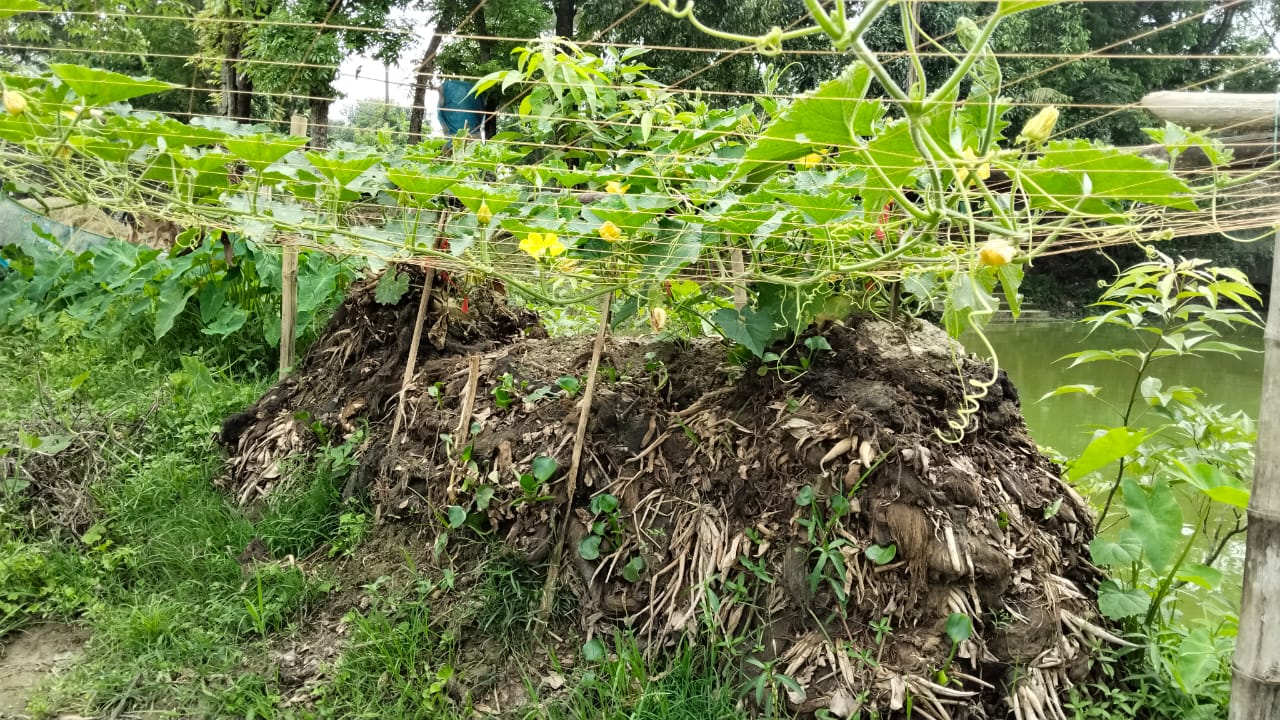
Through BARCIK’s ‘Cultivating Change Project’ and other projects, local farmers, women, youth, and children have received training and awareness support on agroecology and climate adaptation. This has strengthened their skills in sustainable farming and the use of indigenous knowledge.
One successful farmer is Arjan Mia (55+) from Barghoria village of Gobindashree Union, Madan Upazila. Agriculture is his main livelihood. He lives with his wife and four children and owns about 2.4 acres of land, including homestead land, crop fields, higher land, and a pond. Along with crop farming, he raises cows and poultry.
After joining the Agroecology Team under the project, Arjan Mia participated in training, meetings, and adaptation fairs on sustainable agriculture, biodiversity farming, and local adaptation techniques. Using these skills, he successfully cultivated diverse vegetables and crops during the winter and Robi seasons on homestead and higher lands. By selling surplus vegetables, rice, and fish, he earned around some cash that helps her to cover family and educational expenses.
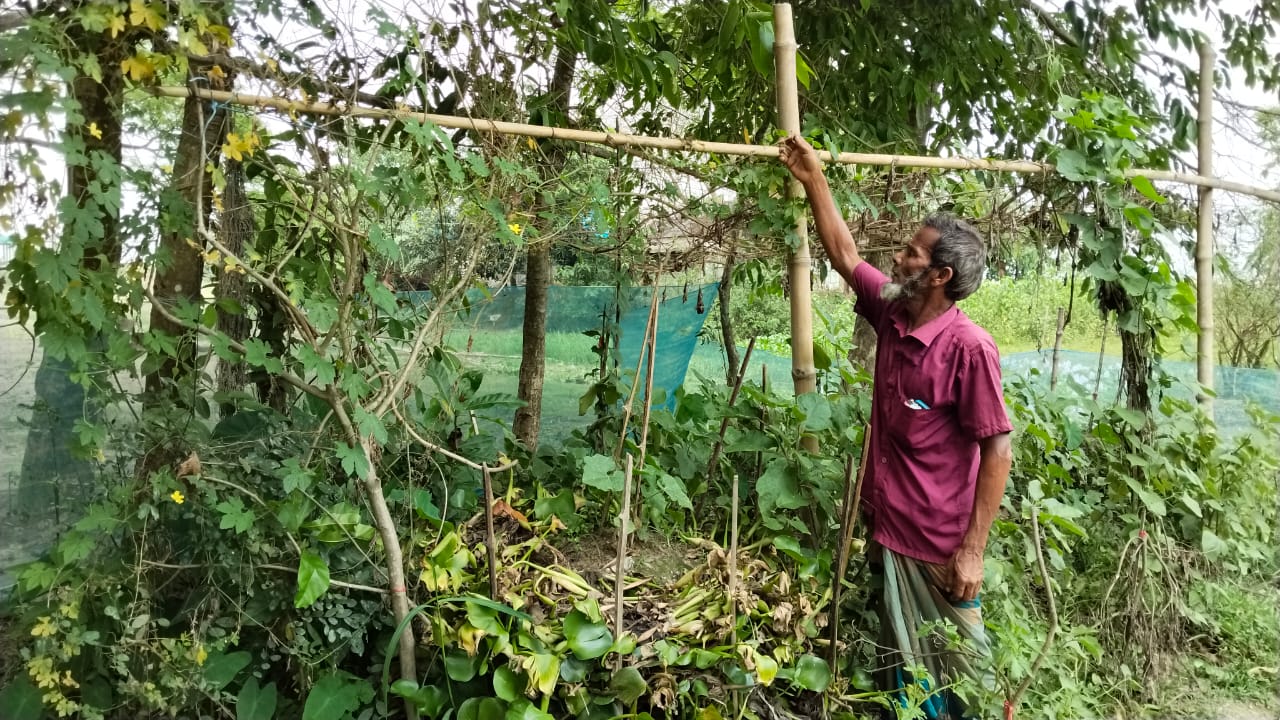
He also conserves seeds and exchanges them with other farmers to reduce dependence on commercial seed companies. For summer and monsoon farming, he uses local materials like aquatic weeds, organic fertilizer, and natural pest control methods. He practices sack farming, tower farming, floating beds, and pond-side cultivation to grow vegetables sustainably.
Arjan Mia says the project improved his knowledge and farming skills, enabling him to increase production, ensure family nutrition, and support other farmers with seeds and advice. He plans to continue year-round organic farming without chemical fertilizers or pesticides, using local resources to produce safe food in an environment-friendly way.