
By Rina Akter, Singair, Manikganj
For generations, society taught that a woman’s place was inside the home. But in today’s rural Bangladesh, women are steadily reshaping that reality. Alongside managing households, many are stepping into income-generating work, using both newly learned skills and traditional knowledge passed down through generations.
In the village of Azimpur under Singair, a group of rural women have found new hope through hand embroidery and needlework. What once began as a household skill for repairing clothes and meeting family needs has now become a source of income, confidence, and identity.
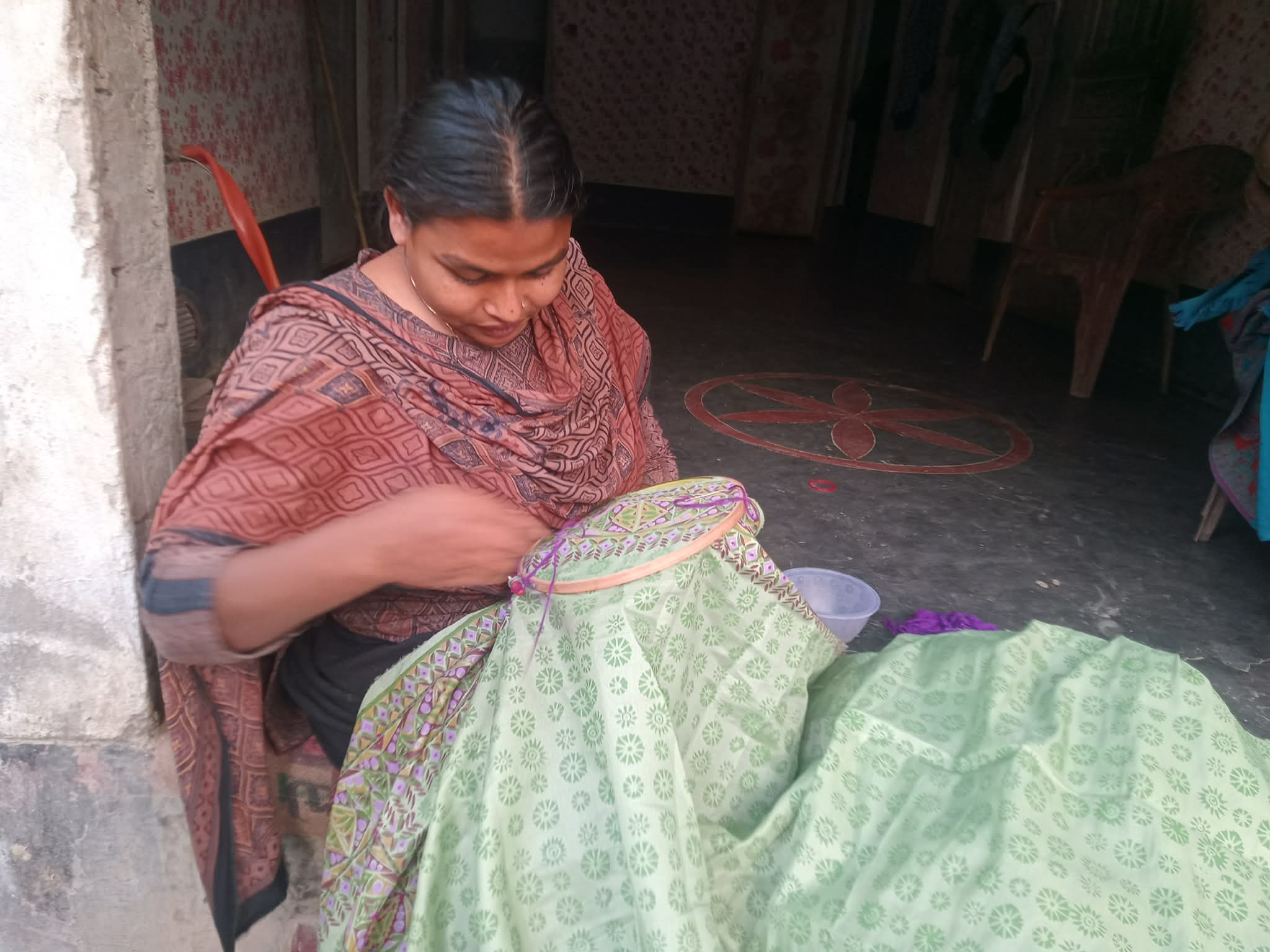
BARCIK has been working with women and adolescent girls in eight villages of Singair since 2018, focusing on gender awareness and livelihood opportunities. With support from different government departments and local institutions, women received training in livestock rearing, family farming, sewing, block-batik work, and beautification.
Among those who transformed their lives through these opportunities are Tanjina Akter, Hena Akter, Janata Akter, Amena Begum, and Saheda Begum. Using colorful threads and careful stitches, they create intricate designs on three-piece dresses and sarees that are later sold in urban boutiques and fashion outlets in Dhaka.
The journey began when Hena Akter, a member of the Azimpur Women Development Organization, contacted a handicraft shop that sold handmade clothing. A few sample pieces were sent first. The response was encouraging, and gradually more women joined the work.
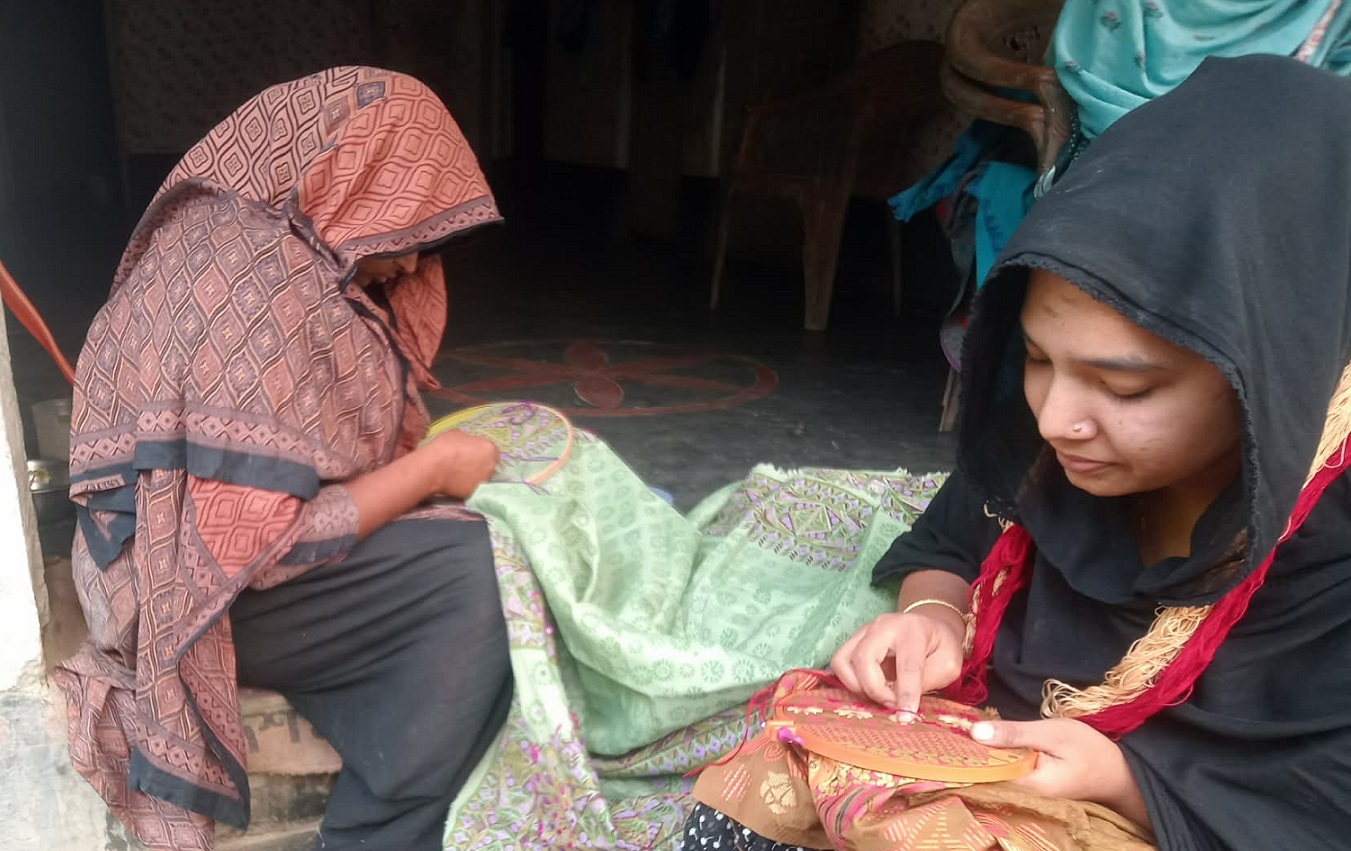
Today, each artisan earns around 40 taka for embroidery on a dress and 100 taka for work on a saree. After finishing household responsibilities, a woman can usually complete two dresses a day or a saree within two to three days. Though the earnings may appear modest, the extra income helps support children’s education, household expenses, and daily family needs.
The women believe that the wages are still too low compared to the labor and artistry involved. They say fair payment would encourage more women to join the craft and improve the quality of the work further. Despite the challenges, they see great potential in this traditional art form.
For these women, embroidery is more than just earning money. Every stitch carries emotion, patience, memory, and dreams of a better future. Through the careful touch of a needle, they are not only creating patterns on cloth but also weaving stories of resilience, dignity, and hope.