
By Protima Rani from Shyamnagar Satkhira
Despite the growing challenges of climate change, commercial shrimp farming, and ecological degradation in coastal Bangladesh, Ganga Rani Mondal of Debalaya village in Shyamnagar, Satkhira, has successfully transformed her homestead into a model agroecological farm.
Ganga Rani supports her six-member family through farming and vegetable production. Inspired by the traditional farming practices she witnessed during childhood, she began cultivating seasonal vegetables on her homestead land. After joining BARCIK in 2024, she participated in learning visits and agroecology training that significantly improved her farming knowledge and confidence.
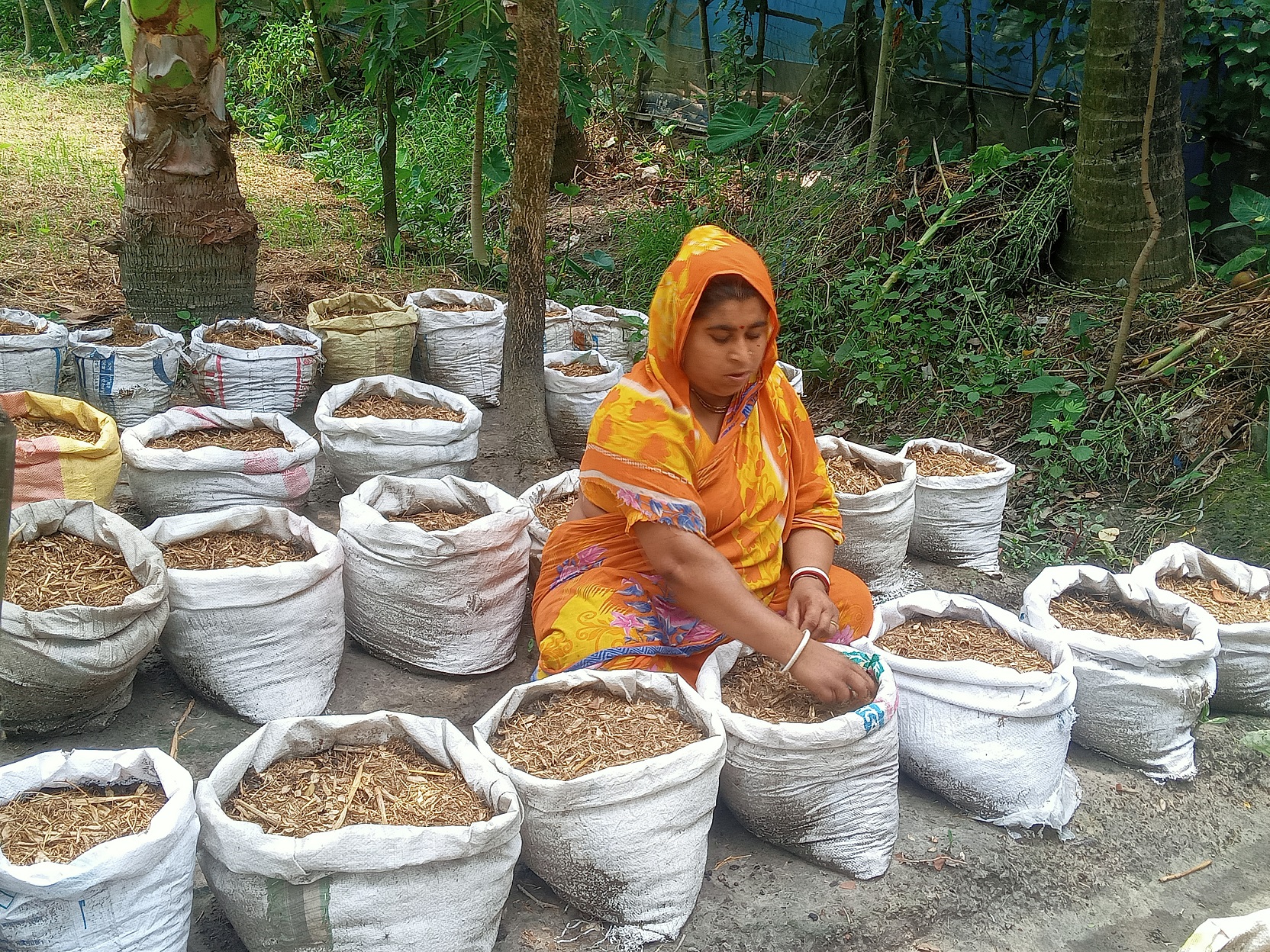
Today, she conserves 25 varieties of indigenous vegetable seeds and operates a community seed bank, distributing seeds such as bottle gourd, pumpkin, bitter gourd, Malabar spinach, and sponge gourd to about 25 members of her farmers’ group.
She also practices composting, botanical pest management, seed conservation, and organized vegetable cultivation while rearing livestock such as cattle, goats, ducks, and chickens. Her farm includes 11 local chili varieties, attracting farmers from surrounding villages seeking seeds and seedlings.
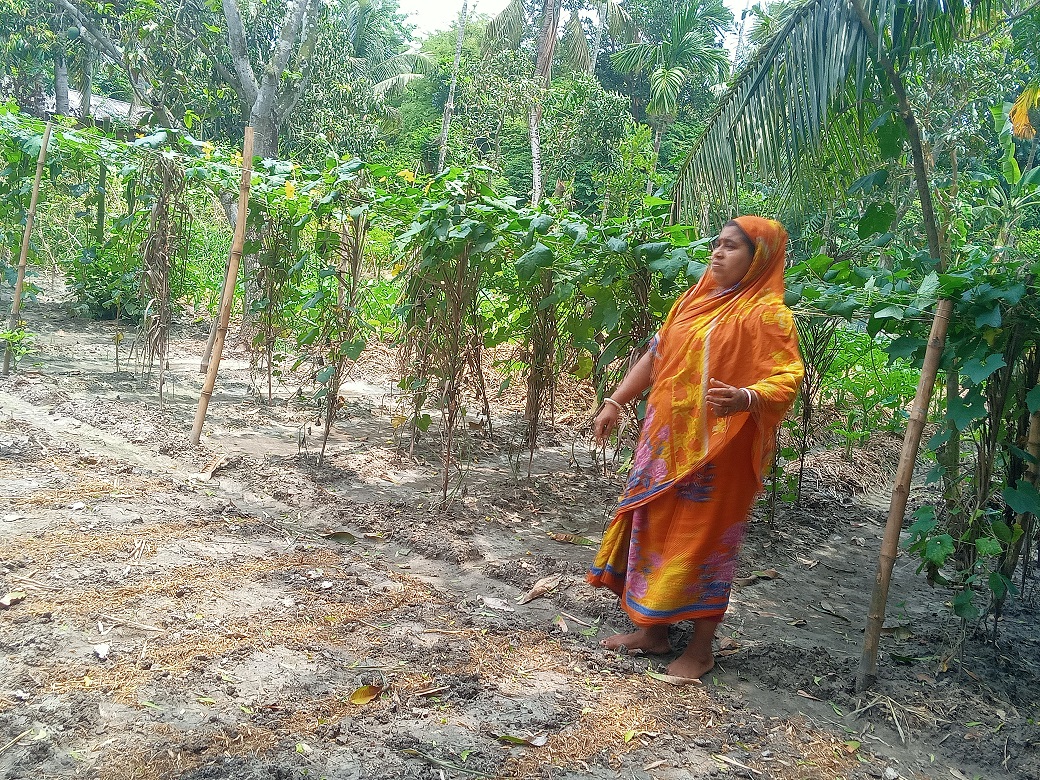
Ganga Rani also stores dried food for emergency periods and has transformed her homestead into a learning centre for neighboring farmers. Her integrated farming system demonstrates how indigenous knowledge, biodiversity conservation, and agroecological practices can strengthen food security and climate resilience in Bangladesh’s coastal region.