
By Mofijur Rahman from Shyamnagar, Satkhira
Communities living in the coast regularly face cyclones, storm surges, floods, and prolonged waterlogging, making access to safe food difficult during disasters. In these situations, preserved local foods play a vital role in ensuring survival.
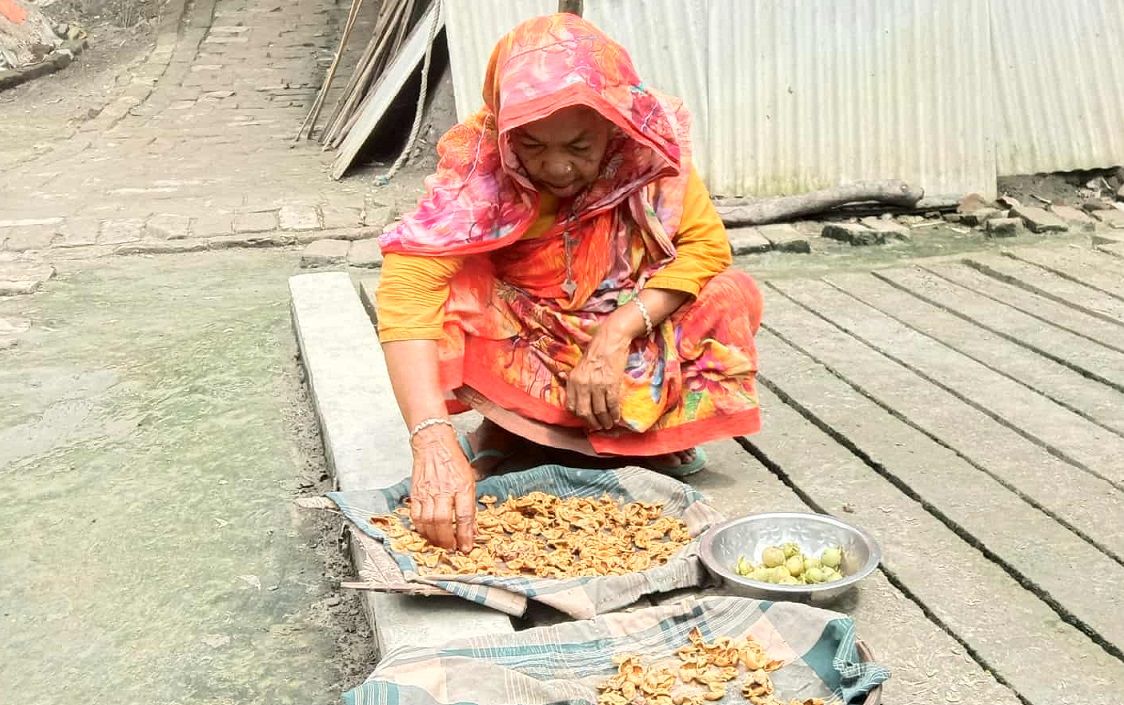
For over four decades, Kadbanu Bibi (65) of Bonyatola village in Padmapukur Union has practiced the traditional method of preserving Kewra (Sonneratia apetala) fruit, a technique she learned from her mother and grandmother. The fruit, collected from the Sundarbans, requires no cooking and can be stored for six months to a year, making it an important emergency food.
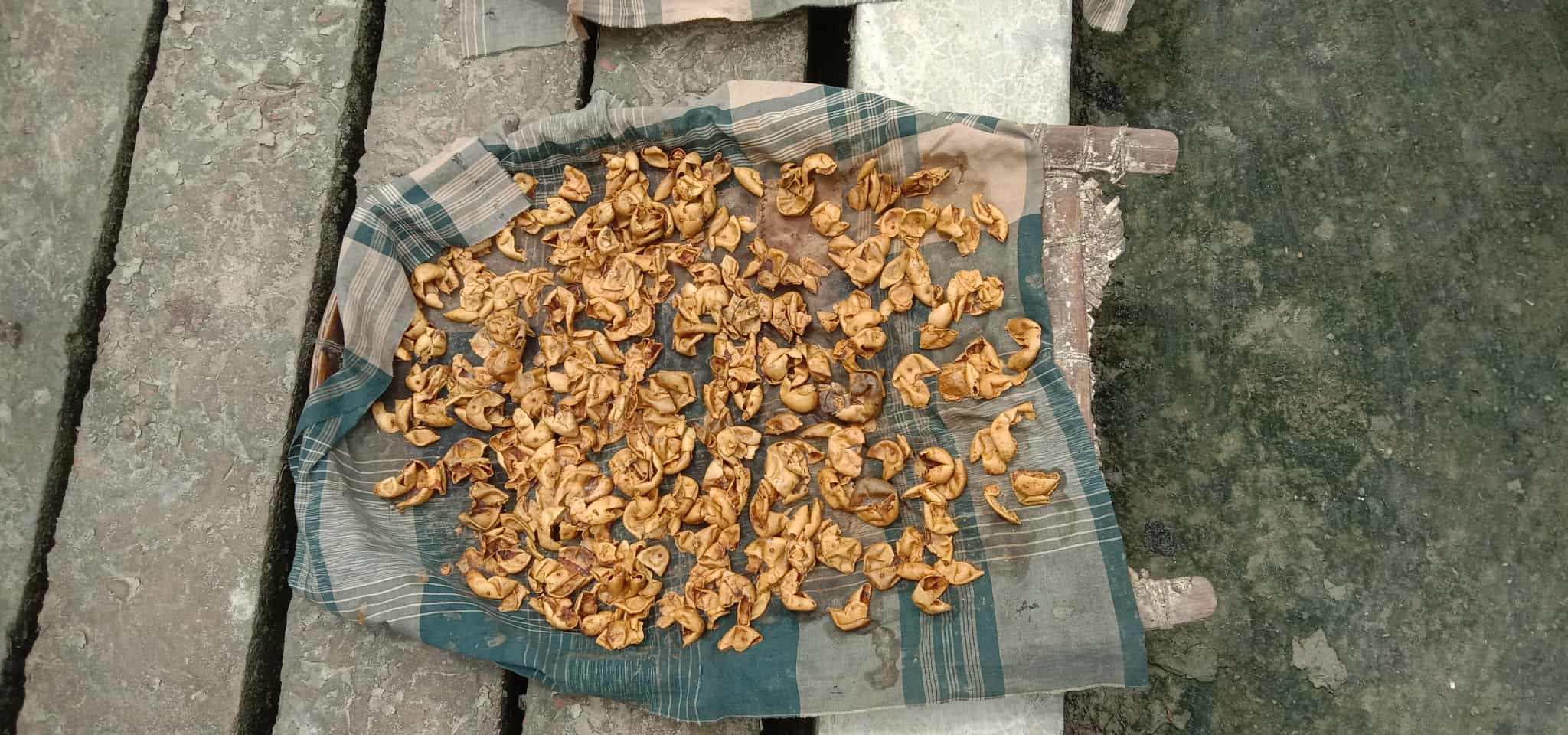
The preservation process involves collecting semi-ripe fruits, washing, peeling, slicing, and sun-drying them for three to five days before storing them in airtight containers. During the rainy season, when sunlight is limited, women use oven heat or smoke to dry the fruit and regularly inspect stored supplies to prevent spoilage.
According to Kadbanu Bibi, preserving Keora fruit is more than a food preservation technique, it is part of the coastal people’s survival strategy. Women primarily lead the preservation process, while men assist in collecting the fruit.
This indigenous knowledge represents a simple, climate-resilient, and environmentally friendly approach to strengthening food security in disaster-prone coastal areas. Preserving and documenting such traditional practices is essential for passing this valuable heritage on to future generation.