
By Promtima Rani from the coast
The southwestern coastal region of Bangladesh frequently faces natural disasters, causing recurring hardships for local communities. Despite these challenges, many coastal families continue their agricultural practices with determination, holding onto their traditional heritage and culture. One such inspiring agricultural entrepreneur is Ganga Rani Mondal (36), a farmer from Debalaya village in Shyamnagar Union of Shyamnagar Upazila, Satkhira.
Ganga Rani lives with her husband, Sushanta Mondal (40), their two sons, and her in-laws a family of six. She owns one bigha of homestead land and cultivates another bigha of leased agricultural land. Her homestead has been transformed into an integrated farming.
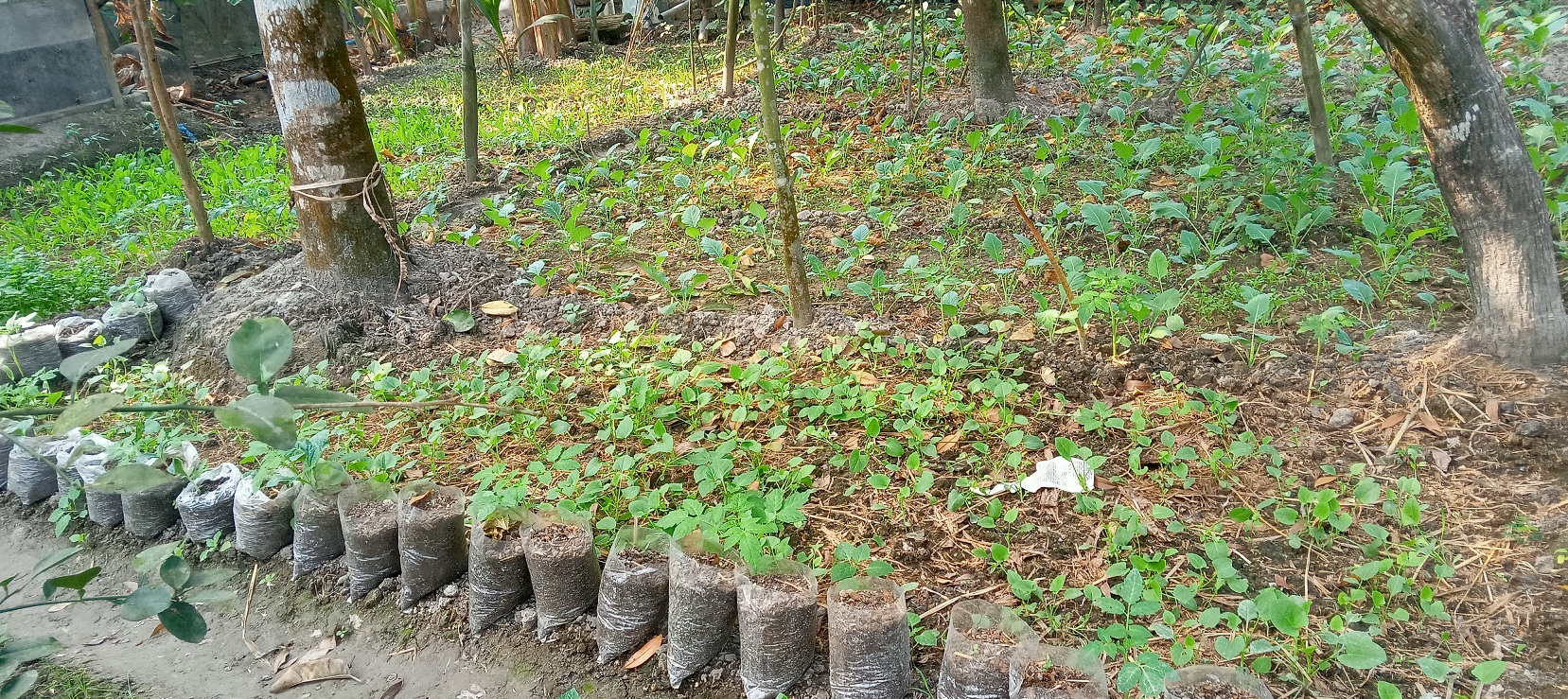
Throughout the year, she grows a wide variety of seasonal crops on her homestead land, including ridge gourd, sponge gourd, beans, pumpkin, yard-long beans, okra, eggplant, chili, Malabar spinach, amaranth, tomato, spinach, taro, bitter gourd, bottle gourd, water spinach, radish, cabbage, beetroot, potato, and papaya. She also plants 100–150 taro roots annually, conserving the seeds carefully in ash-filled pits. In addition, her yard produces many naturally growing leafy vegetables that require no cultivation. These are often collected by villagers for cultural events and nutritional needs, earning her home the reputation of a “vegetable house.”
Ganga Rani follows agroecological practices as much as possible. As a result, her produce is in higher demand in the market due to its better taste and quality. A freshwater pond beside her vegetable garden ensures year-round irrigation. Alongside crop cultivation, she raises livestock: four cows, twelve goats, eight ducks, fifteen indigenous chickens, and five pigeons.
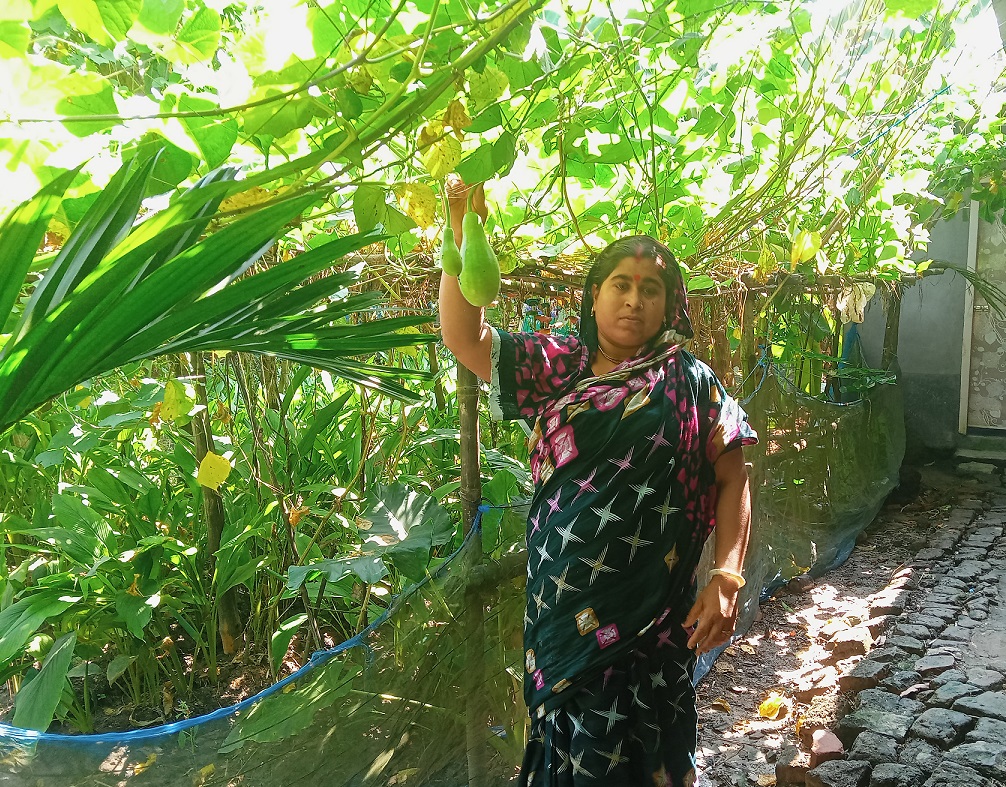
She said, “I don’t leave any part of my homestead unused. I grow vegetables everywhere. This way, I meet my family’s food needs and also earn income by selling surplus produce in the local market. Agriculture is our only source of income, and my husband and I work together. Our production costs are low, and we hardly need to buy vegetables from the market.”
Ganga Rani’s biodiversity-rich farm is a powerful model for sustainable living. It reflects the agricultural heritage, culture, and resilience of coastal Bangladesh. Recognizing and supporting her knowledge and experience through coordinated government and non-government initiatives could play a vital role in ensuring biodiversity conservation and household food security.