
By Parboti Rani Singh from Netrakona
Every element of nature has its own importance. If the Earth is compared to a heart, then seas, rivers, canals, and wetlands function like its arteries and veins. Disrupting these natural elements damages the ecosystem, leading to environmental degradation that ultimately threatens human life as well as countless other living beings. When humans alter nature only for short-term needs, the destruction begins with small organisms and gradually affects the entire ecological system, including human survival.
Atpara Upazila is highly dependent on rivers, canals, wetlands, and haors. People’s livelihoods, occupations, and culture have developed around these natural resources. In Rameshwarpur village of Swaromushia Union, key natural resources include the Saiduli River, Pagla Khali Canal, Koincha Khali Canal, and Dusa Beel. These water bodies shape local life, livelihoods, and traditions.
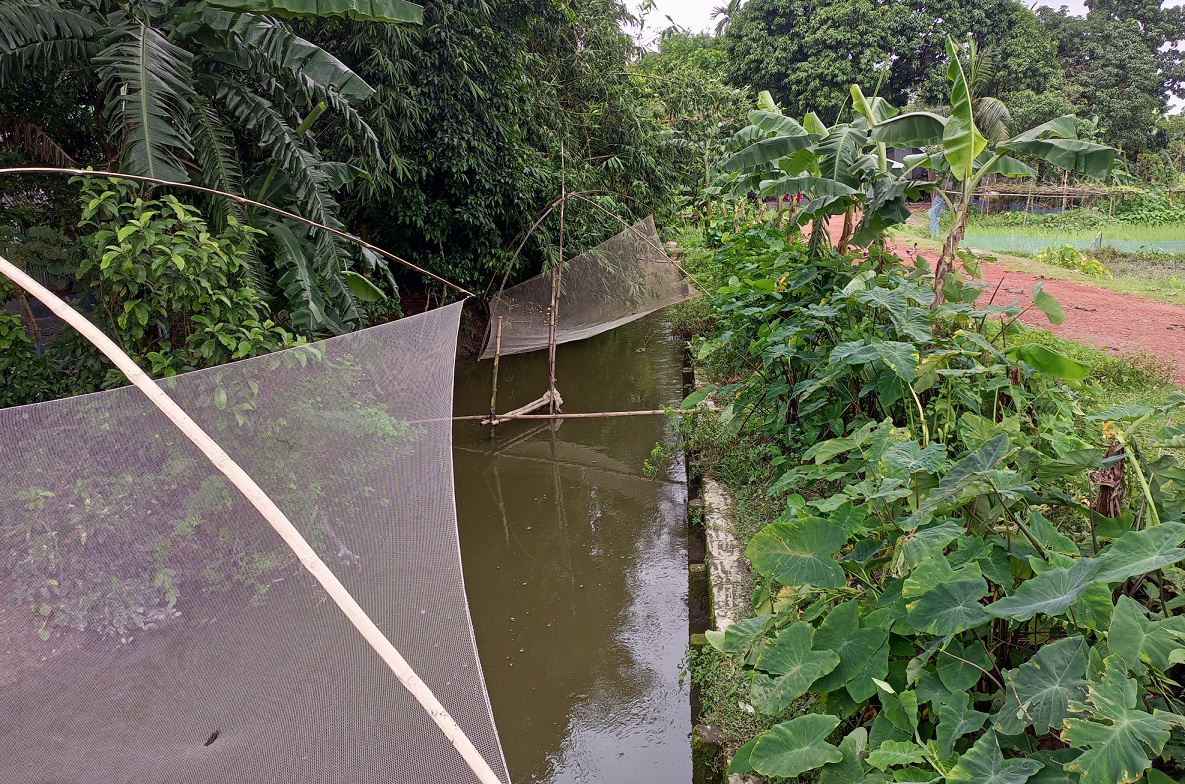
The Koincha Khali Canal flows through Rameshwarpur village via Deshiura and Basati before joining the Saiduli River. It is approximately 4 kilometers long and retains water for about eight months of the year (from Chaitra to Kartik). The canal supports around 20 local fish species, meeting the nutritional needs of people from nearly 10 surrounding villages for much of the year. Various traditional fishing tools and practices such as traps, nets, hooks, and light fishing have evolved around it.
Uncultivated aquatic and riverside plants such as leafy greens, medicinal herbs, bamboo, water spinach, taro, and vines grow naturally along the canal, contributing to local nutrition and livestock feed. The canal ecosystem also supports crabs, snails, eels, snakes, and wildlife such as foxes, civets, monitor lizards, birds, and leeches, making it an important food source for forest animals.
During the dry season, when water levels are low, the canal bed and banks are used for seedbeds, short-duration vegetable cultivation, grazing land, fuel collection, irrigation, household water use, livestock bathing, and soil collection for household purposes.
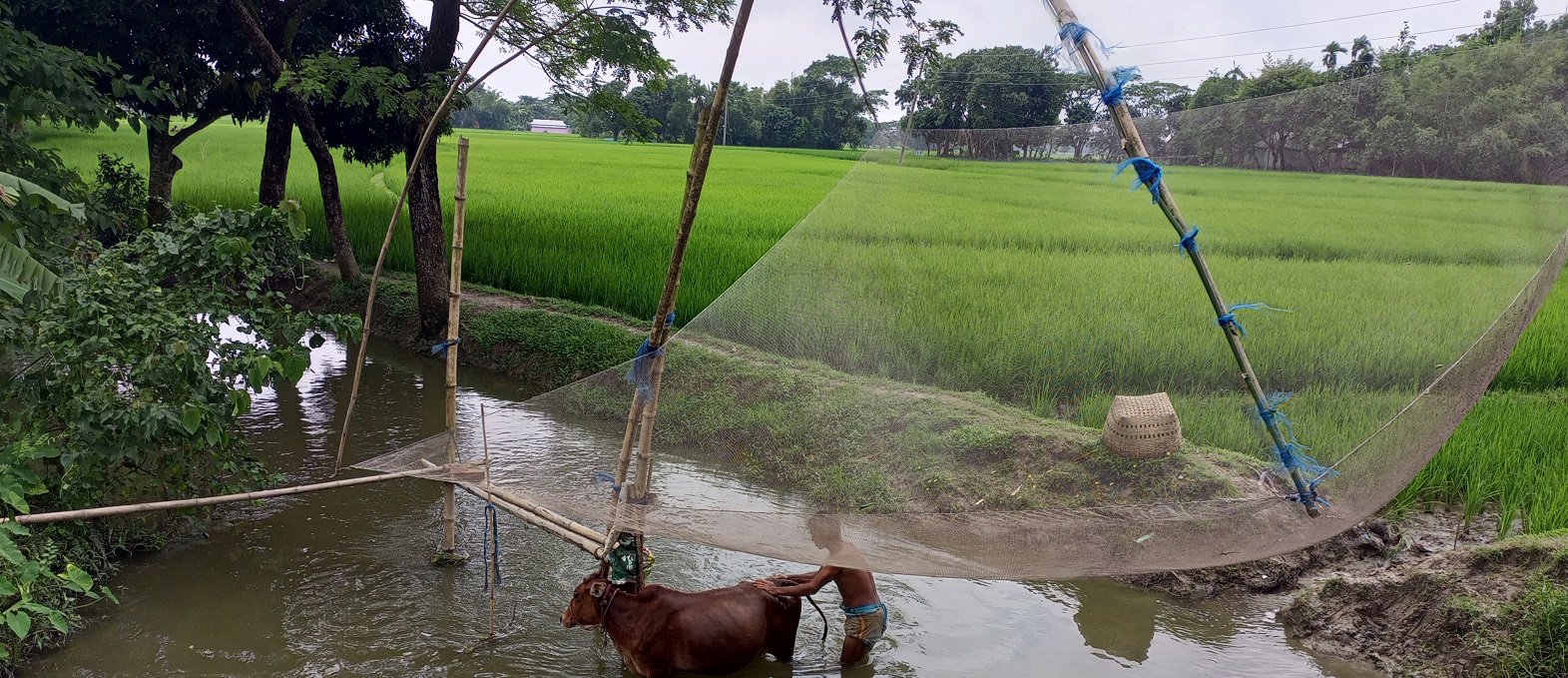
The canal plays a crucial role in draining excess rainwater during the monsoon. However, over the past 15 years, water flow has been obstructed due to narrowing of the canal. As a result, around 55 acres (approximately 1,500 decimals) of land in Rameshwarpur, Deshiura, and Basati villages remain waterlogged from April to November, severely affecting Aman rice and vegetable cultivation. Farmers often have to transplant rice seedlings two to three times, leading to low yields and financial losses. In the dry season, lack of surface water forces farmers to extract groundwater for irrigation, increasing costs and environmental pressure.
Aquatic species such as crabs, snails, eels, and snakes have become increasingly rare, and wildlife populations have declined due to ecosystem degradation.
If just 2 kilometers of the canal are re-excavated, approximately 1,700 decimals (about 2 acres) of land could be brought back under cultivation. This would enable three cropping seasons, increase vegetable and fish production, improve irrigation access, reduce groundwater extraction, enhance farmers’ incomes, and play a vital role in conserving biodiversity.