
By Happy Roy from Netrakona
People work tirelessly to sustain their lives, but the value of that labor truly emerges when it brings security to the family. Salaried employees or businesspeople often earn a fixed monthly income, yet farmers survive through daily, backbreaking work through growing crops to meet both family needs and household expenses.
Zahura Akter is a farmer from Atkapara village of Laxmiganj Union. Together with her husband, Md. Jamal Mia, she sustains her family through year-round farming by using their homestead yard, cultivating crops on river char land, and leasing others’ land. They do not own any agricultural land of their own, making their homestead their most dependable resource for vegetable cultivation.
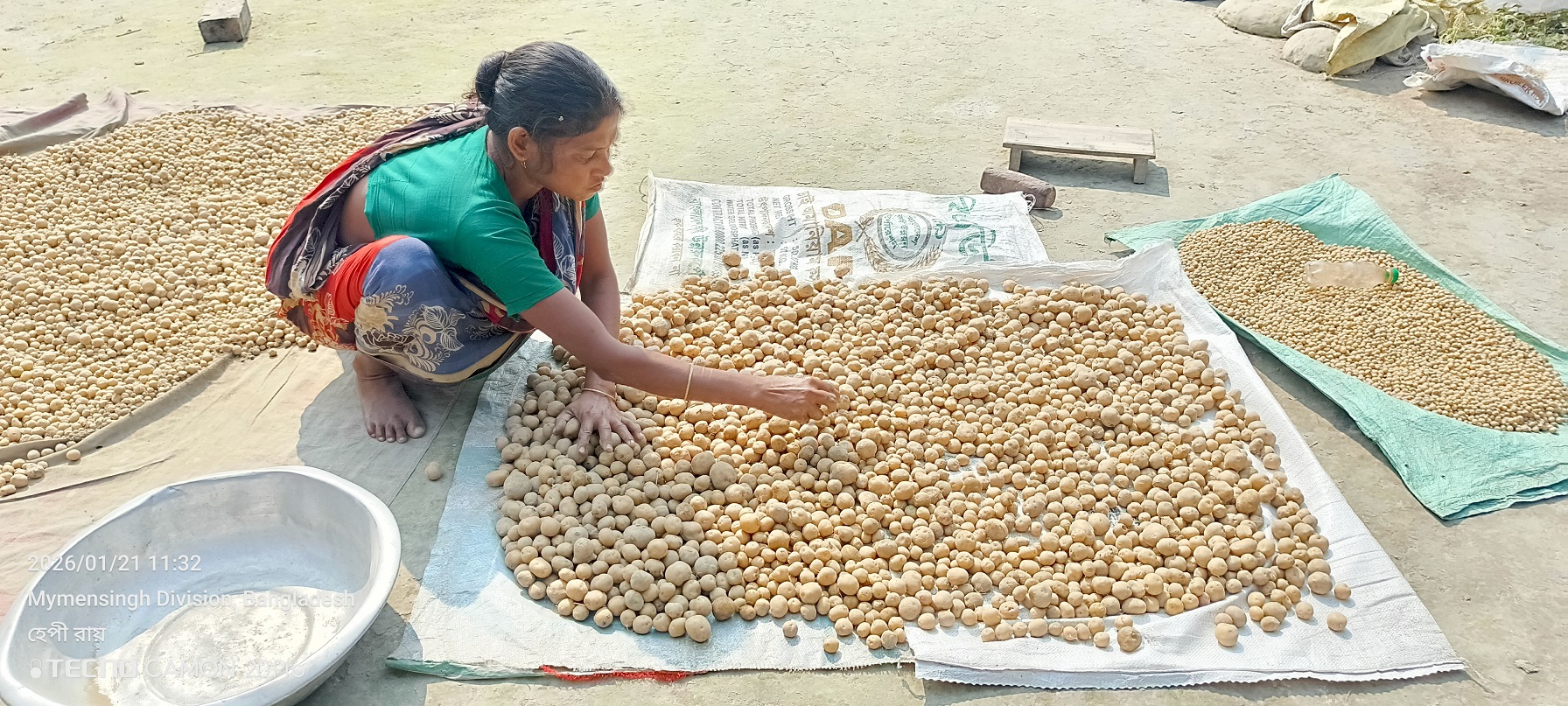
In early 2020, Jamal Mia began farming in their home yard using seeds of Malabar spinach, sweet gourd, and bottle gourd, preparing the soil with cow dung. That modest beginning soon transformed into a flourishing garden.
Today, Zahura’s homestead is rich with diversity with three varieties of beans, bottle gourd, long beans, sweet potato, Malabar spinach, turmeric, sugarcane, pumpkin, papaya, cucumber, leafy greens, lemon, bitter gourd, ginger, eggplant, and year-round chili. Around the pond she grows jute spinach, while black gram lines the roadside. Since 2021, she has also cultivated mustard on nearby river char land, along with coriander, groundnut, ridge gourd, potatoes, garlic, onion, and sweet potato.
Zahura actively rears livestock using income from vegetable sales. She owns six cows, sixteen ducks, and twenty-six chickens. Milk and eggs are consumed by the family, ensuring year-round nutrition. She relies entirely on organic inputs such as cow dung, poultry waste, kitchen ash, and natural pest-control methods learned through BARCIK-supported training.
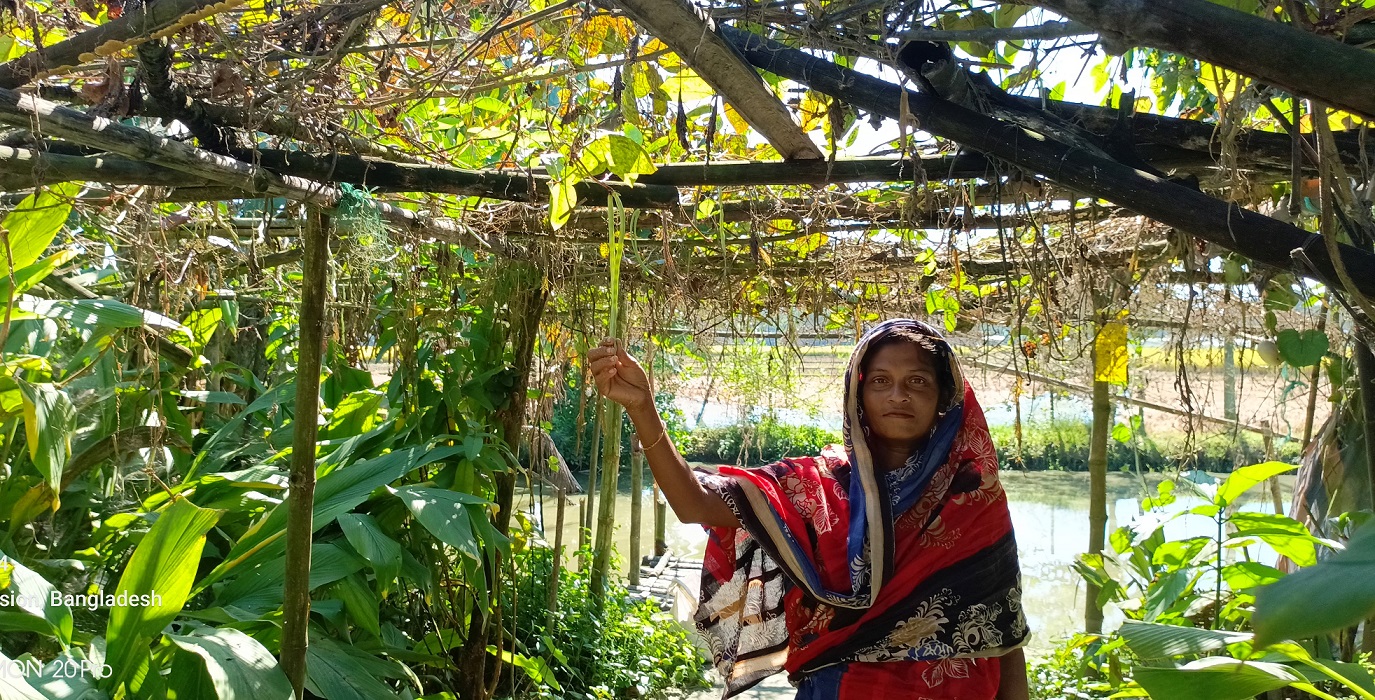
Every inch of space is thoughtfully used. Trellises surround the pond, shade-tolerant crops grow beneath them, and turmeric, ginger, papaya, and chili fill the yard’s edges. This integrated system has significantly reduced market dependence. The family rarely needs to buy vegetables, fish, or meat, selling only the surplus.
Zahura also saves diligently. From vegetable earnings, she deposits small amounts into a clay bank, later using the savings for major family expenses such as weddings or education.
Through dedication, indigenous knowledge, and efficient use of space, Zahura Akter demonstrates how small-scale, diversified farming can ensure food security, resilience, and dignity for farming families.