
By Atikur Rahman Atik from Rajshahi
A regional dialogue titled “Climate-Resilient Food Systems in Bangladesh: Agroecology leads the way” was held recently. The event was organized by BARCIK with support from Rosa Luxemburg Stiftung South Asia.
Farmers, researchers, development workers, civil society representatives, and professionals joined the discussion on climate-resilient and equitable food systems in Bangladesh. Key issues included water scarcity in the Barind region, climate change impacts, chemical dependency in agriculture, and conservation of indigenous seeds, women farmers’ rights, and the importance of agroecology-based farming.
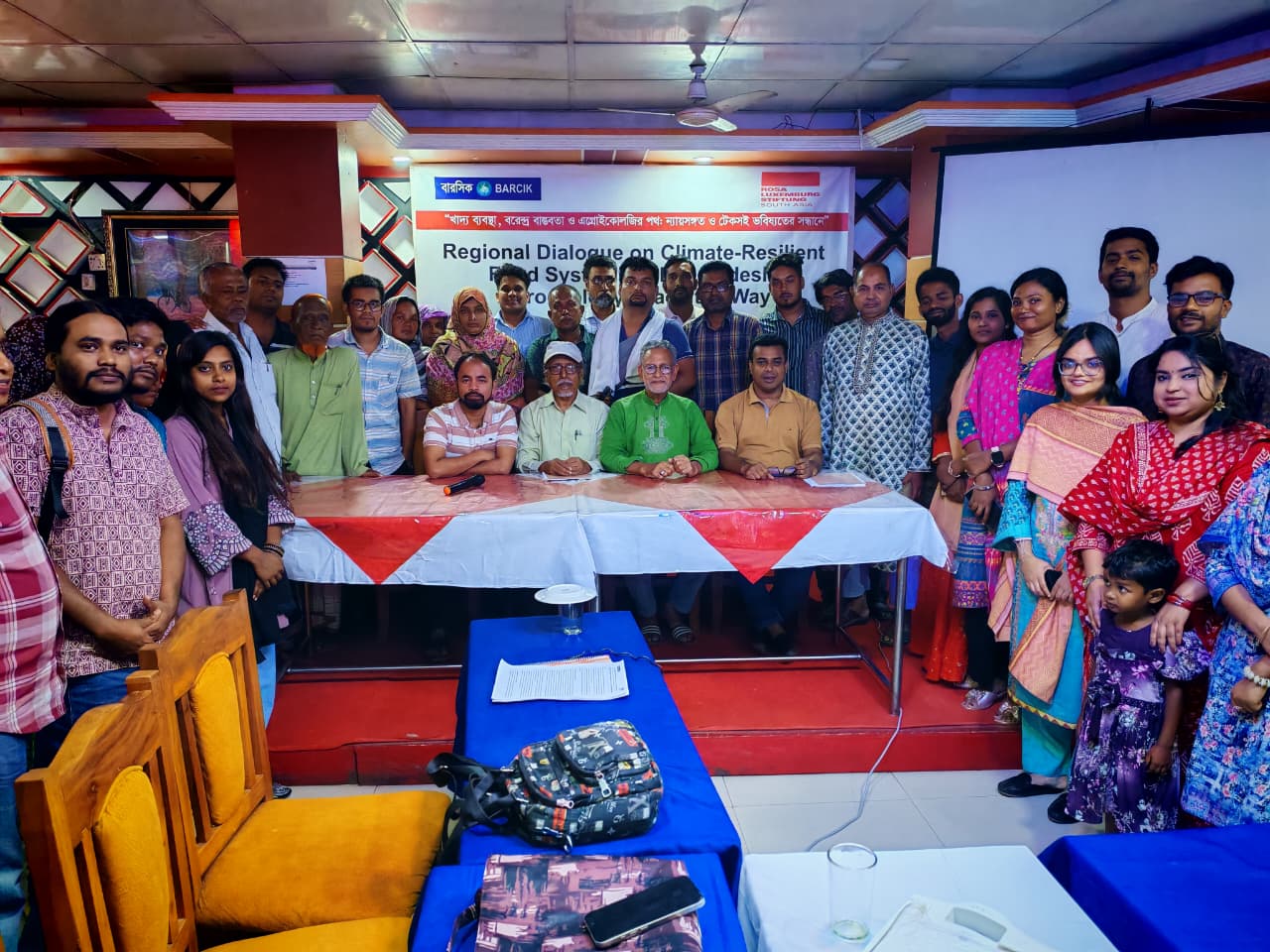
Speakers emphasized that there is no alternative to national policies promoting agroecology to protect life, livelihoods, and the environment. They highlighted the need for local knowledge, biodiversity conservation, low-cost farming, and farmer-led food systems to address climate challenges. According to the speakers, agroecology is not only a farming method but also a pathway to environmental and social justice.
The program began with a welcome speech by BARCIK Director Silvanus Lamin and was moderated by Shaheda Purna. BARCIK Policy and Research Officer Amreen Binte Azad presented field experiences on agroecological challenges and opportunities in the Barind region.
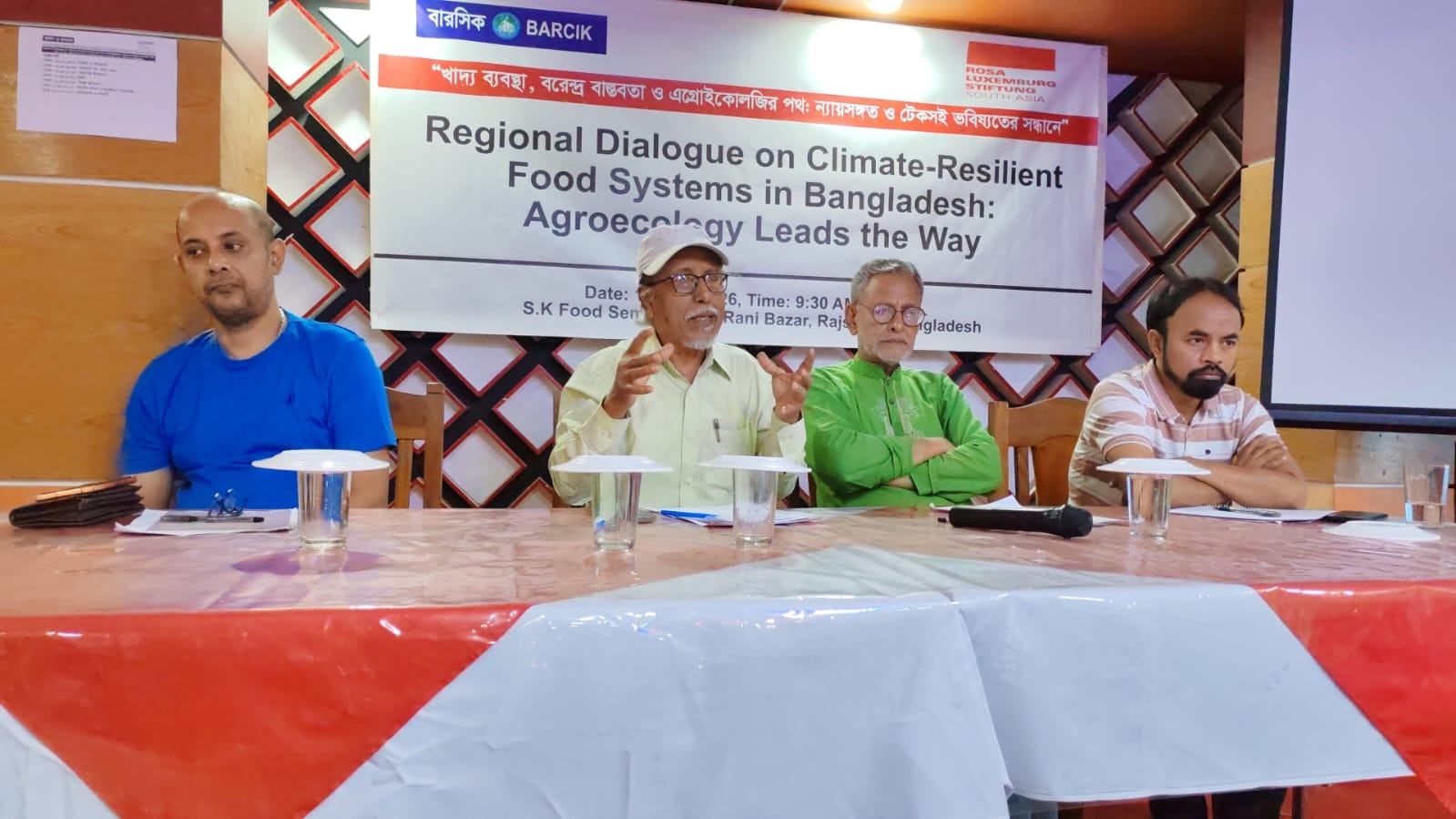
Environmental researcher Mahbub Siddiqui stressed the importance of expanding dry-season crop cultivation instead of water-intensive rice farming in Barind. Farmer Renuka Begum called for greater recognition and policy support for women in agriculture. Varendra Youth Forum President Atikur Rahman Atik emphasized including agroecology education in school curricula to promote safe food and environmental protection.
The dialogue concluded with a call for coordinated efforts to build a sustainable, climate-resilient, and farmer-friendly food system in Bangladesh.