
By Biswajit Mondal, from Shyamnagar, Satkhira
In the village of Mathurapur under Munshiganj Union of Shyamnagar, Satkhira, 46-year-old farmer Shorma Rani has transformed challenges into opportunities through innovative farming practices. Living with her husband, Bimal Mondal, and their son, she relies primarily on agriculture for her family’s livelihood. Together, they cultivate a wide range of crops throughout the year in their homestead and continuously experiment with climate-resilient farming techniques.
The southwestern coastal region of Bangladesh is highly vulnerable to natural disasters and salinity intrusion. Cyclones, tidal surges, waterlogging, and increasing soil salinity regularly disrupt agricultural production, making year-round crop cultivation difficult. To adapt to these challenges, Shorma Rani has adopted various innovative methods, including raised beds, sack gardening, crate cultivation, container farming, saline-resistant cultivation techniques, and the reuse of household materials. Among these, the Tower Gardening Method has proven particularly effective.
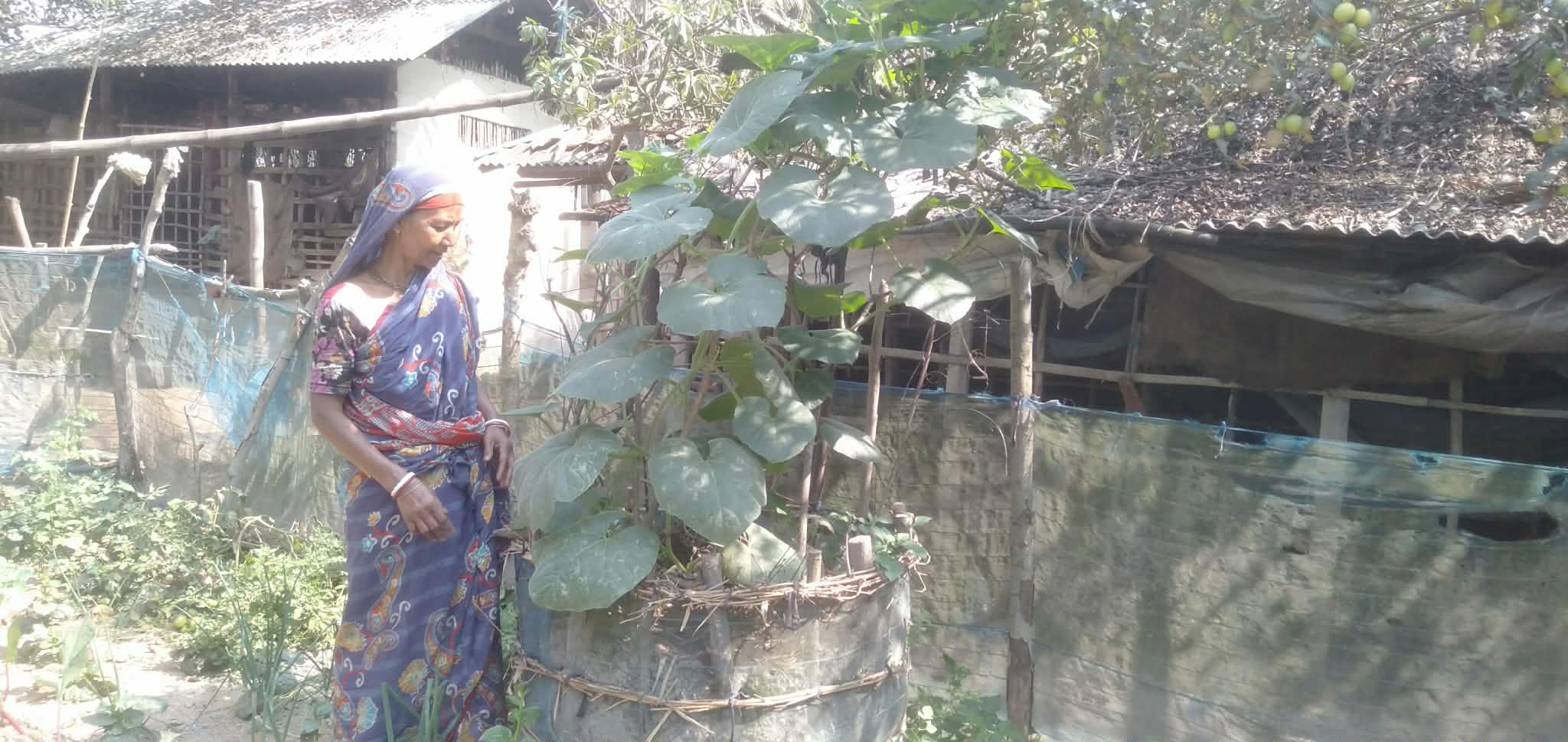
She has been practicing tower gardening since 2014. Inspired by her success and guided by her experience, around 25 farmers in her locality have also adopted the technique.
According to Shorma Rani, a tower garden is a raised cultivation structure designed to maximize vegetable production in limited spaces or waterlogged areas. The method helps to reduce the impact of flooding and soil salinity while requiring relatively little water.
Constructing a tower garden requires materials that are commonly available in rural households, such as bamboo poles, bamboo strips, ropes, nets, brick chips, soil, cow dung, compost, and small amounts of chemical fertilizers. The structure is created by marking a circular or square area, erecting bamboo supports around it, and securing them with netting. The base is filled with a mixture of soil and organic manure. A temporary banana stem is placed in the center and surrounded by brick chips to create a vertical drainage channel. Once the tower is filled, the banana stem is removed, leaving a hollow core that allows water to flow evenly throughout the structure.
Site selection is critical for successful tower gardening. It is particularly suitable for waterlogged, low-lying, or highly saline areas. Adequate sunlight is also essential for optimal vegetable growth.
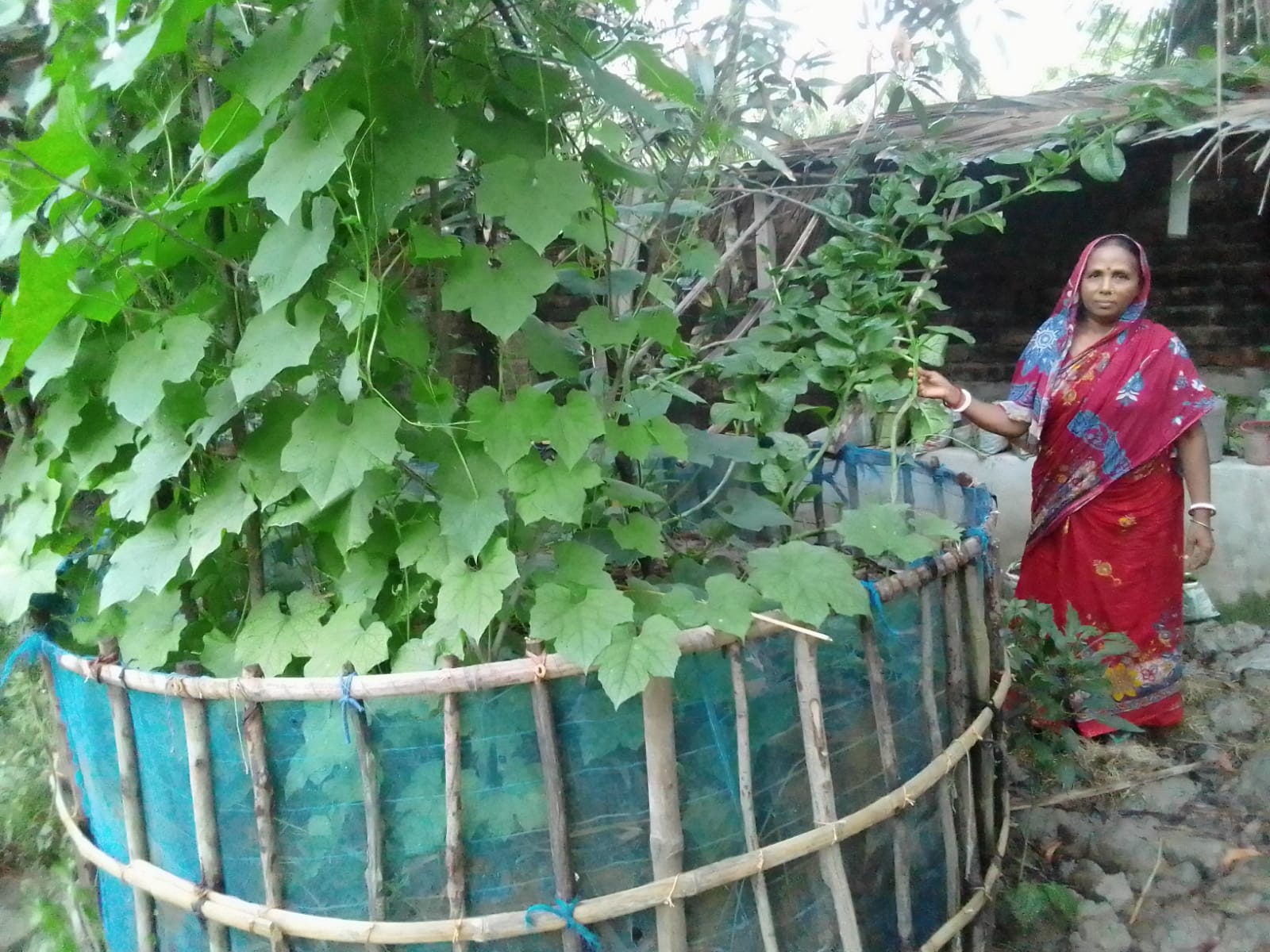
The benefits of tower gardening are numerous. It requires less fertilizer, makes weed control easier, reduces soil-borne diseases, and allows vegetables to be planted on the sides of the structure through small openings. Multiple vegetable species can be grown simultaneously, ensuring year-round production. The system improves water efficiency, maintains soil moisture, and minimizes the upward movement of salinity from deeper soil layers.
As coastal communities continue to face the challenges of climate change, salinity, waterlogging, and shrinking cultivable land, innovative practices like tower gardening are playing an increasingly important role in strengthening food security and enhancing resilience. For many farmers in Bangladesh’s coastal regions, tower gardening is emerging as a practical, sustainable, and climate-smart solution for vegetable production under adverse conditions.