
By Munna Rongdi from Kalmakanda Netrakona
Flowing through the heart of Lengura Union in Kolmakanda Upazila along the northern border of Netrokona district, the Ganeshwari River is far more than a geographical feature. Originating in the hills of Meghalaya, India, the river enters Bangladesh carrying not only water, but also stories of life, struggle, and survival. The roaring currents of the monsoon, the dry sandy riverbeds of winter, and the generations of joy and hardship along its banks together define the Ganeshwari as the lifeblood of border communities.
Origin and Course of the River
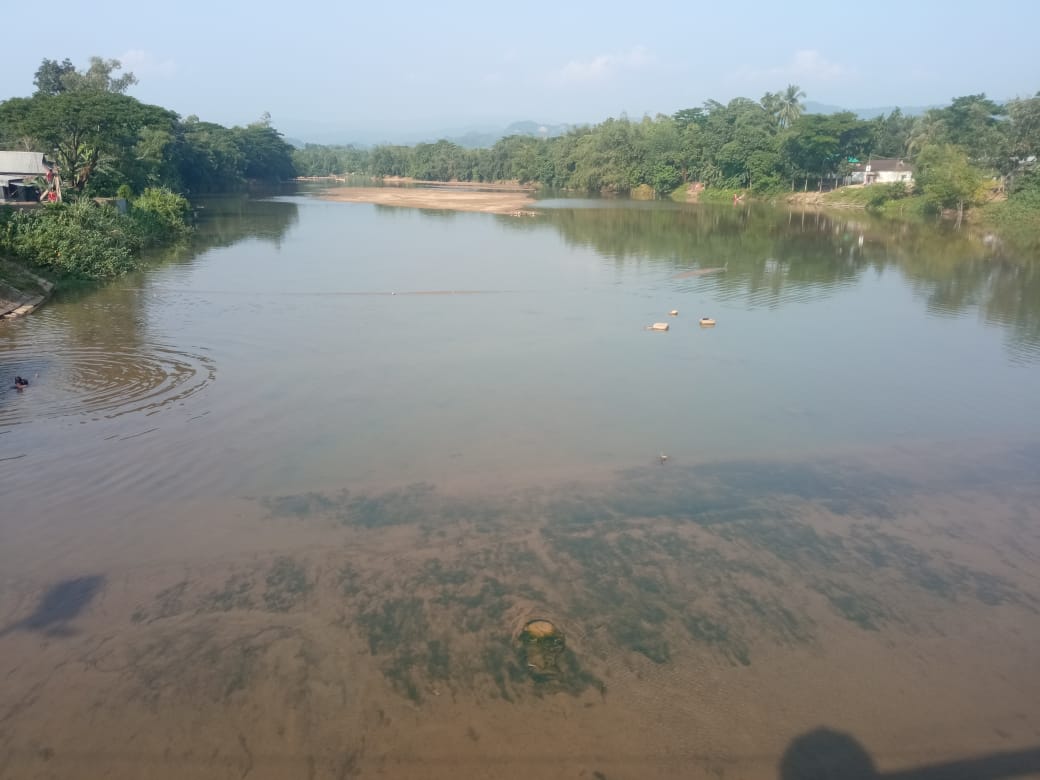
The Ganeshwari River originates in the Garo Hills of India’s Meghalaya state, formed by hill streams and monsoon rainfall. After crossing the international border, it flows through Lengura Union of Netrokona district, passes Kolmakanda Upazila, and eventually merges with the Someshwari River. During the monsoon, the river becomes turbulent, its strong currents filling the surroundings with sound and movement. In the dry season, much of the riverbed dries up, exposing vast sandy char lands.
The River-People Relationship
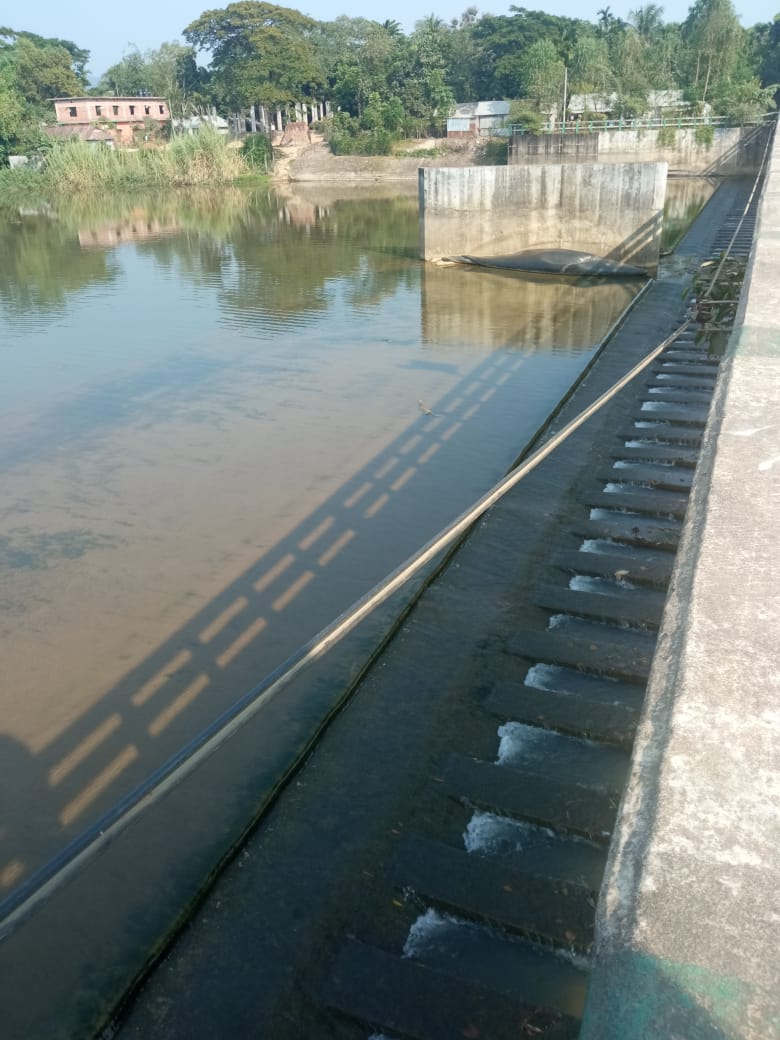
The Ganeshwari River is inseparable from the lives of local people. Its water irrigates rice fields, its fish provide daily food, and its banks offer sand that supports many households. A rubber dam has been constructed on the river to facilitate irrigation, enabling nearly 2,000 farmers to cultivate around 800 hectares of land during the Boro season. Thanks to irrigation from the dam, production costs have decreased significantly, allowing farmers to achieve better returns. As one farmer explained, “Earlier, when the river dried up, the land cracked and cultivation stopped. Now, with dam water, farming continues.”
Agriculture and Livelihoods
Villages along the river such as Lengura, Koilatok, Nayapara, Dingapara, areas adjacent to Kolmakanda Sadar, and nearby settlements depend heavily on the Ganeshwari for agriculture. Using river water, farmers cultivate rice, jute, potatoes, maize, vegetables, and other crops. Previously, lack of water in the dry season left fields fallow, but the rubber dam now allows two to three cropping cycles a year. Many farmers who once grew only Aman rice now cultivate Boro rice and vegetables, significantly improving household food security and income. Fishing is another crucial livelihood tied to the river. Many families in Lengura Union still depend on fishing in the Ganeshwari. During the monsoon, fishermen take to the river with nets, hooks, traps, and lines. In the past, the river was rich in indigenous fish species such as shing, magur, koi, taki, rohu, boal, chital, and ghariyal. These fish supported both household nutrition and the local market economy. Although fishing remains an important income source, declining navigability and reduced water flow have led to a noticeable decrease in fish populations, according to local fishermen.
Women and Everyday Life
The Ganeshwari River plays a vital role in the daily lives of women. Women use river water for household chores such as cooking, washing, bathing, and sometimes even drinking. During summer, when tube wells often dry up, the river becomes the only reliable water source. Women living along the riverbanks note that without the river, many aspects of daily life would come to a standstill. As they say, “We cannot live a single day without the river’s water.” Beyond domestic work, women contribute to river-based livelihoods by cultivating vegetables on riverbanks, raising poultry and ducks, assisting in agriculture, and occasionally engaging in fishing-related activities. Thus, the Ganeshwari is not only a source of livelihood but also a natural resource deeply intertwined with women’s lives and economic participation.
Biodiversity and the Natural Environment
The river once supported rich biodiversity. Its waters teemed with native fish, while the sandy banks were lined with kans grass, providing nesting grounds for numerous birds. In winter, migratory birds such as herons, cormorants, wagtails, and lapwings arrived from distant regions. Over time, however, this biodiversity has declined. Reduced water flow, siltation, barriers to natural currents, cross-border sand and stone extraction, and weak river management have all contributed to ecological degradation. Still, the Ganeshwari River plays a crucial ecological role. During the monsoon, it retains excess water and helps mitigate flooding. It also maintains soil moisture for surrounding farmlands and sustains vegetation, birds, amphibians, and aquatic organisms along its banks.
Culture, Economy, and Collective Life
The river is not only an economic resource but also a cultural and social hub. Religious rituals, festivals, and community gatherings often take place at river ghats during the monsoon. Around the Ganeshwari has grown a vibrant micro-economy sand and stone extraction, boat services, net making, seasonal vegetable farming on char lands, and small riverside markets all contribute to local livelihoods.
Conclusion
Despite mounting challenges, the Ganeshwari River remains the heart of life for border communities. It is not merely a river, but a way of life, a culture, and a symbol of the local economy. Protecting the Ganeshwari means protecting the people, agriculture, environment, and cultural heritage of this region. As local residents express it simply and powerfully: “If the Ganeshwari River survives, we survive.”