
By Mofijur Rahman, from Shyamnagar, Satkhira
Mohammad Sobed Ali Gazi (57), a resident of Dantinakhali village in Burigoalini Union of Shyamnagar upazila in Satkhira district, has spent most of his life depending on the Sundarbans for survival. Since childhood, he collected honey, fish, crabs, and golpata (nipa palm leaves) from the forest to support his family. For nearly five decades, the Sundarbans remained his only source of income and an inseparable part of his life.
However, in recent years the lives of forest-dependent people have become increasingly uncertain and risky. The growing activities of forest pirates have created serious financial and security challenges for those who rely on the forest for their livelihood.
According to Sobed Ali, forest dependent communities are now forced to pay large sums of money as “tokens” to pirates before entering the Sundarbans. A group of five teams usually has to pay about 100,000 taka for four months of access, meaning each team must contribute around 20,000 taka. Most forest workers have to take loans to arrange this money.
Despite these costs, forest resources dependent (bonijibi) people often fail to collect sufficient fish, crabs, or other resources from the forest. As a result, their income remains uncertain while their debt burden continues to grow. Many of them including Sobed Ali, have become trapped in a cycle of debt.
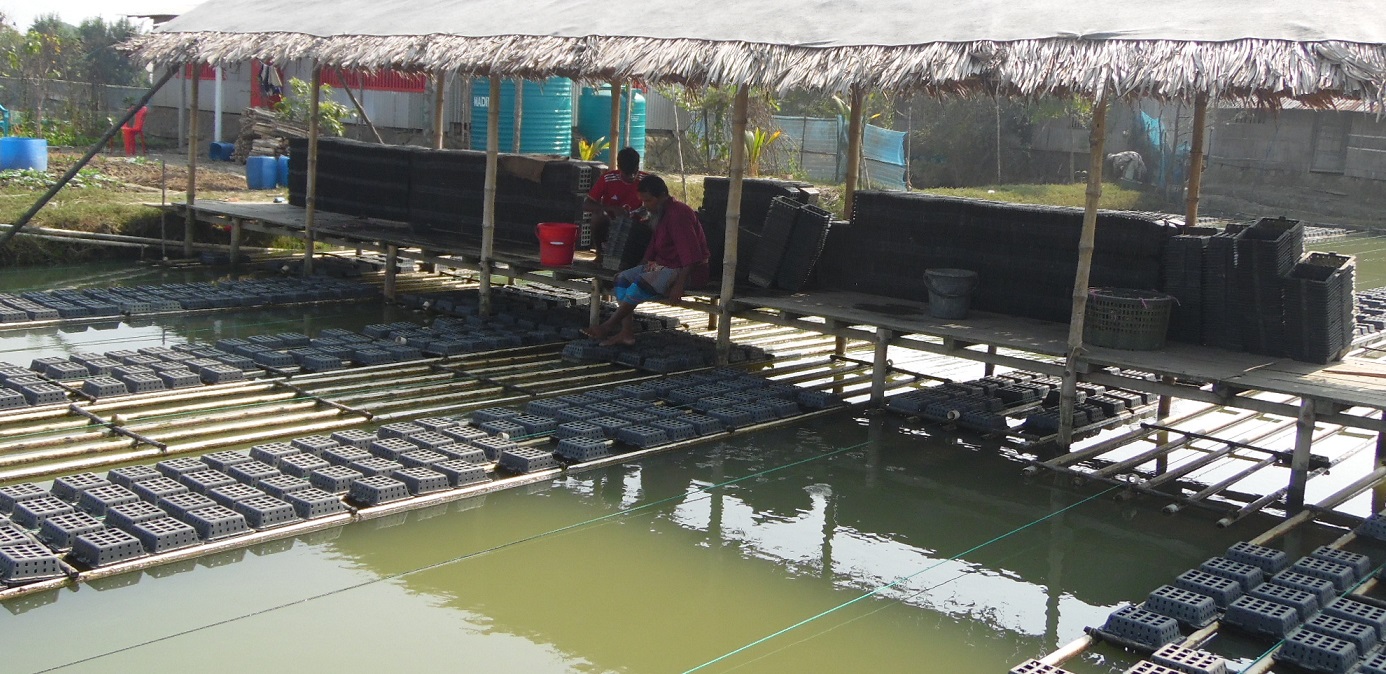
Realizing the risks and uncertainty of forest-based livelihoods, Sobed Ali began looking for alternative income opportunities. In 2017, he decided to start a soft-shell crab farming business, which marked a turning point in his life. Starting the business required initial investment for pipes, boxes, bamboo structures, ropes, and other materials. Lacking sufficient capital, Sobed Ali approached BARCIK and shared his plan.
Recognizing his commitment and initiative, BARCIK provided him with financial support of 20,000 taka. With this assistance and some of his own savings, he purchased around 4,000 crab boxes and launched his soft-shell crab farming enterprise. Currently, Sobed Ali operates about 4,000 crab boxes and supplies soft-shell crabs regularly to a designated company. The company collects the crabs daily and pays him weekly.
According to Sobed Ali, he now earns between 60,000 and 70,000 taka per week. This stable income has significantly improved his family’s financial condition and allows him to earn throughout the year something that was nearly impossible when he depended solely on forest resources.
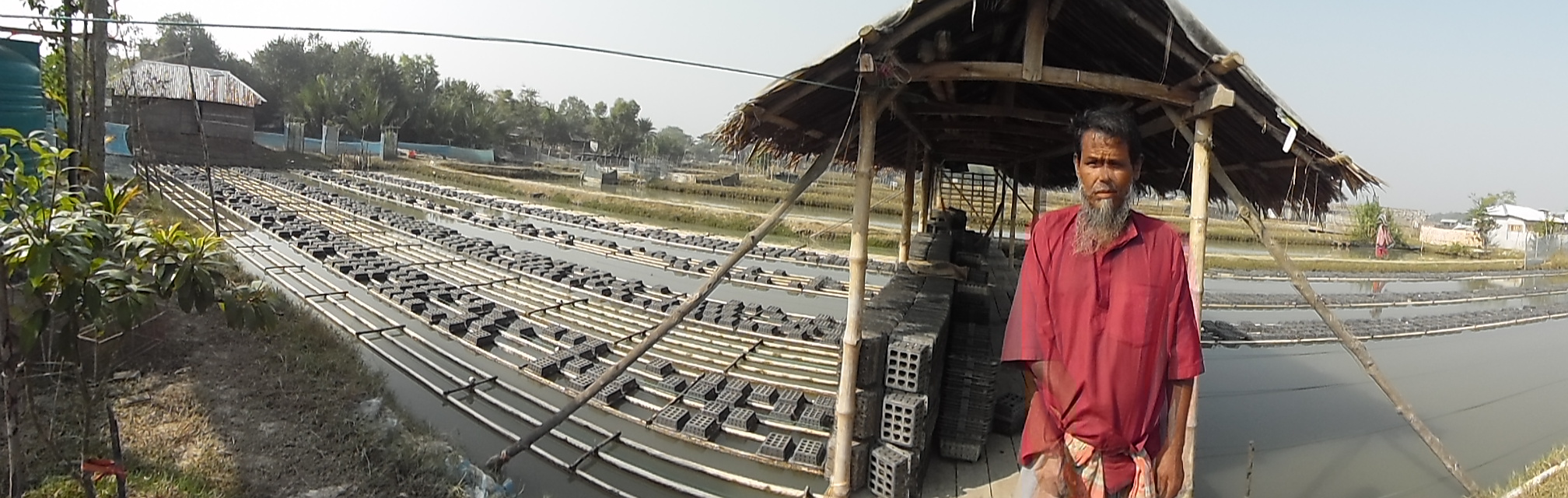
Encouraged by the success of his venture, Sobed Ali is now planning to expand his business by establishing another crab farming point. If successful, he hopes to completely stop entering the Sundarbans and rely fully on this safer and more sustainable livelihood.
His success story has become an inspiration for other forest-dependent people in the area. Sobed Ali’s journey shows that with determination, timely support, and innovative thinking, forest workers can shift from risky livelihoods to safer and more sustainable economic activities.
The initial support of 20,000 taka from BARCIK has now grown into a successful soft-shell crab farming enterprise that not only improves livelihoods but also contributes to reducing pressure on the Sundarbans.