
By Gunjon Rema, from Kalmakanda, Netrokona
An awareness meeting and practical on organic pesticide preparation were held on the occasion of World Pesticide-Free Day in Chandradinga village of Kalmakanda upazila in Netrokona district. The event was jointly organized by BARCIK and the Green Coalition, with the participation of a large number of local farmers and women.
The programme was moderated by Gunjon Rema, Upazila Coordinator of BARCIK. Md. Alamgir, Programme Officer of BARCIK, shared the objectives and significance of the day. He said, ‘Chemical pesticides damage soil and the environment and pose serious health risks to human beings.’ He emphasized that promoting organic farming has become an urgent necessity.
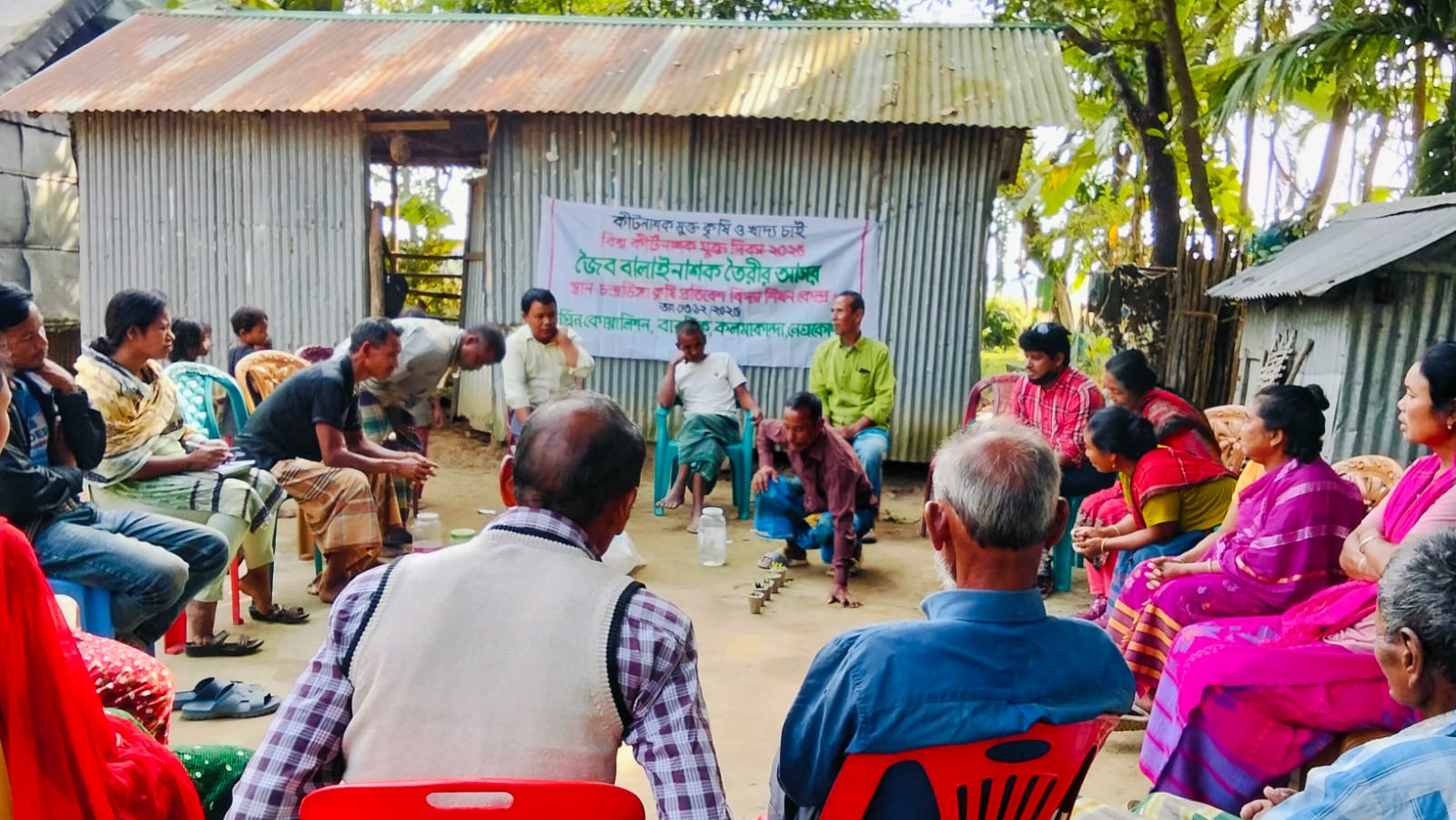
The meeting was presided over by Sunil Mrong, President of the Bandh Rakkha Farmers’ Organization. He stated that farmers in the past used indigenous knowledge for pest control and stressed the need to revive those safe and natural methods in modern agriculture.
Narayan Hajong, Supervisor of the Lengura Agroecology Learning Centre, conducted a practical demonstration on preparing organic pesticides. He explained step by step on how effective biopesticides can be made using neem leaves, chili, garlic, onion skins, tobacco leaves, mahogany seeds, hegra leaves and custard apple leaves.
He also demonstrated the use, installation time and benefits of yellow traps, white traps and sex pheromone traps. Participants observed the process closely and learned through hands-on practice.
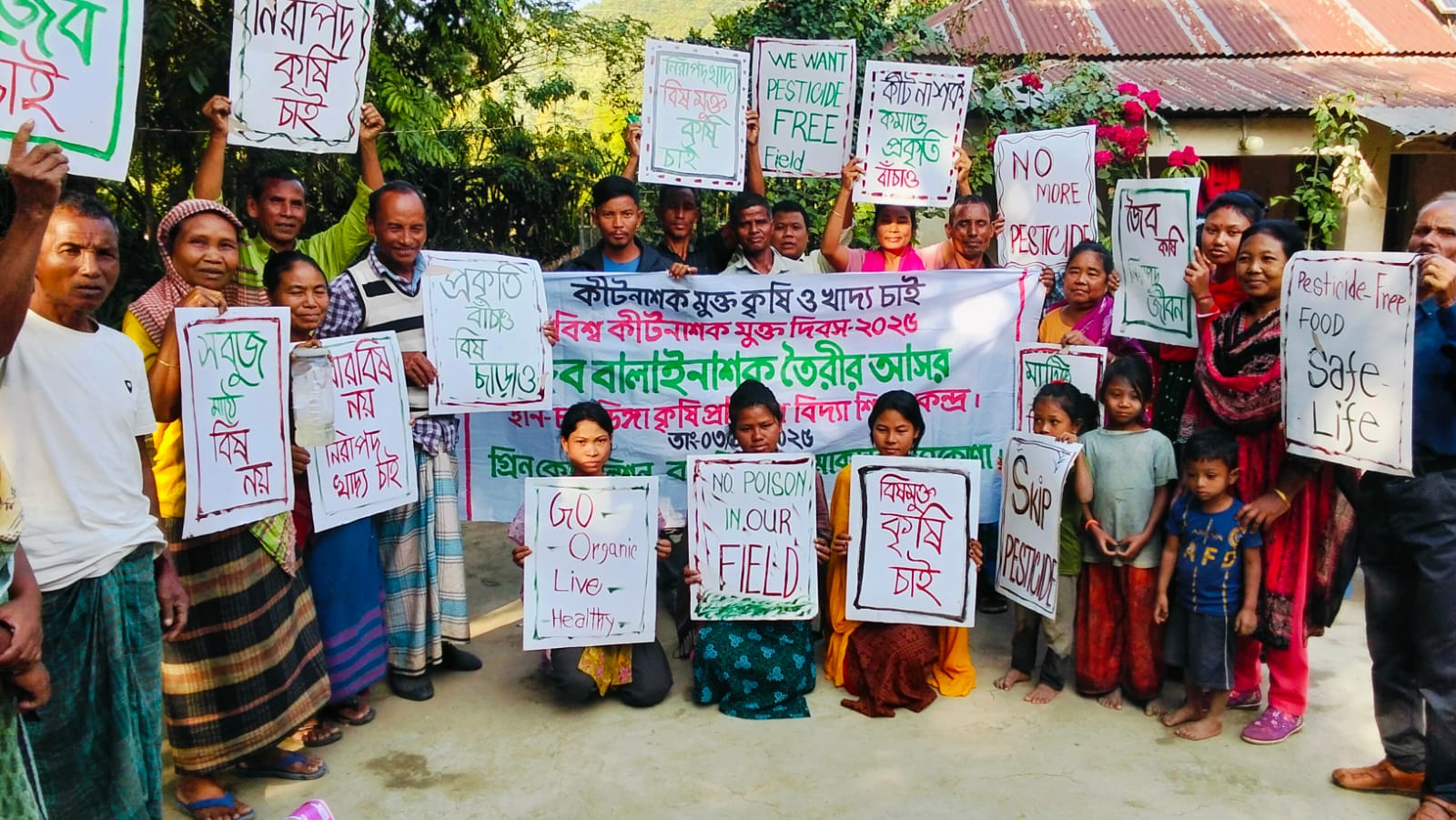
Sharing his real-life experience from chili cultivation research, Narayan Hajong said that various pests including aphids can be successfully controlled through natural methods, ensuring good yields and producing 100 percent pesticide-free chilies. Inspired by his experience, many farmers expressed interest in applying these techniques in their own fields.
At the end of the training session, 10 sex pheromone traps were distributed among interested farmers for use in their fields. Benuka Mrong stated that such training and awareness programmes would continue in the future to promote safe food production, environmental protection and organic farming practices.