
By Barsha Gain and S.M Osman Goni from Shyamnagar,Satkhira
A field-level youth training workshop on youth in agroecology was held at Shrifalkati area of Shyamnagar upazila in Satkhira district, organized by BARCIK recently.
A total of 20 young men and women from different unions of the upazila participated in the day-long workshop. The training focused on eco-friendly farming practices, sustainable crop management, natural soil fertility enhancement, biodiversity conservation, and greening of pond banks and homesteads through practical demonstrations.
The workshop was presided over by Gobinda Mondal, Supervisor of the Shrifalkati Agroecology Learning Centre, while the main training session was conducted by Shonkar Mrong, Associate Regional Coordinator of BARCIK’s Netrokona Resource Centre.
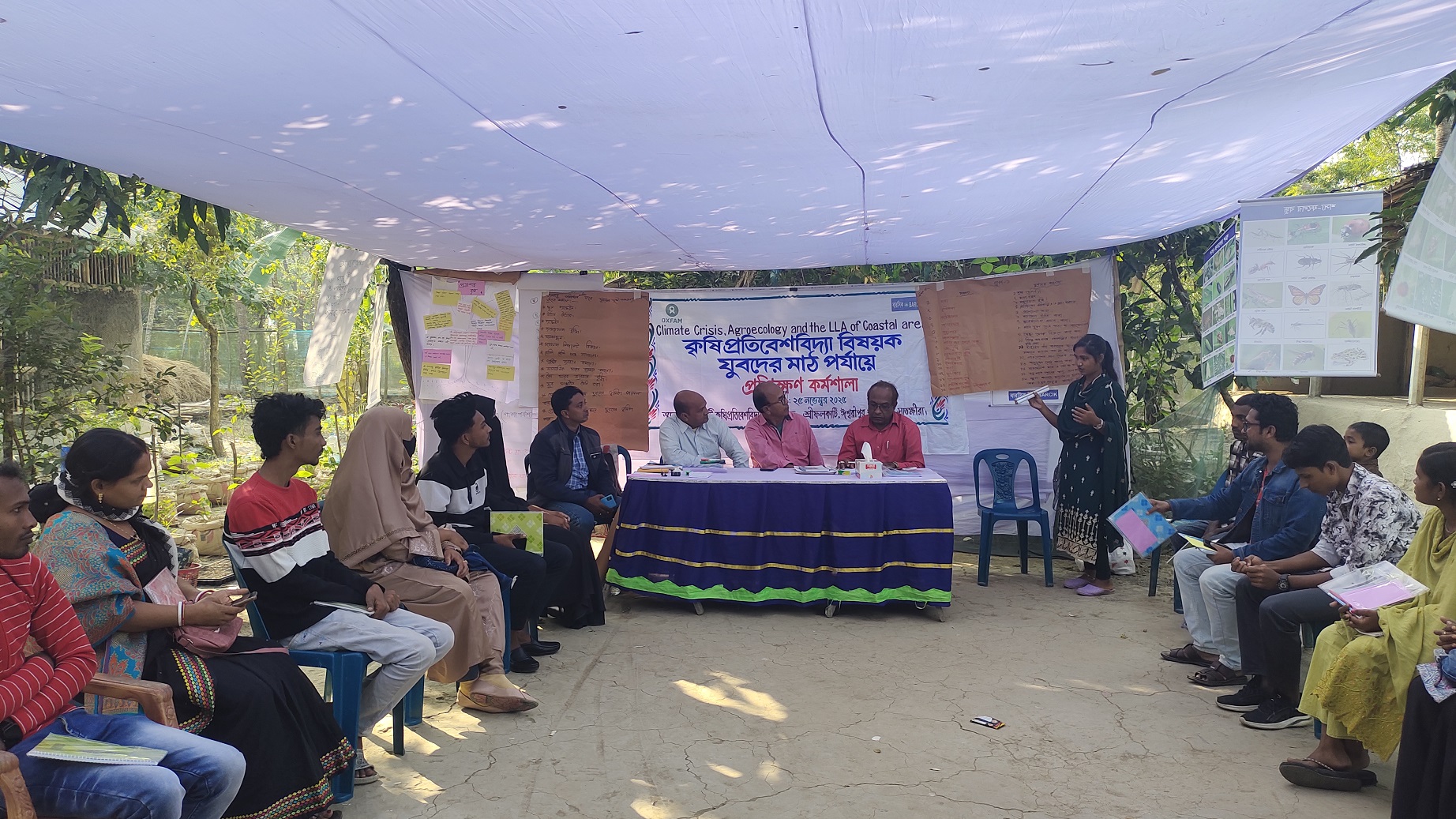
During his presentation, Shonkar Mrong said, ‘Agroecology plays a crucial role in ensuring food security for coastal people who are highly vulnerable to climate change.’ He added that reducing chemical dependency and adopting environmentally friendly agricultural practices can increase production while lowering costs. Participants described the training as timely and practical.
Ranjit Barman mentioned that the future depends on today’s youth, and that environmental protection will only be ensured through their awareness and active engagement. He emphasized that youth entrepreneurship in organic and nature-based farming can reduce unemployment while creating employment opportunities for others, alongside initiatives to conserve biodiversity and protect the Sundarbans.
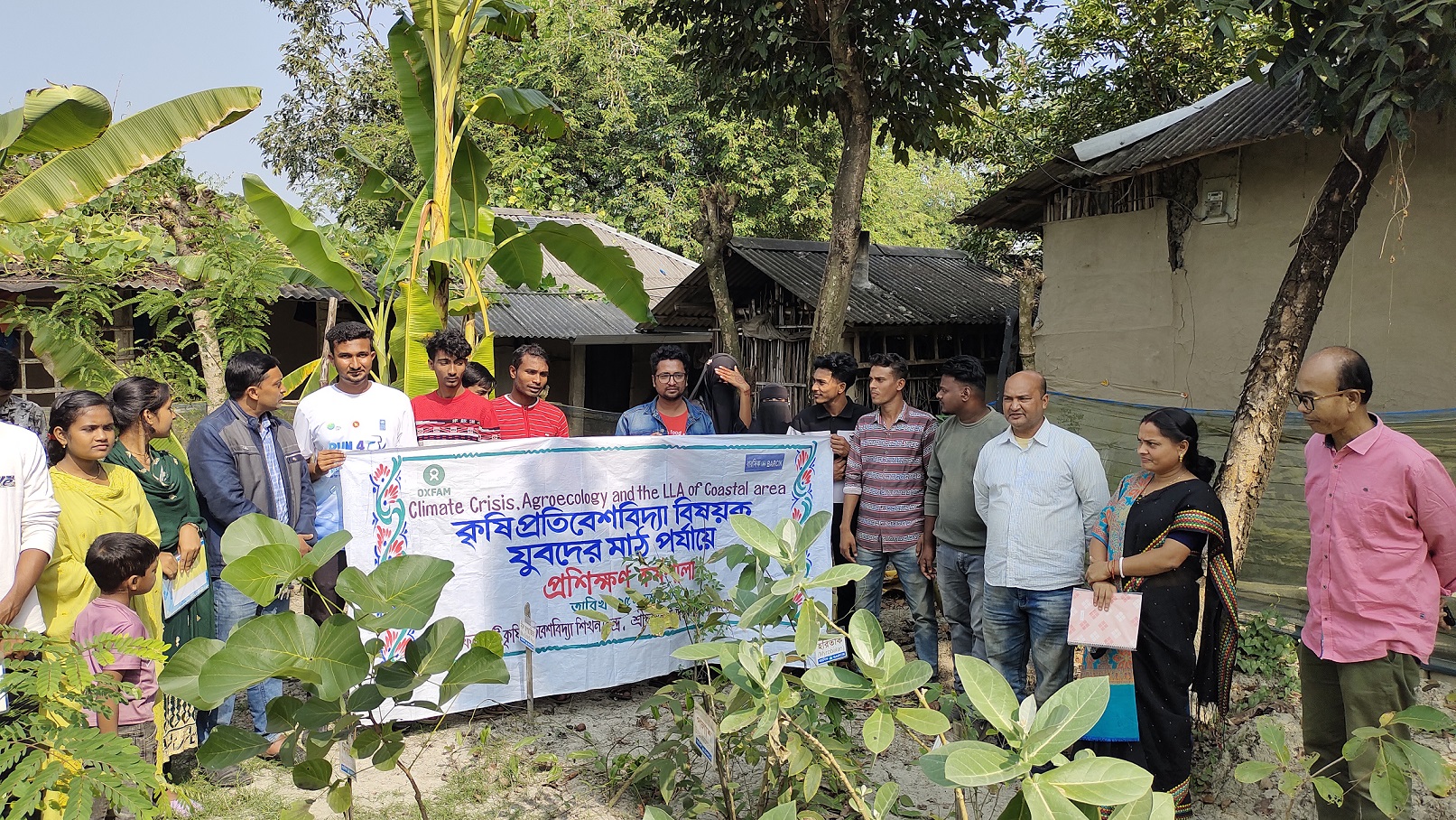
Ramkrishna Jowarder, Associate Regional Coordinator of BARCIK; Maruf Hossain Milon, Programme Officer; Barsha Gain, Field Facilitator; and youth organizer S. M. Osman Goni participated in the training.
Through practical demonstrations at the display plots, participants gained direct field-based learning. Organizers said such training would empower young people with skills for sustainable agriculture and environmental protection, creating positive impacts at the local level and supporting food sovereignty in the future.