
By Rina Tudu from Rajshahi
In Jagadishpur Natun Para, Ward 6 of Mundumala Municipality in Tanore, 26 families of diverse ethnic and religious backgrounds such as Santal, Mahali, Hindu, Muslim, and others live together harmoniously. Among them, Marjina Tudu, a schoolteacher and dedicated farmer, has become an inspiration for many women.
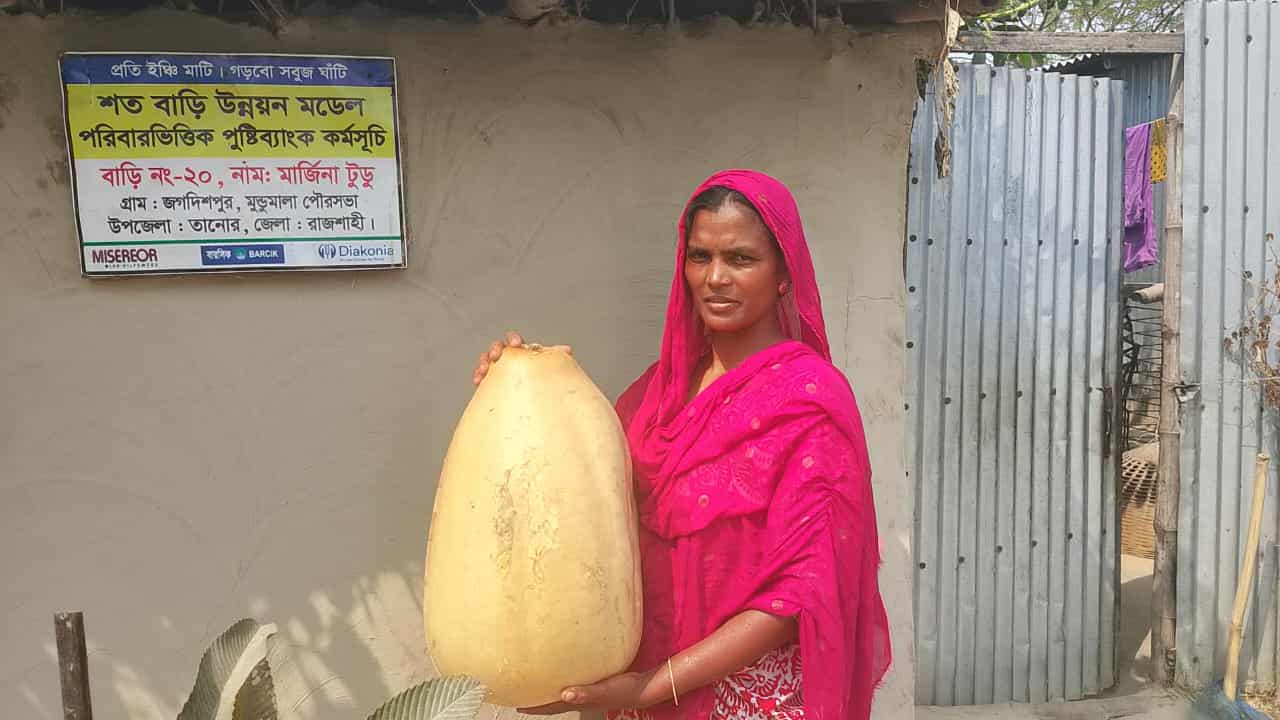
Despite family struggles and her husband’s illness, Marjina supports her five-member family by teaching, crafting bamboo products, and farming. On her five-decimal homestead, she grows vegetables on three decimals of land and keeps livestock including cows, chickens, and pigs.
When BARCIK began working in the village in 2022, her hard work and leadership led to her being selected as a Model Shotobari Member. Following BARCIK’s advice, she started cultivating 15 types of vegetables and began seed conservation, exchanging seeds with about 70–80 women and vegetables with over 100 women.
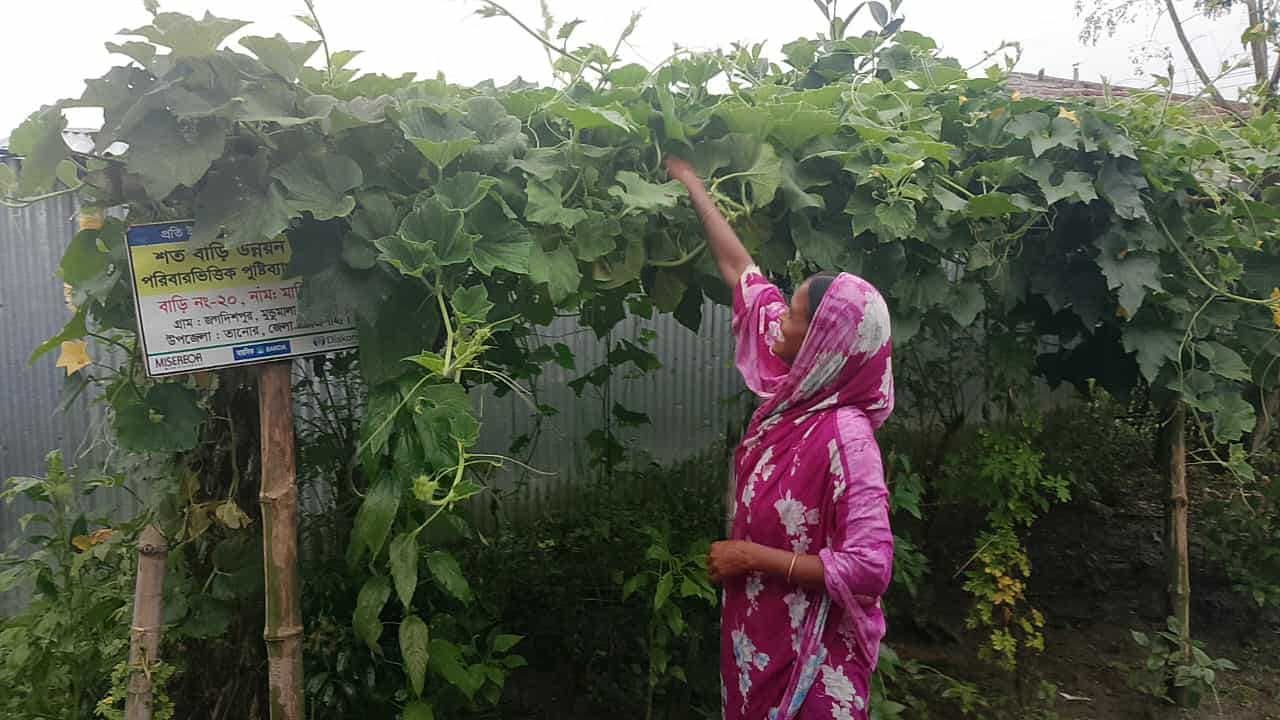
Encouraged by BARCIK, Marjina initiated vermicompost production, using it in her nutrition garden. Seeing her success, other women farmers followed her lead. She dreams of expanding organic fertilizer production and training more women so they can earn income, reduce chemical use, and achieve self-reliance.
Under her guidance, villagers formed the Jagadishpur Natun Para Comprehensive Village Development Organization, which now promotes safe vegetable cultivation, composting, and ecological farming practices for sustainable community development.