
By Shahinur Rahman from Singair, Manikganj
A small homestead can become a valuable resource for an entire community when its land, knowledge and resources are used wisely. The home of Subhash Chandra Mondal, 58, in Baldhara Union of Singair upazila, Manikganj, is an inspiring example.
Spread over 52 decimals of land, his homestead includes three residential rooms, a cowshed and a kitchen on 20 decimals. The remaining 32 decimals are intensively used for diverse vegetable cultivation, with no land left unused.
Known as the Bangala Agroecology Learning Centre, the homestead has become a familiar place for safe food production, agricultural learning and community activities. It also serves as an information and advisory centre where villagers seek guidance on farming problems, government and non-government services, environmental conservation, women’s rights and the prevention of child marriage.
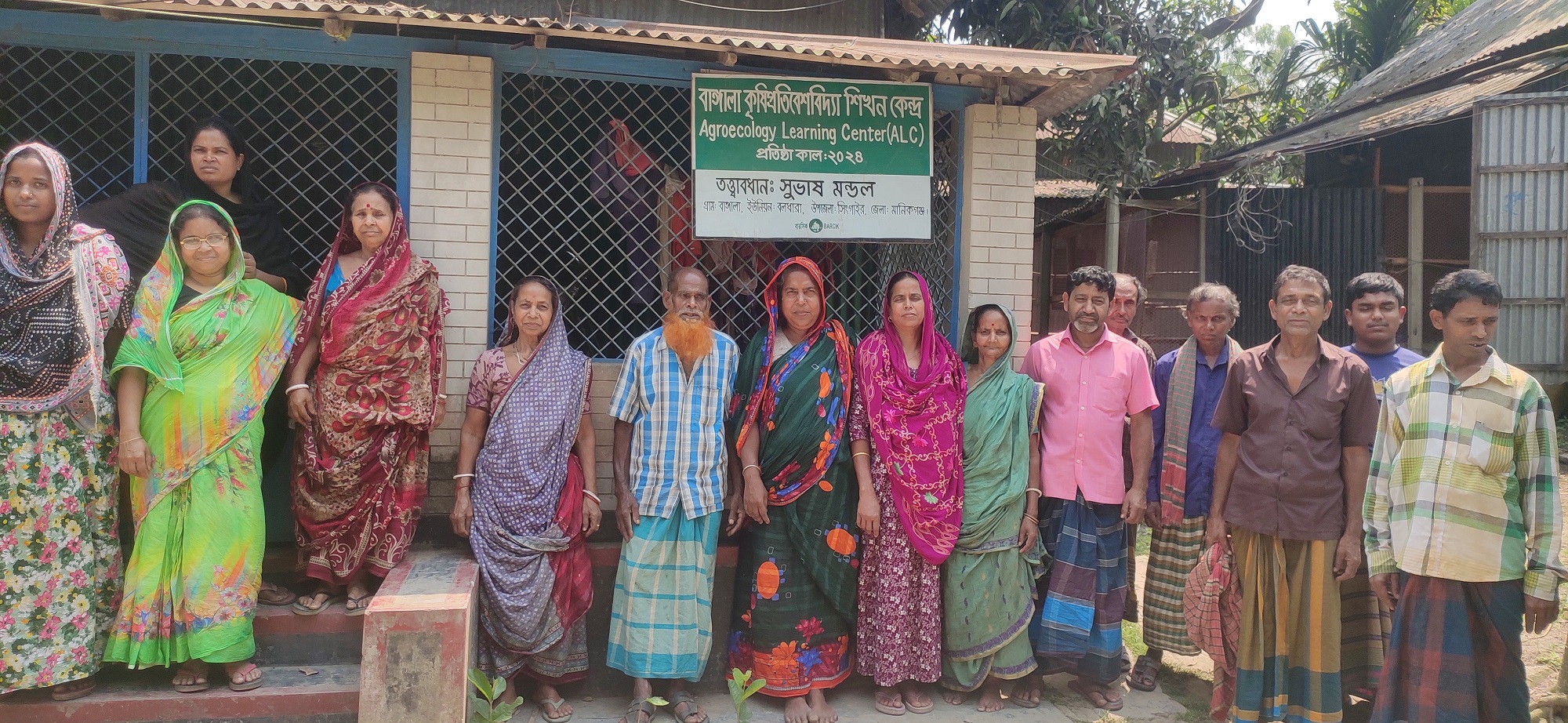
Subhash first became connected with BARCIK through courtyard meetings organized to discuss local issues and community development. He gradually opened his homestead for these gatherings and other community activities.
Regular discussions eventually led villagers to establish the Bangala Nab-Krishak Krishani Organization. Today, the organization conducts its monthly meetings and various activities from his home.
These include training on organic fertilizers and pesticides, local seed conservation, safe food production, traditional food festivals, health camps, poultry rearing and homestead gardening. Farmers also regularly exchange seeds and share their agricultural experiences.
In 2018, the homestead was recognized as an information and advisory centre under BARCIK’s Farmers’ Rights Programme. A signboard displaying information about available government and non-government services helps villagers learn where and how to access essential support.
Subhash also maintains a small seed bank where he conserves local varieties and exchanges seeds with other farmers. He believes this practice helps communities overcome seed shortages during disasters while strengthening cooperation and solidarity among farmers.
In 2024, BARCIK arranged an experience-sharing visit for Subhash to Penang, Malaysia, focusing on safe food production without harmful chemicals. He brought back practical knowledge and combined it with local farmers’ experiences to improve his farming practices. Subhash said, “I use locally available resources and traditional knowledge to cultivate vegetables without chemical fertilizers or pesticides. I never leave any part of my land unused”.
His homestead produces a wide variety of vegetables, including brinjal, bitter gourd, pumpkin, cucumber, beans, cauliflower, tomatoes, onions, chillies, spinach, papaya, okra, radish, ginger and turmeric. He mainly uses earthworm compost to maintain soil fertility and produce safe vegetables. During the COVID-19 pandemic, his homestead played an important role in meeting household nutritional needs. He shared vegetables with 50–60 neighbouring families and sold surplus produce in the local market.
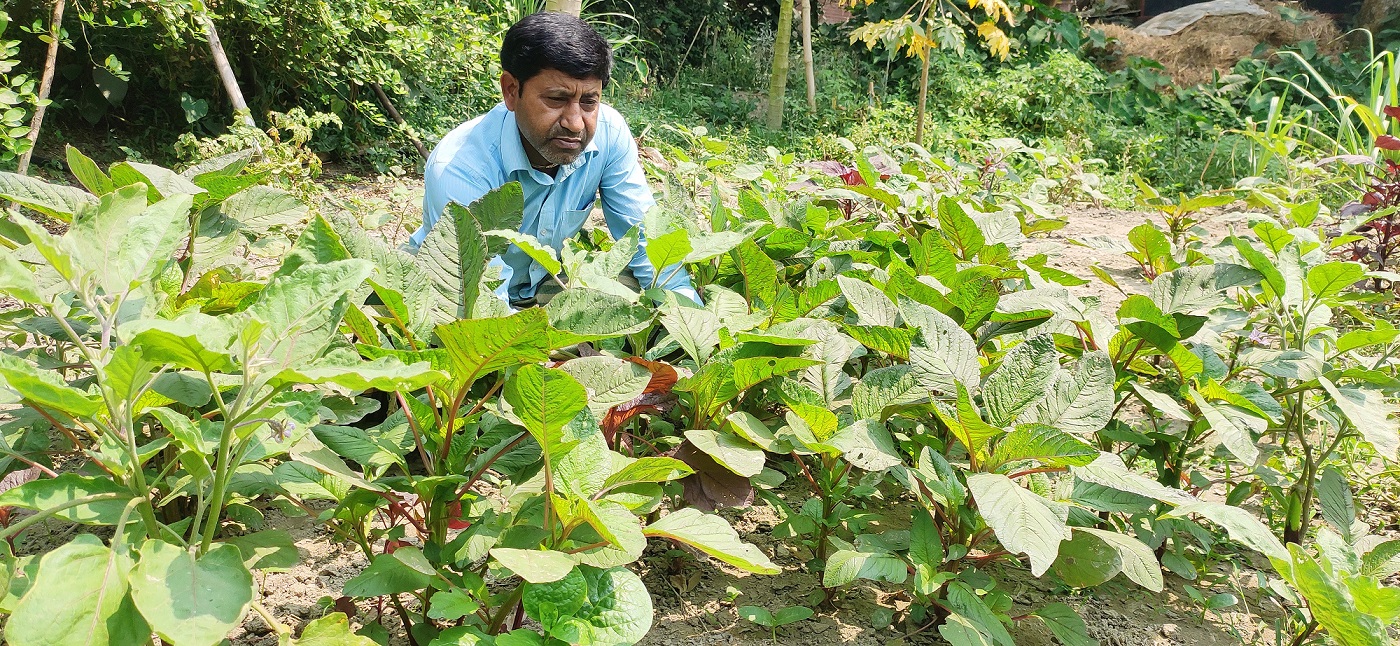
Subhash said that he earned approximately Tk 120,000 from vegetable sales over two years during the pandemic. He believes sharing locally produced food helped neighbouring families cope with the crisis. Selina Begum, a reserved-seat woman member of Baldhara Union Parishad and general secretary of the Bangala Nab-Krishak Krishani Organisation, says the homestead is a safe and welcoming space for women and men from different religious communities.
She said, “We regularly organize our meetings and activities here. The diversity of vegetables attracts visitors, and people come to learn about cultivation. The homestead has also become an important source of information about public services available at union, upazila and district levels”. Another organization member, Ananda Mondal, describes the homestead as a centre for learning natural farming and accessing useful information.
What began as an ordinary family homestead has gradually evolved into a community resource centre. Through biodiversity conservation, seed exchange, safe food production and collective learning, Subhash Mondal has demonstrated how a small piece of land can contribute to food security, environmental protection and stronger community relationships. His initiative shows that agroecology is not limited to farming practices; it can also build knowledge, cooperation and resilience within rural communities.