
By Rina Akter from Singair, Manikganj
Menstruation is a natural and healthy biological process in every woman’s life. It is neither a disease nor a source of shame; rather, it is an important part of reproductive health. Yet, in many communities, silence, fear and misconceptions still surround it.
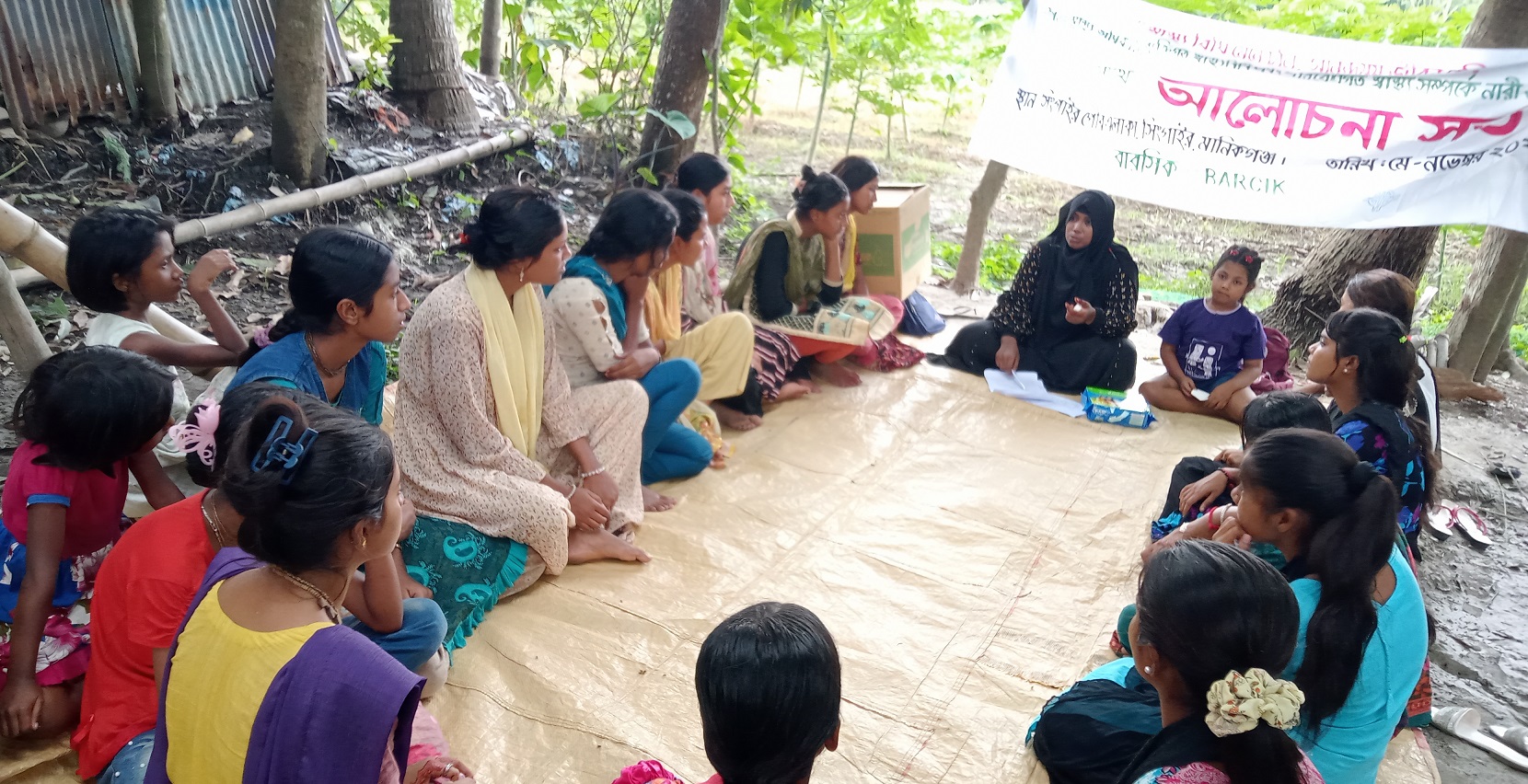
Sumi Akter, a young woman from Binodpur village in Singair Municipality, Manikganj, knows this silence all too well. Once, she could hardly utter the word “menstruation.” Today, she leads the Konkolota Adolescent Girls’ Club, formed by enthusiastic girls from the Binodpur Rishipara community with support from BARCIK. She now helps other adolescent girls understand their bodies and overcome the fear and embarrassment she experienced as a child.
A frightening first experience
Sumi was in Class Five when she noticed bloodstains on her clothes one afternoon. She had no idea what was happening to her body. No one had explained menstruation to her, she had not learned about it at school, and the subject had never been discussed at home. Her own body suddenly felt unfamiliar. She feared something terrible had happened. Even the word “menstruation” seemed impossible to say aloud. She would lower her eyes, imagining that everyone around her would somehow know her secret if she spoke about it. Without telling anyone, Sumi went to the pond and quietly washed her clothes and body. She no longer remembers whether the water was cold, but she clearly remembers the fear that gripped her. She felt as though she had done something terribly wrong.
By evening, her mother understood what had happened. Exhausted from the day’s work, she handed Sumi a piece of old cloth without saying much. Perhaps she, too, did not know how to explain the experience. Like many women of her generation, she had learned the customary rules surrounding menstruation but had little opportunity to understand its scientific and health-related aspects. Then Sumi’s grandmother offered more instructions. She was told to avoid going out in the sun, eat only ordinary rice rather than nutritious foods, and keep bloodstained cloth hidden from others. After washing, the cloth had to be buried in the ground. Sumi listened silently. She had questions, but asking them required a courage she did not yet possess. As the years passed, menstruation came and went, but the silence remained. To her, it seemed like a secret door through which every girl had to pass, while no one offered a light to guide her way.
When knowledge replaced fear
Years later, that light finally appeared. During a training session organized by BARCIK, Sumi learned that menstruation was neither impurity nor a curse. It was a normal biological process that required understanding, proper hygiene and safe practices. She learned about using clean menstrual materials, disposing of them safely, maintaining personal hygiene and eating nutritious food. As she listened, memories of her childhood returned. She thought of the frightened girl in Class Five who had seen blood on her clothes and believed she had done something wrong. She remembered going alone to the pond, confused and afraid. What if someone had told her then not to be afraid? What if someone had explained that her body was not her enemy and that menstruation was nothing to hide? The words she had never heard as a child became the words she wanted other girls to hear.
Today, Sumi serves as president of the Konkolota Adolescent Girls’ Club, which has around 30 members. She discusses menstruation openly with adolescent girls and their mothers, encouraging them to replace shame and misconceptions with knowledge and confidence. During club meetings, she talks about safe bathing during menstruation, using clean menstrual materials, eating nutritious food and disposing of used products properly. She also encourages mothers to speak openly with their daughters about bodily changes and menstrual health. At first, speaking about menstruation was difficult. Her voice would tremble, and the embarrassment of her childhood would return whenever she tried to say the word aloud. Gradually, however, she began to notice changes among the girls and their mothers.
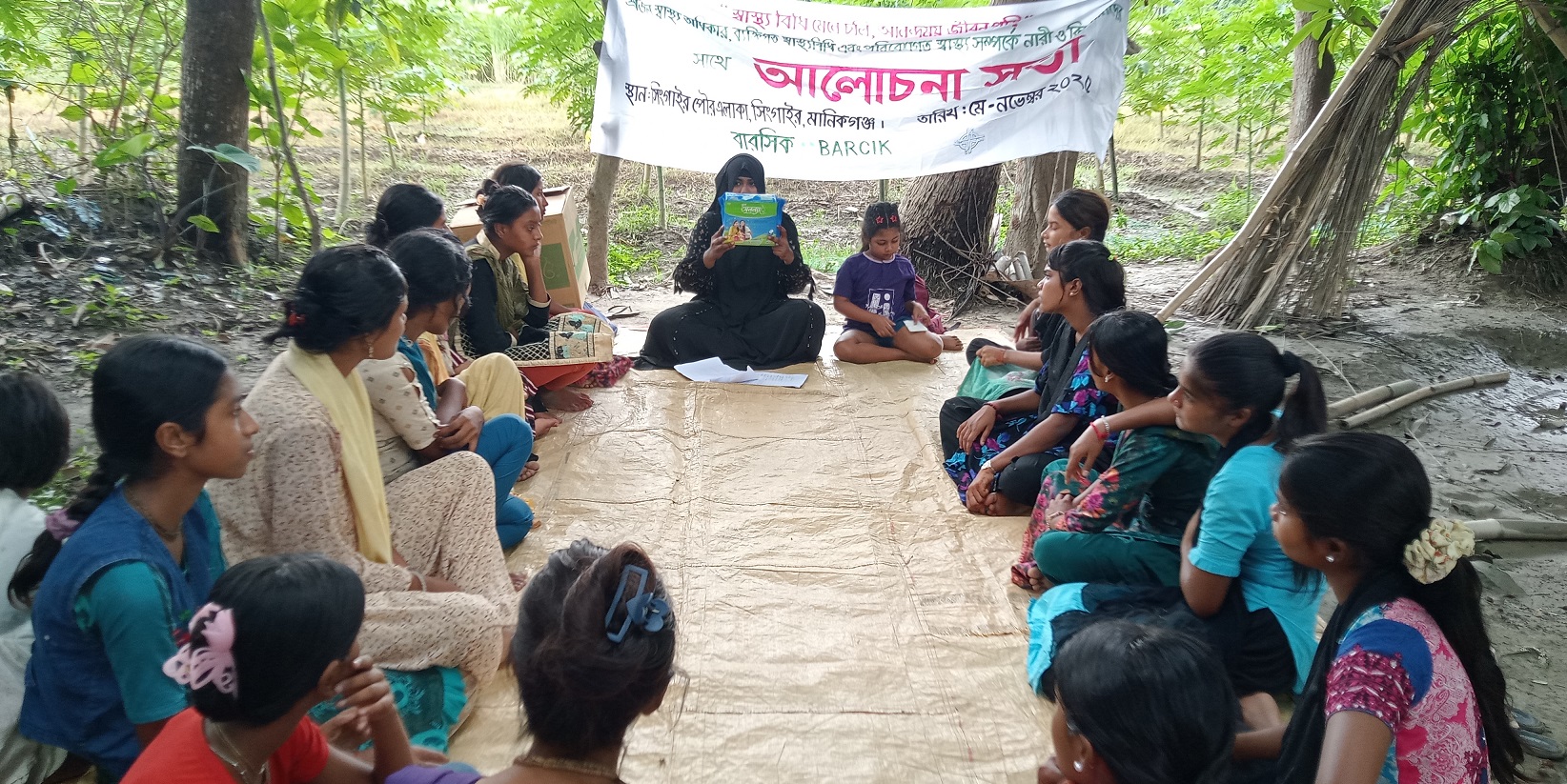
Some girls appeared relieved after listening to her. Some mothers nodded quietly, while others approached her privately after meetings to ask questions they had never felt comfortable raising before. One day, a girl told her, “Apa, I used to think this happened only to me.” Sumi looked at the girl for a moment. She saw something of her younger self in that face, the frightened Class Five student who had stood alone by the pond, carrying questions for which no one seemed to have answers.
Turning silence into strength
Sumi no longer lowers her eyes when she talks about menstruation. She understands that many restrictive practices and misconceptions grow out of fear, while a lack of knowledge allows them to persist across generations. Information and open discussion can gradually ease that fear. Her journey reflects the difference that access to knowledge and a supportive space can make in a young person’s life. By sharing what she has learned, she is helping other girls understand their bodies, ask questions without embarrassment and make informed decisions about their health. Like light entering a dark room through a narrow window, change does not always arrive all at once. It begins with a small opening and gradually pushes back the darkness. Sumi is creating that opening for the girls around her. Once, she searched for answers in silence. Today, she is helping other girls find them.