
By Md. Nazrul Islam from Manikganj
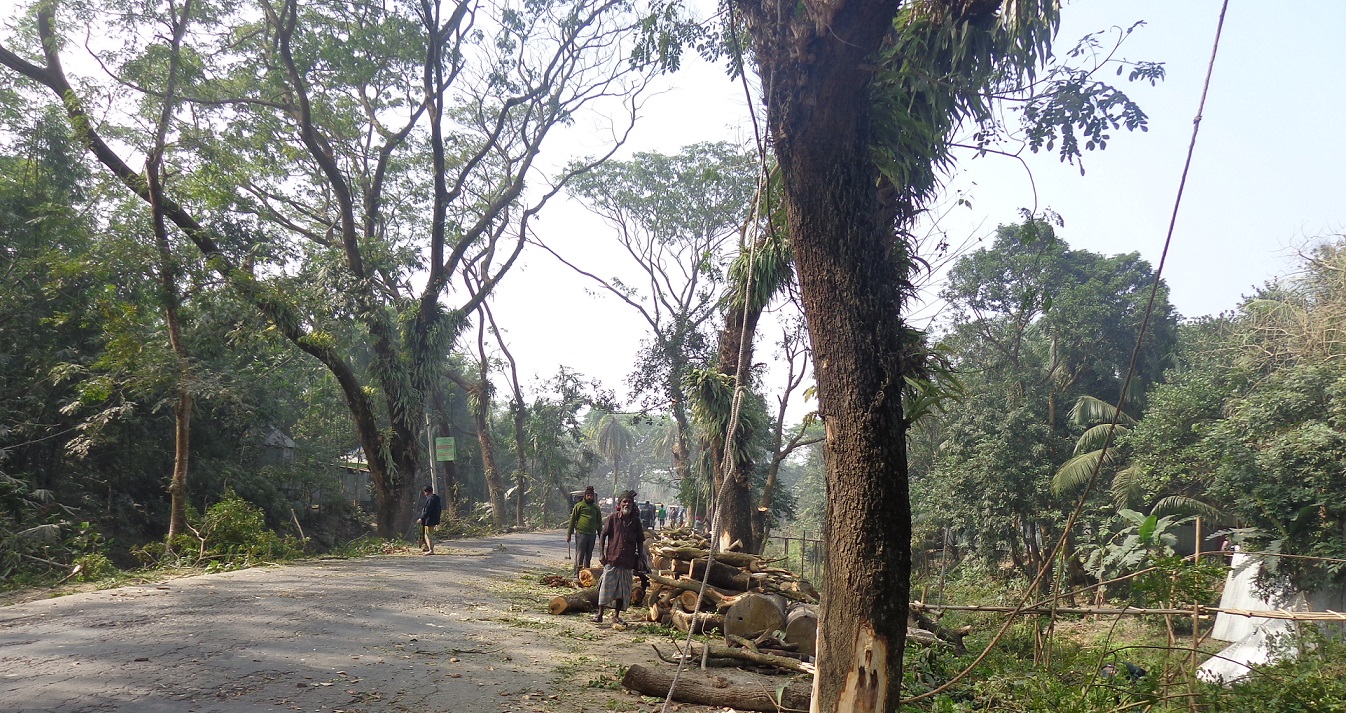
Krishnatala was once a familiar landmark named after a magnificent Krishnachura (flame tree). Its branches offered shade to passers-by, while its vibrant red flowers brightened the surroundings every spring. Local people gathered beneath it to rest, meet and exchange stories. Today, the tree is gone. After being damaged in a storm, its remaining parts were removed during road expansion. Only the name Krishnatala preserves its memory. The place is also closely associated with the memory of Yusuf Ali, popularly known as Yusuf Member, a social activist, cultural organizer and former local representative. Ironically, the man who once raised his voice for people’s rights and safer roads also became a victim of a road accident at this very intersection, according to local accounts. The loss of a tree and the death of a community activist raise an important question: Is road development simply about increasing vehicle speed, or should it ensure people’s right to safe mobility?
Krishnatala: A tree, a community and its memories
Located beside the road in Bangura village of Betila-Mitara Union under Manikganj Sadar Upazila, Krishnatala was once a small social gathering place. The tree stood beside a canal, surrounded by a few small shops and two pedestrian paths. Over time, tea stalls, businesses and traffic increased, transforming the area into a busy intersection. Although the tree disappeared, its name remains a reminder of the area’s natural heritage and collective memories. Its loss also raises concerns about how infrastructure development can affect local trees, biodiversity and community identity.
Yusuf Member: A life dedicated to people
Yusuf Ali was known for his progressive political beliefs and commitment to social equality and justice. He used cultural activities, particularly songs that he wrote and performed himself, to raise public awareness and organize people. His dedication earned him the trust and affection of the local community, which elected him as a local government representative. He was also concerned about accidents at Krishnatala. With support from BARCIK, he and other local citizens approached the then Deputy Commissioner and submitted a memorandum seeking measures to reduce road risks. Subsequently, speed breakers were installed at several points, and the Roads and Highways Department took initiatives to put up warning signs. Tragically, on 1 September 2026, Yusuf Ali was seriously injured in a bicycle accident at Krishnatala intersection, in front of his home. His leg was fractured, and he underwent surgery. He returned home but died following a stroke on 16 September.
Other accidents, more unanswered questions
Local people also recall the death of Nurul Islam, owner of Beutha Nur Hotel, who reportedly lost his life while crossing the road at the intersection. Another victim, Ibrahim Mia, a former Bangladesh Students’ Union activist from Bangura village, suffered a serious accident when a truck struck a branch of the Krishnachura tree under which he was sitting. The branch fell on him, breaking his leg. Despite surgery, he continues to face physical limitations. According to local statistics, 10–12 women and elderly people have died in different accidents in the Krishnatala area over the past three to four years. These figures require verification through official accident records. Each incident represents a family tragedy and an irreversible loss. Yet the question remains: Why has this busy intersection not been made safer?
Road expansion without adequate safety
The Hemayetpur–Singair–Manikganj road is important for local transport, agricultural trade and everyday communication. Once used mainly by pedestrians, bicycles and traditional carts, it now carries a wide range of vehicles, including motorcycles, battery-run vehicles, cars, buses and heavy trucks. Fast-moving heavy vehicles and slow-moving transport share the same road with pedestrians, including farmers, women, children, students and elderly people. Road widening alone cannot address these risks. Proper design, speed control, pedestrian crossings, footpaths and adequate lighting are equally important. Road development has also resulted in the loss of old trees. Trees provide shade, absorb carbon, regulate local temperatures and support biodiversity. Where removal is unavoidable, alternative designs and planned replacement planting, with proper maintenance, should be considered. A road is more than infrastructure for vehicles. It is a shared public space connected to people’s lives, livelihoods, memories and the natural environment. We need roads where vehicles can move safely, farmers can reach markets, students can travel to school, pedestrians can cross without fear and roadside trees can continue to grow.