
By Amreto Sarker, from Rajshahi
The Barind region of Rajshahi is highly prone to drought and water scarcity, intensified by excessive groundwater extraction. In areas such as Tanore upazila, many lands remain fallow due to lack of irrigation, with groundwater levels dropping to 150–180 feet or more.
To address this challenge, BARCIK is supporting farmers in adopting water-efficient crops such as lentils, peas, mustard, black cumin, and coriander. Demonstration plots have helped farmers identify suitable crops for the region.
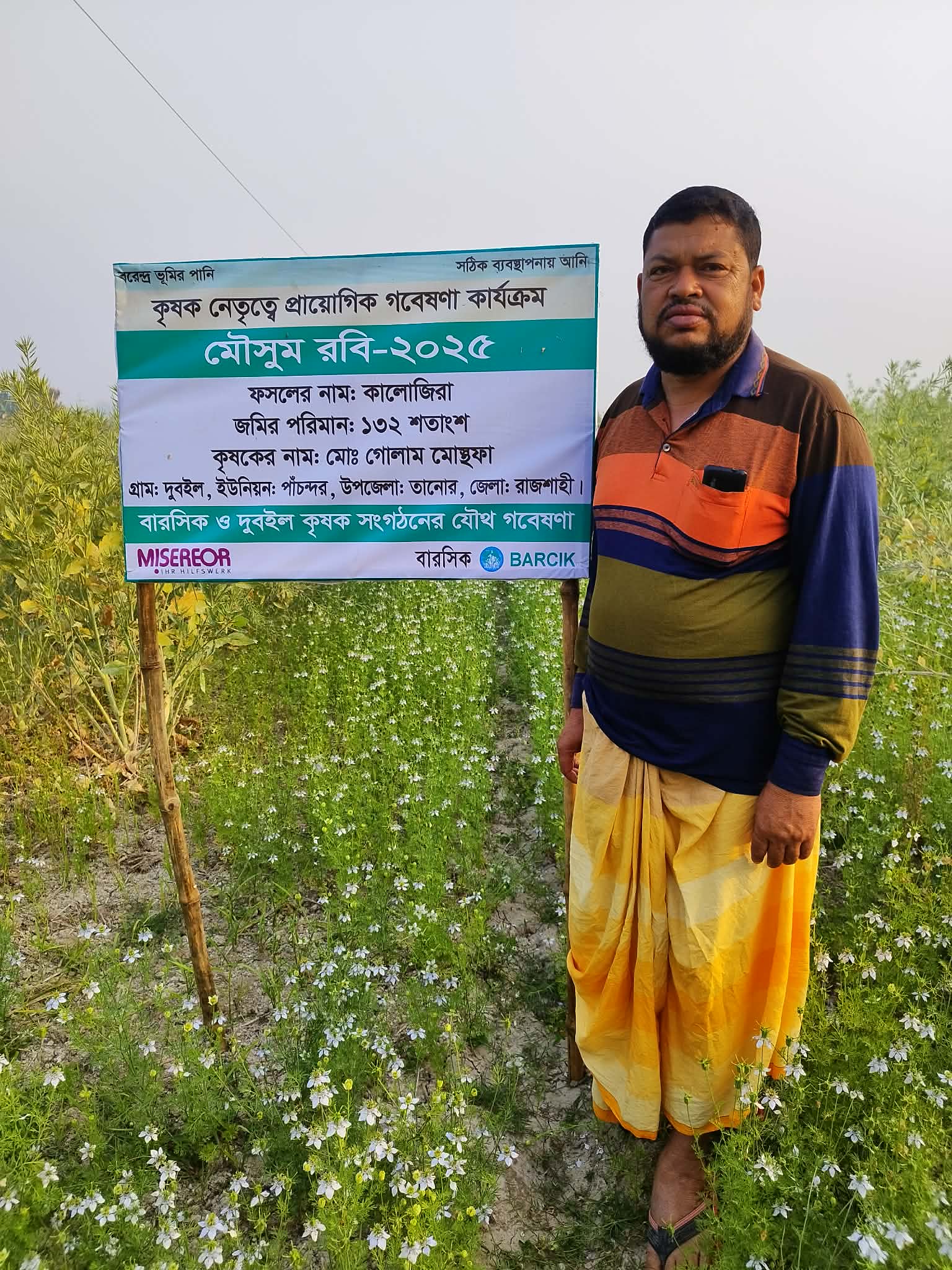
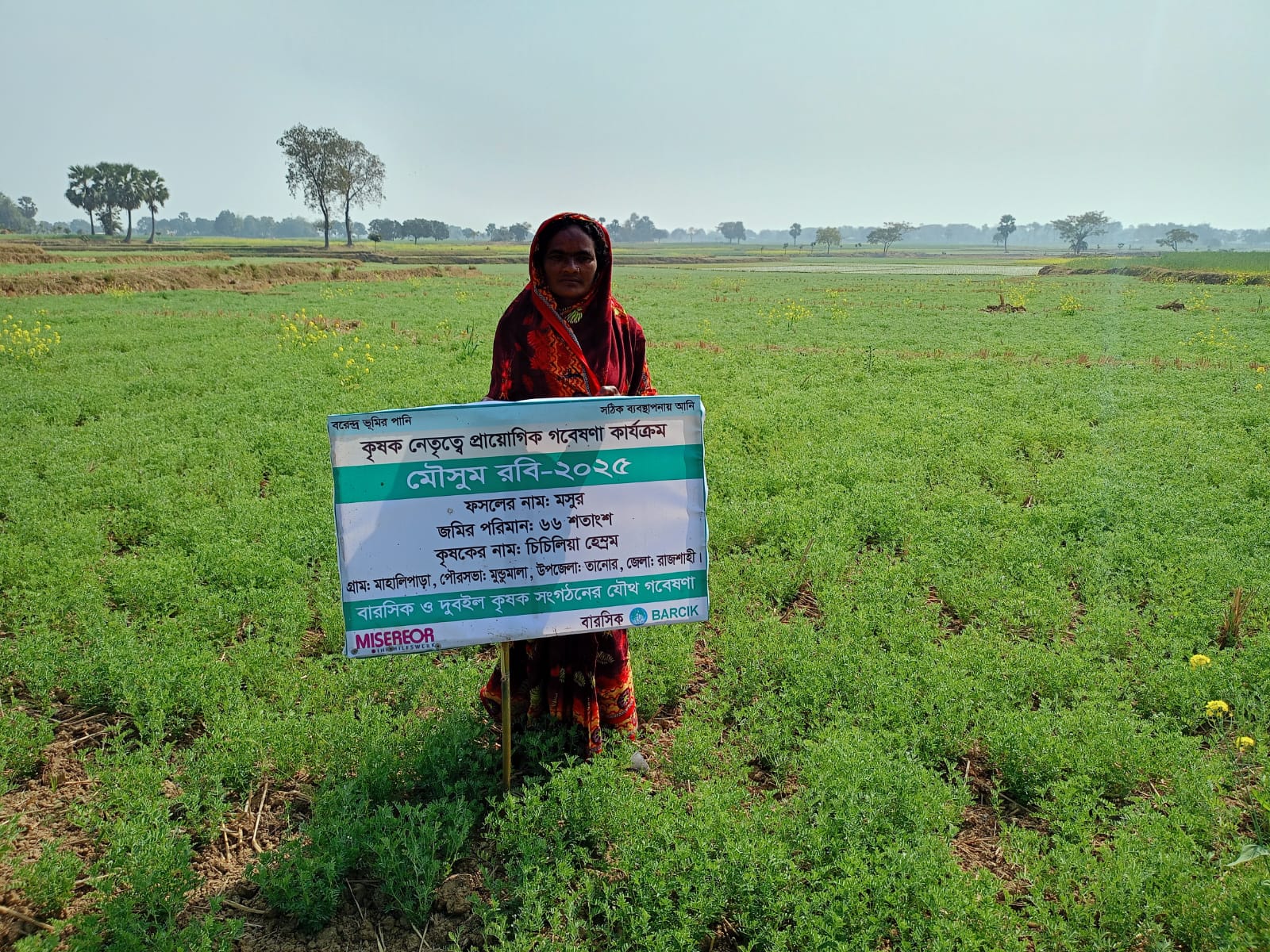
With support from BARCIK Cicila Hemrom, an indigenous woman farmer, cultivated lentils on 4 bighas of land. She produced 17 maunds, spent BDT 20,000, and sold 15 maunds for BDT 48,000, earning a net profit of BDT 28,000. Lentils require no irrigation, making them ideal for drought-prone areas. Meanwhile, farmer Golam Mostafa cultivated black cumin on 4 bighas of his land. With a production of 8 maunds sold at BDT 15,000 per maund, he earned BDT 120,000 and made a profit of BDT 80,000. The crop requires only 1–2 irrigations and has high market value. On the other hand, farmer Zaidur Rahman cultivated peas on 50 decimals of his land, producing 8 maunds. He earned BDT 24,000 with only BDT 4,000 of production costs. The crop required minimal irrigation and also provided fodder for livestock.
These examples demonstrate that adopting water-efficient crops can reduce irrigation costs, conserve groundwater, and increase farmer incomes. Such practices are essential for building climate resilience and sustaining agriculture in drought-prone regions.
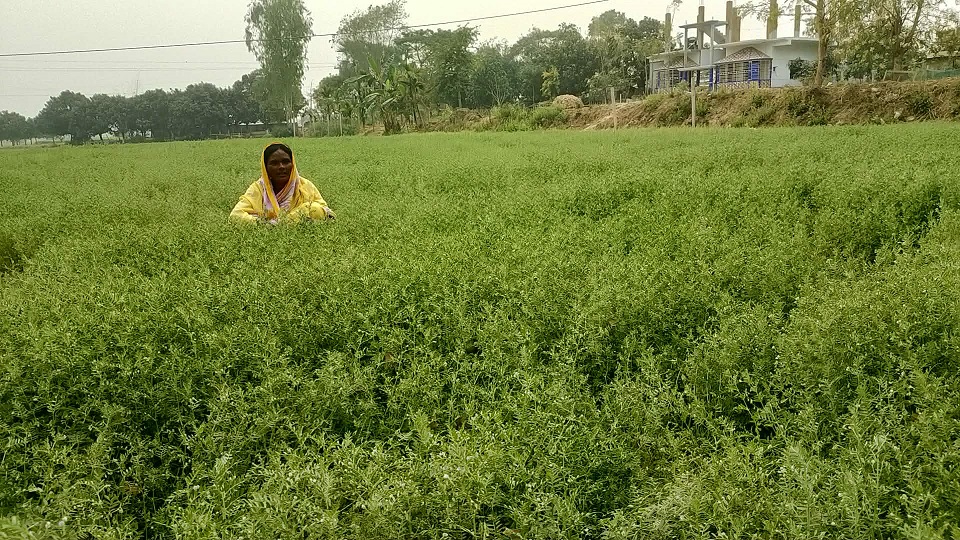
These farmers now see ray of hope to maximize their lands by producing less water intensive crops and vegetables. Seeing their success other farmers also show interest in cultivating such less water intensive crops in the area.