
By Gunjon Rema from Kalmakanda Netrakona
With the aim to raise awareness on the growing risks of climate change and natural disasters, the International Day for Disaster Risk Reduction 2025 was observed in Chandradinga, a border village under Kalmakanda upazila, with the theme “Together for Action, Resilience for All.”
The event was jointly organized by the local Embankment Protection Committee and Green Coalition with support from BARCIK. The day-long program began with a welcome song performed by the village’s men, women, and youth, followed by a discussion meeting and a cultural session.
The meeting was chaired by Mr. Sunil Mrong, President of the Embankment Protection Committee, and moderated by Ms. Gunjon Rema, Upazila Coordinator of BARCIK. Participants included villagers from four nearby communities, local agricultural officers, and representatives from different organizations.
Mr. Md. Alhaj Mia, Sub-Assistant Agriculture Officer, attended as Chief Guest, while Mr. Md. Abdul Momen, Mr. Abdur Razzak, and Ms. Nemshila Chisik were present as special guests. BARCIK Program Officer Md. Alamgir highlighted the objectives of the event.
Alhaj Mia said, “Local people’s own knowledge and experience are their greatest strength in disaster management. If we prepare early and support each other, we can minimize the damages significantly.”
Sunil Mrong said, “Our Chandradinga village is at high risk from flash floods due to its proximity to the hills and border. Every monsoon, we live in fear and uncertainty, yet we never give up. We work together to protect embankments, prepare shelters, and store dry food. Today’s observance reminds us that only through collective efforts can we face disasters effectively.”
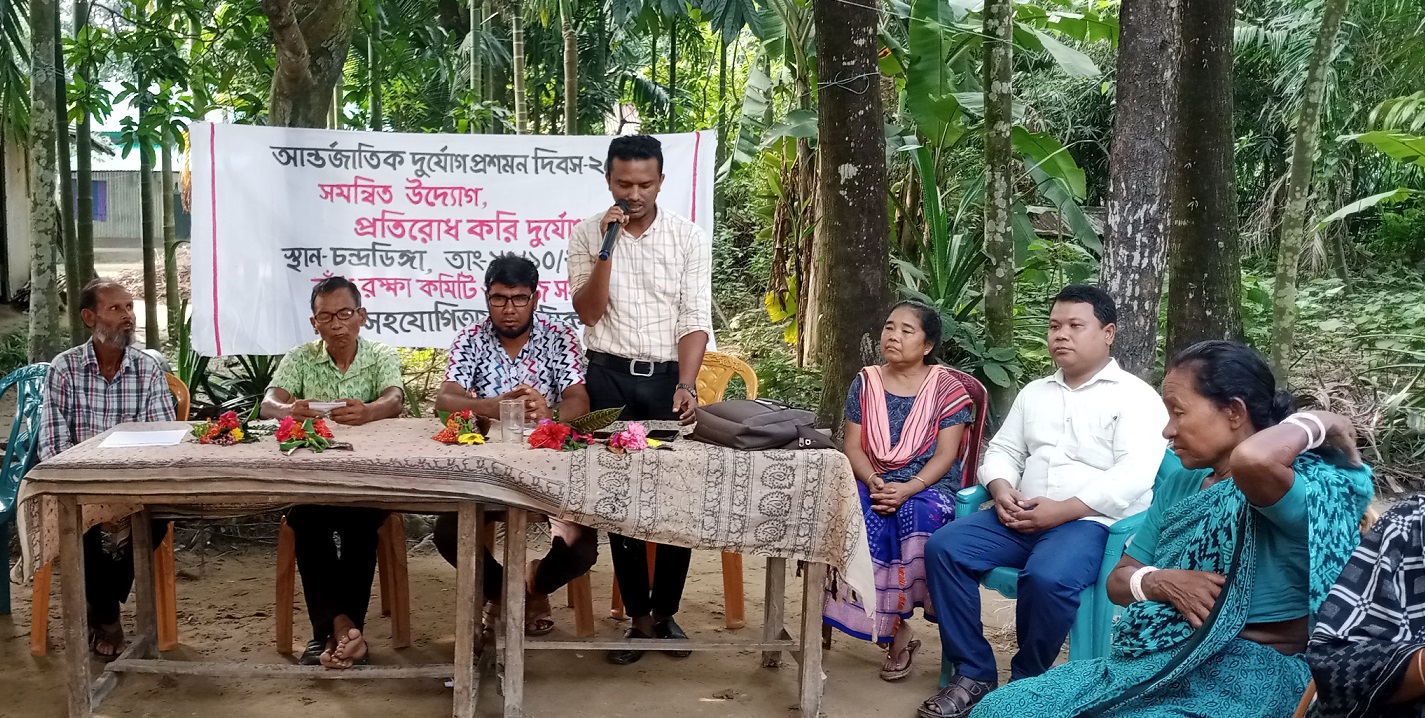
Nemshila Chisik said, “Although women are the most vulnerable during disasters, they are also the ones who protect their families. Therefore, women’s participation in disaster preparedness must be strengthened.”
A short drama performed by local villagers depicted how communities respond and support each other during flash floods. They also performed self-written songs reflecting the harsh realities of disasters in border areas.
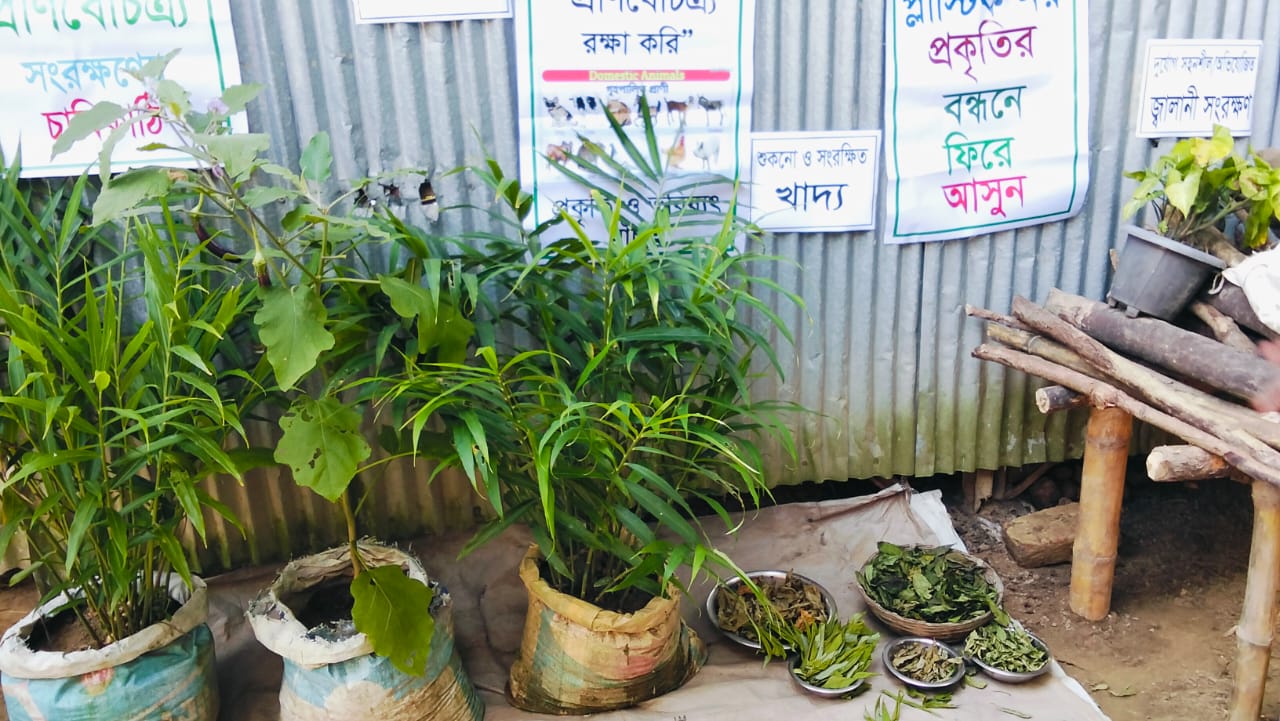
Seven stalls were displayed on climate change adaptation practices, featuring sack vegetable cultivation, well-digging beside streams for safe water, fuel preservation for rainy seasons, dry food storage, seed conservation, floating stoves, and floating poultry houses. These stalls, prepared by local farmers and women entrepreneurs, drew much attention from visitors.