
By Mofijur Rahman, from Shyamnagar, Satkhira
The coastal belt of Bangladesh, particularly Padmapukur Union in Shyamnagar, Satkhira is among the most climate-vulnerable regions of the country. Here, both land and water have long been affected by salinity. Arable land is scarce, and much of it is used for shrimp farming. Yet, the people, especially women continue their relentless struggle to sustain their families and communities. In this challenging situation, Morjina Khatun from Kamalkati village stands as a remarkable example of resilience and innovation.
Her homestead has been recognized as a “Shotobari” (Nutrition Bank), where she has made her family self-reliant through nutrition-based farming. The Shotobari initiative promotes seed exchange, homestead gardening, and seed distribution, encouraging others in the community to follow her lead.
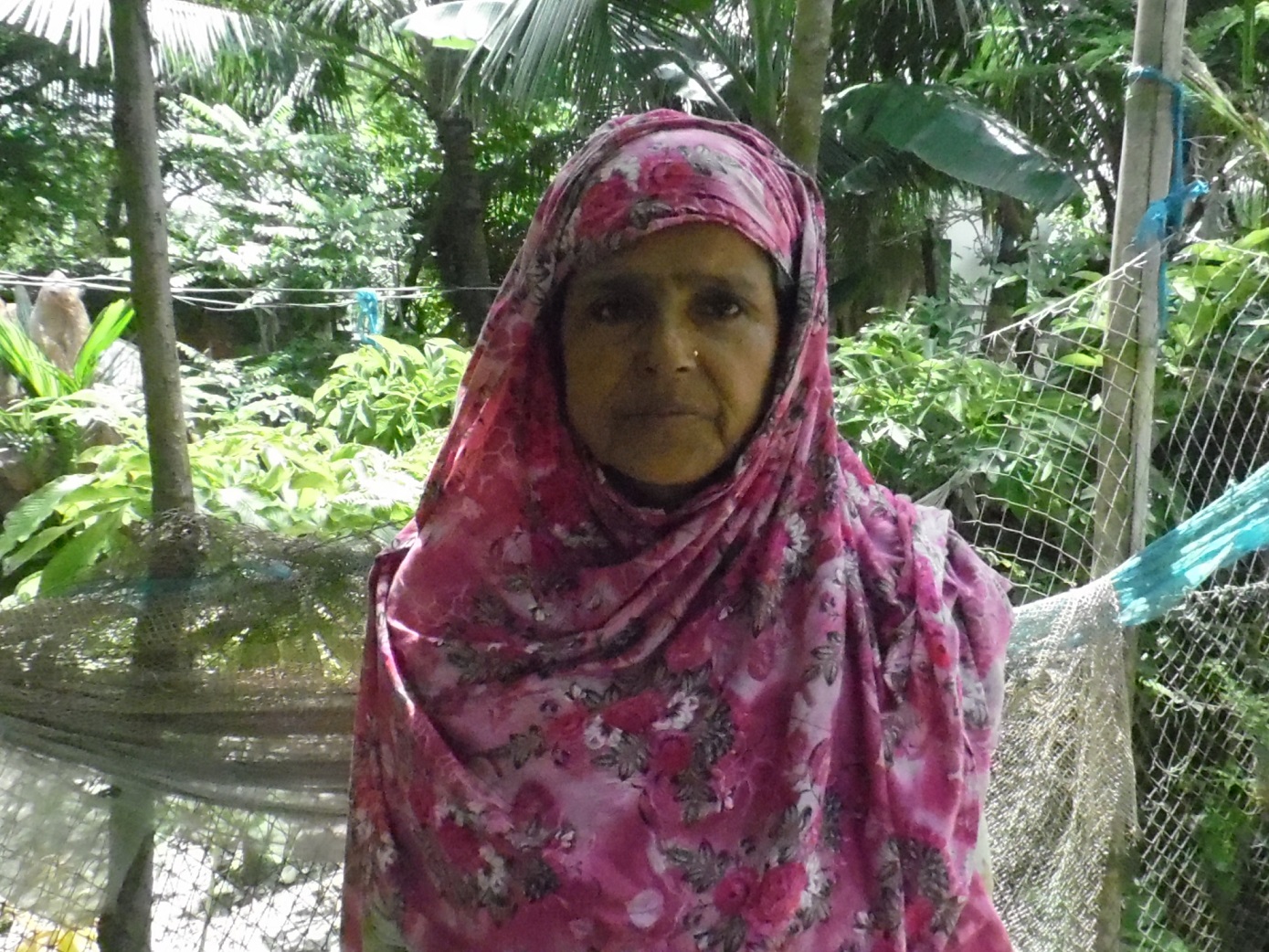
Morjina said, “I grow vegetables all year round, according to the season.” On her homestead, she cultivates okra, Malabar spinach, yam, cucumber, chili, taro, eggplant, red amaranth, stem amaranth, onion, garlic, tomato, fennel, bottle gourd, ridge gourd, sweet pumpkin, water spinach, beans, and drumstick trees. These vegetables meet her family’s nutritional needs and generate income when sold in the local market, helping her to cover household expenses. Importantly, she conserves seeds from her harvest for future planting and shares them with her neighbors.
She said, “Through exchanging vegetables, seedlings, and seeds, our relationships with neighbors have grown stronger”. During the monsoon, she distributes seeds of bottle gourd, ash gourd, eggplant, Malabar spinach, and beans, strengthening community bonds through mutual cooperation.
Beyond vegetables, Morjina has planted a variety of fruit and timber trees such as mango, sapodilla, rose apple, banana, black plum, guava, palm, acacia, neem, silk cotton, and almond. These ensure long-term nutritional and economic security for her family she mentioned.
A pond in her yard adds further diversity to her “nutrition bank.” It is stocked with fish species such as bhetki, rui, katla, mrigel, silver carp, tengra, puti, Japanese puti, tilapia, magur, and shrimp. She also rears seven ducks and fifteen chickens, which provide a vital source of protein.
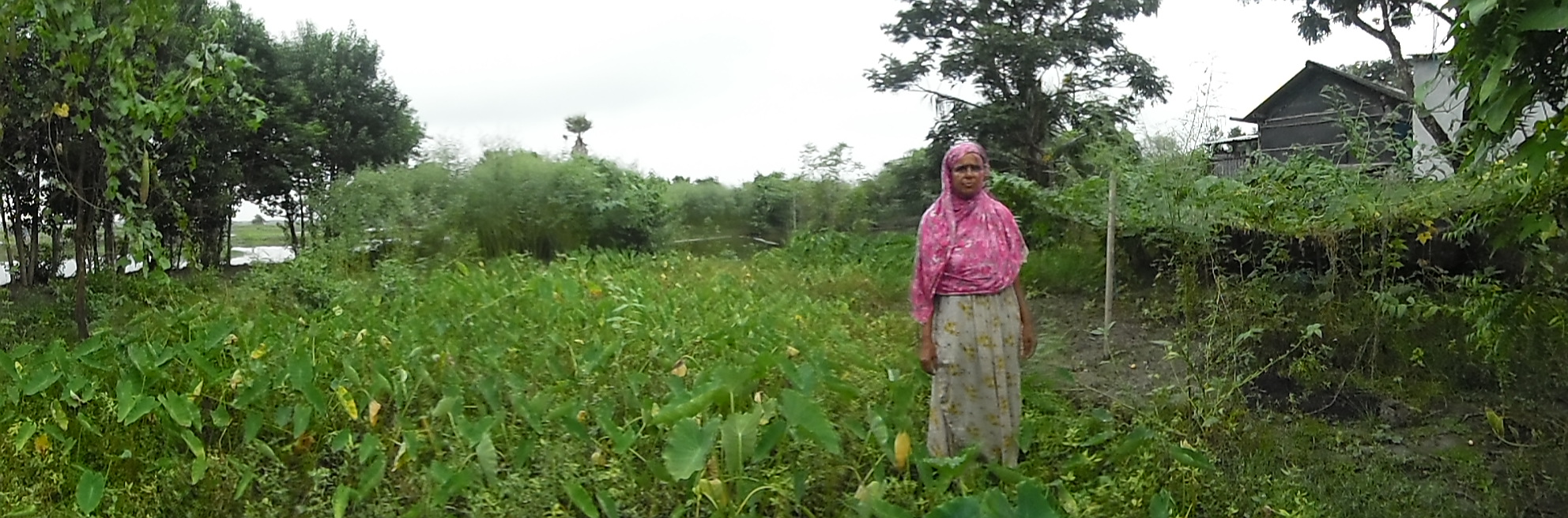
For Morjina, the Shotobari initiative is a farming effort and it is truly a “nutrition bank,” where food, seeds, knowledge, and social bonds are preserved and exchanged. It stands as a living example of how diversified farming and efficient use of limited resources can enhance resilience and promote community-based agriculture.
Morjina Khatun’s journey has secured food and nutrition for her own family and also inspired many women and families around her to grow their own food and reduce dependence on external sources. Her Shotobari has become a shelter of hope, a hub of cooperation, and a reliable model for surviving and adapting to the impacts of climate change.