
By Ohidur Rahman, from Netrakona
Abdul Bari, a farmer from Sadhupura village in Kamaria Union of Tarakanda Upazila, Mymensingh district, is now recognized as a model practitioner of agroecology in his community.
He cultivates 13 types of crops using agroecological methods on about 100 decimals of high land near his house. Along the pond banks, he grows bottle gourd, bitter gourd, Malabar spinach, papaya, and okra. His fields produce a wide variety of crops, including sweet potato, eggplant, spinach, pumpkin, red amaranth, stem amaranth, ridge gourd, taro, jute leaves, tomato, long beans, ginger, turmeric, chili, and maize.
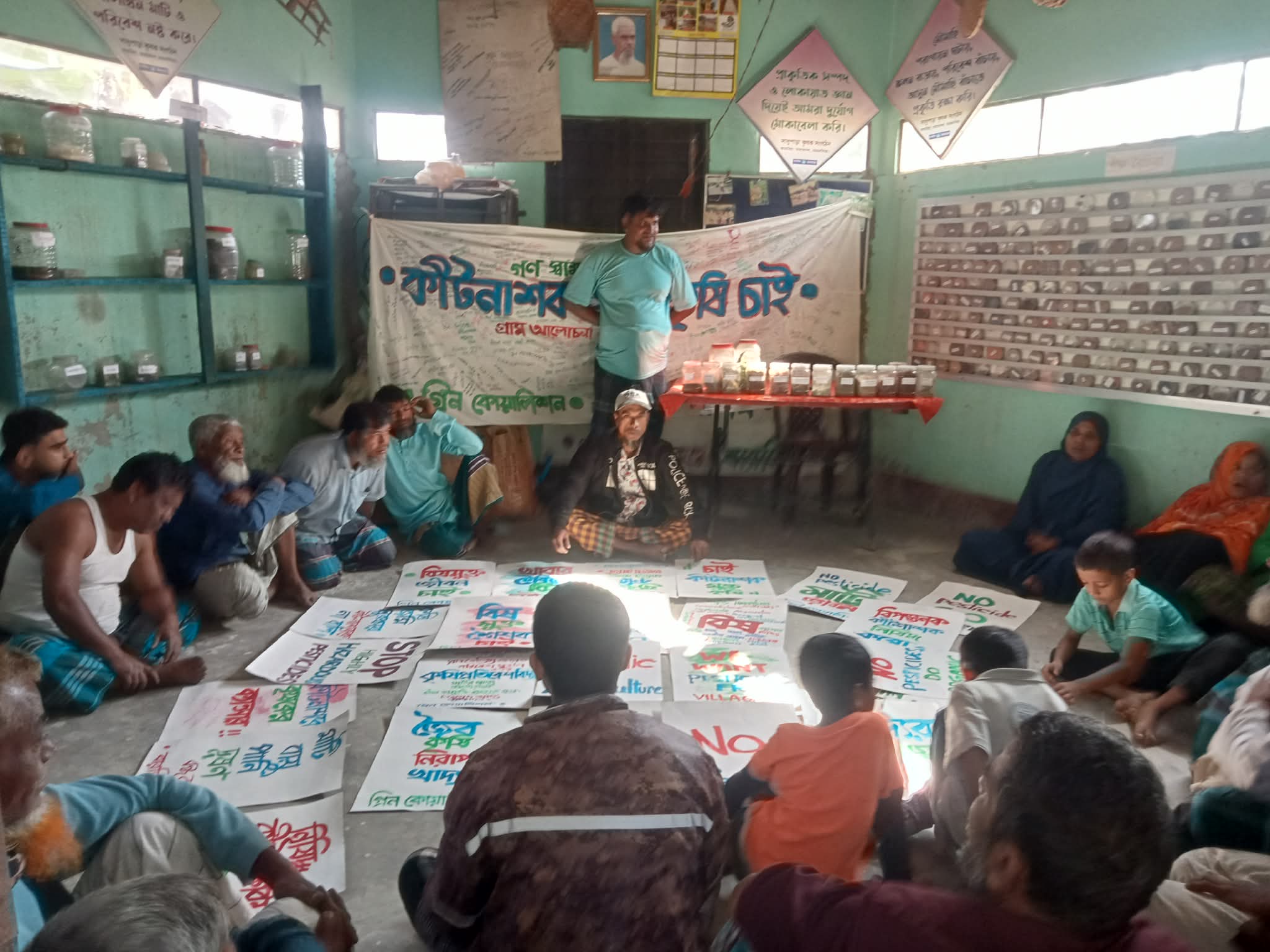
Abdul Bari uses vermicompost in his vegetable fields. Previously, pest attacks caused significant losses, but after receiving training from the Jono Unnayan Kendra, he learned to prepare and use organic pesticides. Now, when crops are affected by diseases, local farmers bring samples to him for advice. He prepares organic solutions and guides them on treatment, helping them to reduce the use of harmful chemicals. He is actively working to make his village pesticide-free.
He sells surplus vegetables in the market and shares them with relatives. He also conserves seeds of vegetables and local rice varieties. He supports nearby farmer groups by sharing knowledge on seed conservation and exchange. he has planted various fruit trees such as mango, jackfruit, guava, litchi, coconut, lemon, and drumstick Around his house. He has been conserving seeds of traditional rice varieties like Kalijira, Kumri, Aijong, Birui, Subash, Hekim, and Malshira for many years.
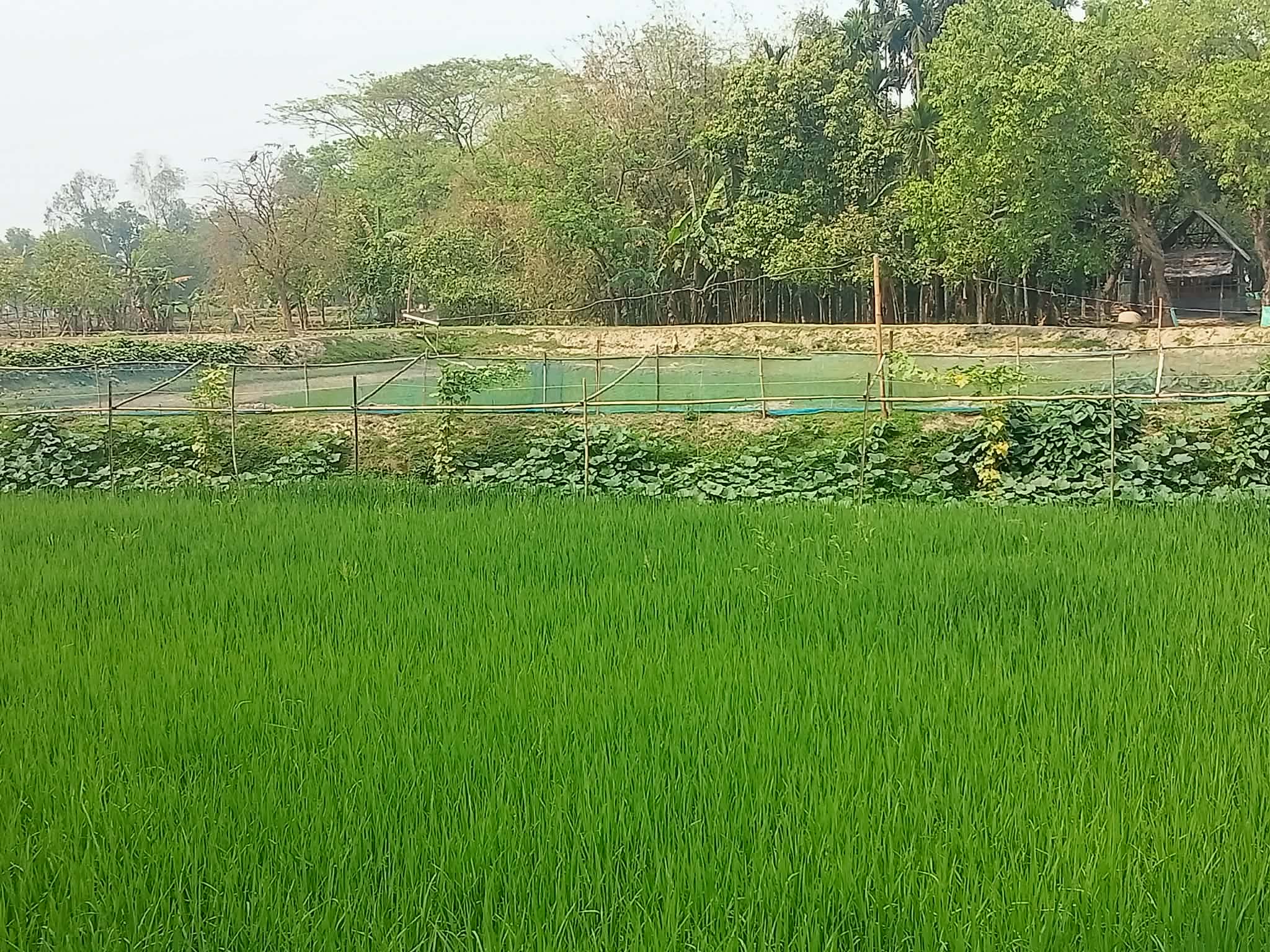
Abdul Bari produces and uses his own organic inputs, including vermicompost, pit compost, quick compost, ash, cow dung, and botanical pesticides, which significantly reduce production costs. He has a vermicompost house measuring 12 feet by 3.5 feet, meeting about 60% of his fertilizer needs.
He has received training from government and non-government organizations on organic farming, seed conservation, and livestock rearing. Combining this knowledge with his own experience, he has become a skilled local resource person. He regularly shares his knowledge with farmers, institutions, and community groups.
Abdul Bari says, “I learned farming from my father and from nature. I want to pass this knowledge on to my children. Even if they work in offices, they should stand by farmers and help protect agricultural resources. Only then will farming remain in farmers’ hands, farmers will receive proper recognition, and Bangladesh will achieve sustainable agriculture.”