
By Shonkar Mrong from Netrakona
The people of the haor region in Netrokona depend almost entirely on Boro rice cultivation for their yearly food and income. For nearly six to seven months every year, the vast haor lands remain underwater, leaving little opportunity for farming. During this period, many residents survive by catching fish from rivers, canals, wetlands, and haors, while others migrate temporarily to nearby towns and cities in search of work. When the water begins to recede in October and November, farmers return home with hope and prepare their land for Boro rice and winter crops.
Farming in the haor region has never been easy. Farmers regularly face challenges such as early floods, hailstorms, pests, drought, excessive rainfall, and sudden temperature changes. Even with these difficulties, they continue cultivating crops year after year. In recent seasons, many farmers managed to avoid major disasters and were able to harvest their rice successfully. This year also began with optimism. Regular rainfall reduced irrigation costs, and healthy paddy fields gave farmers hope for a good harvest.
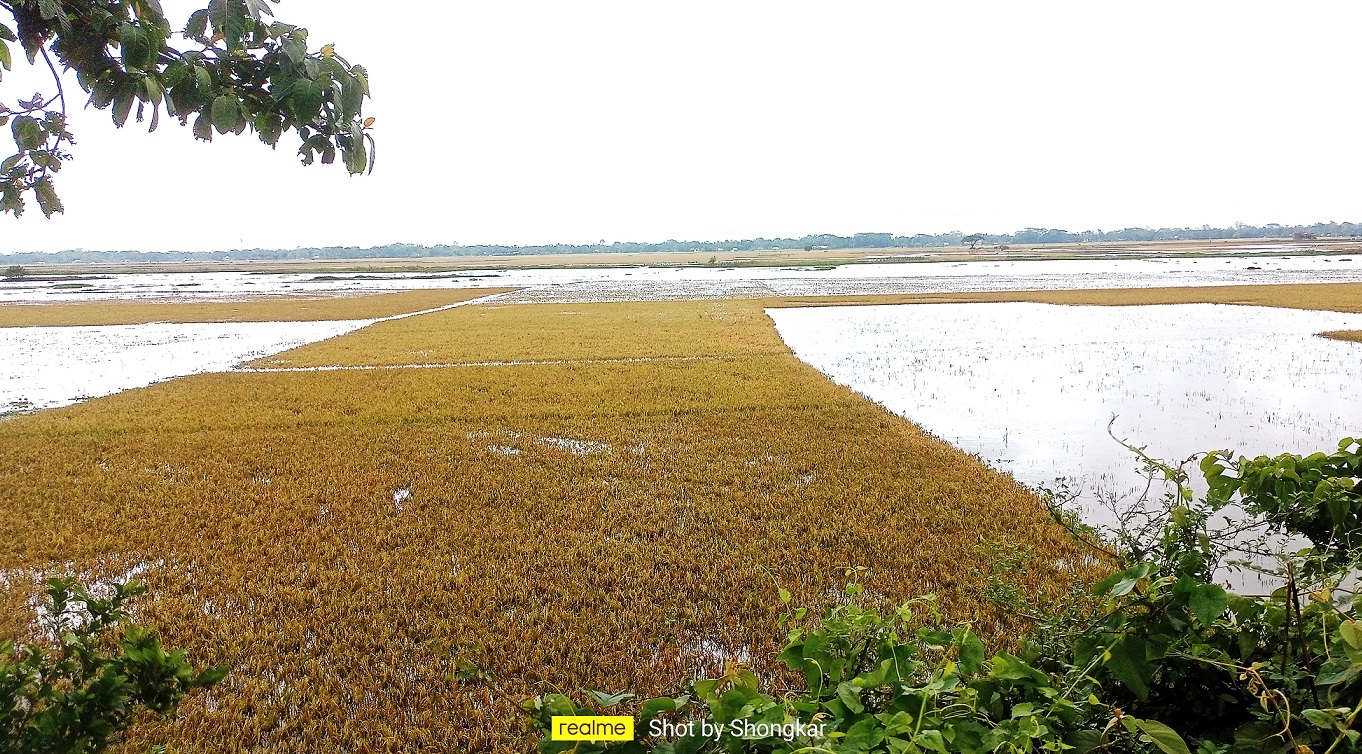
That hope, however, was shattered in the last week of April. Continuous heavy rainfall and flash floods from upstream hills rapidly flooded the low and medium lands of the haor within only a few days. Farmers watched helplessly as ripe paddy fields disappeared under water. Many could not harvest their crops on time because of a shortage of laborers and harvesting machines.
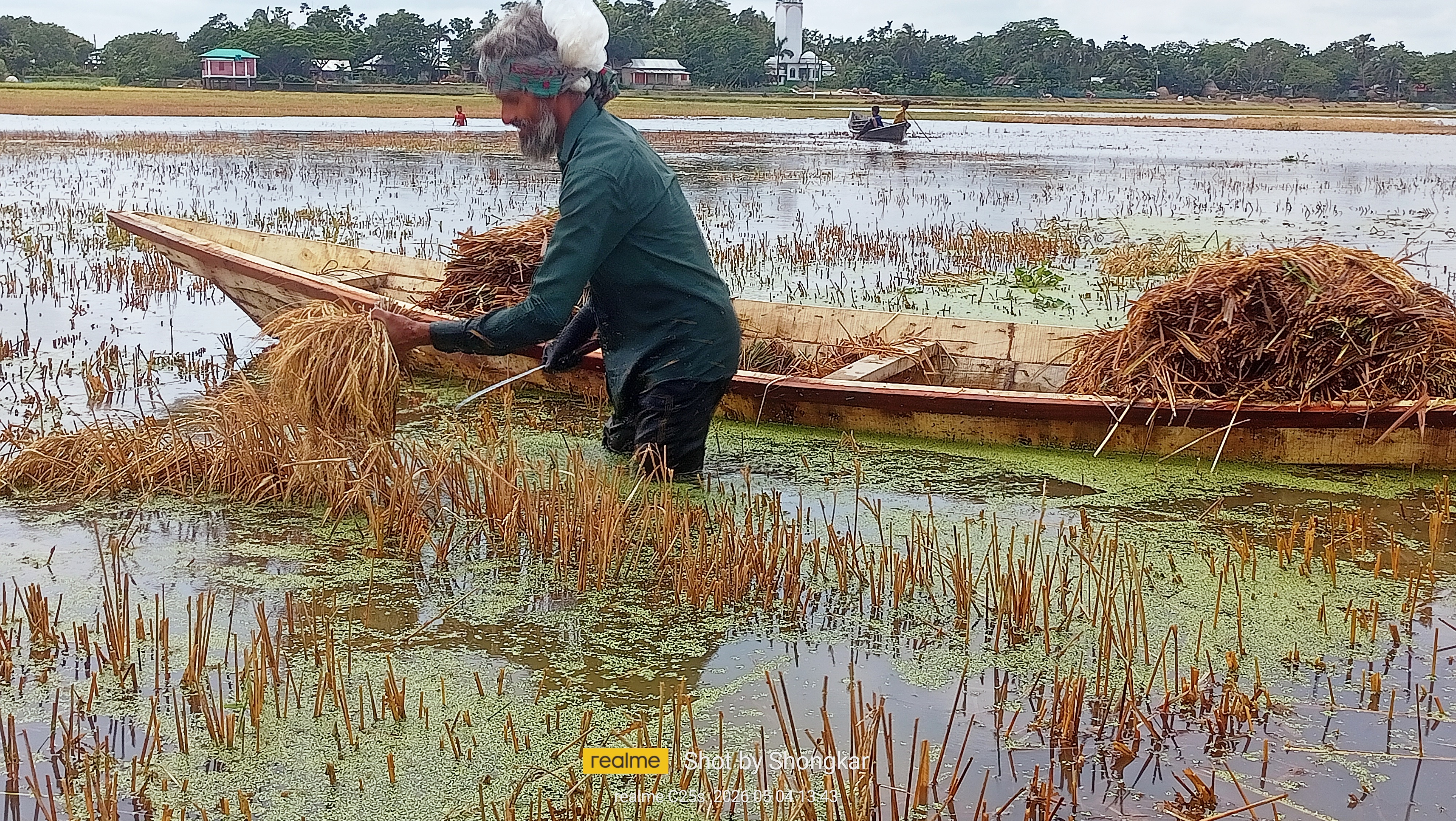
The suffering did not end there. Large amounts of harvested paddy were damaged because farmers had no opportunity to dry or process them during the nonstop rain. In many places, rice grains began to germinate while still lying in the fields. Some farmers desperately covered harvested paddy with polythene sheets in an attempt to save it from further damage.
Villages across Madan and Khaliajuri upazilas experienced severe losses. Some farmers lost all of their crops to floodwater. Whenever sunlight appears, women, men, and children rush to the fields and homesteads to dry rice and straw, trying to save whatever remains of their harvest.
The disaster has also created another crisis for farming families. Since farmers could not collect and preserve straw, cattle feed has become scarce. Straw is the primary source of food for livestock during the rainy season. Many families are now being forced to sell their cattle at low prices because they cannot afford to feed them.
Local farmers believe several human-made problems worsened the disaster. They pointed to poorly planned flood protection embankments, inadequate sluice gates for water drainage, and rivers and canals filled with silt and sand. They also blamed illegal cutting of embankments for boat movement, encroachment on natural water retention areas, and weak monitoring by responsible institutions.
In response to the crisis, the people of the haor region are demanding urgent action. They want public land recovered for cattle grazing, proper grain storage facilities, access to flood-tolerant rice varieties, installation of lightning protection systems, and fair prices for their crops. They are also calling for open access to haors and wetlands instead of lease systems, stronger action against illegal fishing methods, and compensation and food support for flood-affected families.
For the people of the haor, this disaster is not only about crop loss; it is about survival, food security, and the uncertain future of their livelihoods. They believe immediate and long-term action is essential to protect both the environment and the lives of the farming communities who depend on it.