
By Shimul Biswas, from Manikganj
A training workshop on Climate Justice, Agroecology, and Sustainable Development was held in Singair, Manikganj, yesterday. A total of 31 participants (12 women and 19 men) including BARCIK staff, farmers, youth representatives, and members of Green Coalition Committees from Singair, Manikganj, Ghior, and Harirampur participated in the event.
The workshop was facilitated by Program Coordinator Shimul Biswas, with technical support from Syed Ali Biswas, Director of BARCIK Dhaka Office. Local coordination was provided by Bimol Chandra Roy, Beauty Sarker, and Shahinur Rahman. The sessions included thematic presentations, participatory discussions, group exercises, and experience-sharing.
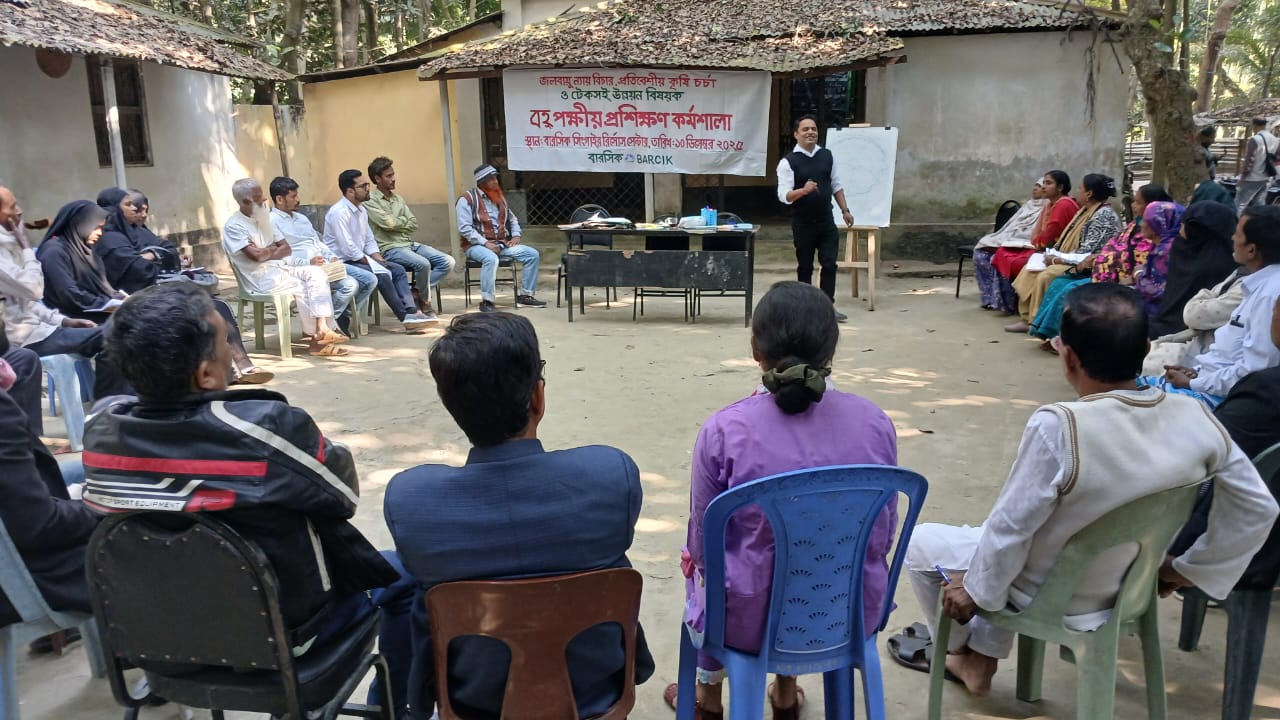
The workshop aimed to build a collective understanding of climate crisis, climate justice, agroecology, rights of affected communities, COP-30 context, and the role of farmers, youth, and Green Caolition Committees.
Participants discussed Bangladesh’s major climate-induced challenges such as heavy rainfall, drought, fog, lightning, and river erosion and identified excessive carbon emissions, mainly from developed countries, as the primary global driver. They observed that although Bangladesh contributes very little to emissions, it suffers disproportionately from the impacts.
Discussants discussed that how modern, fossil-fuel-based agriculture accelerates carbon emissions and disrupts Bangladesh’s natural cropping cycles, pushing farmers into uncertainty while benefiting multinational corporations.
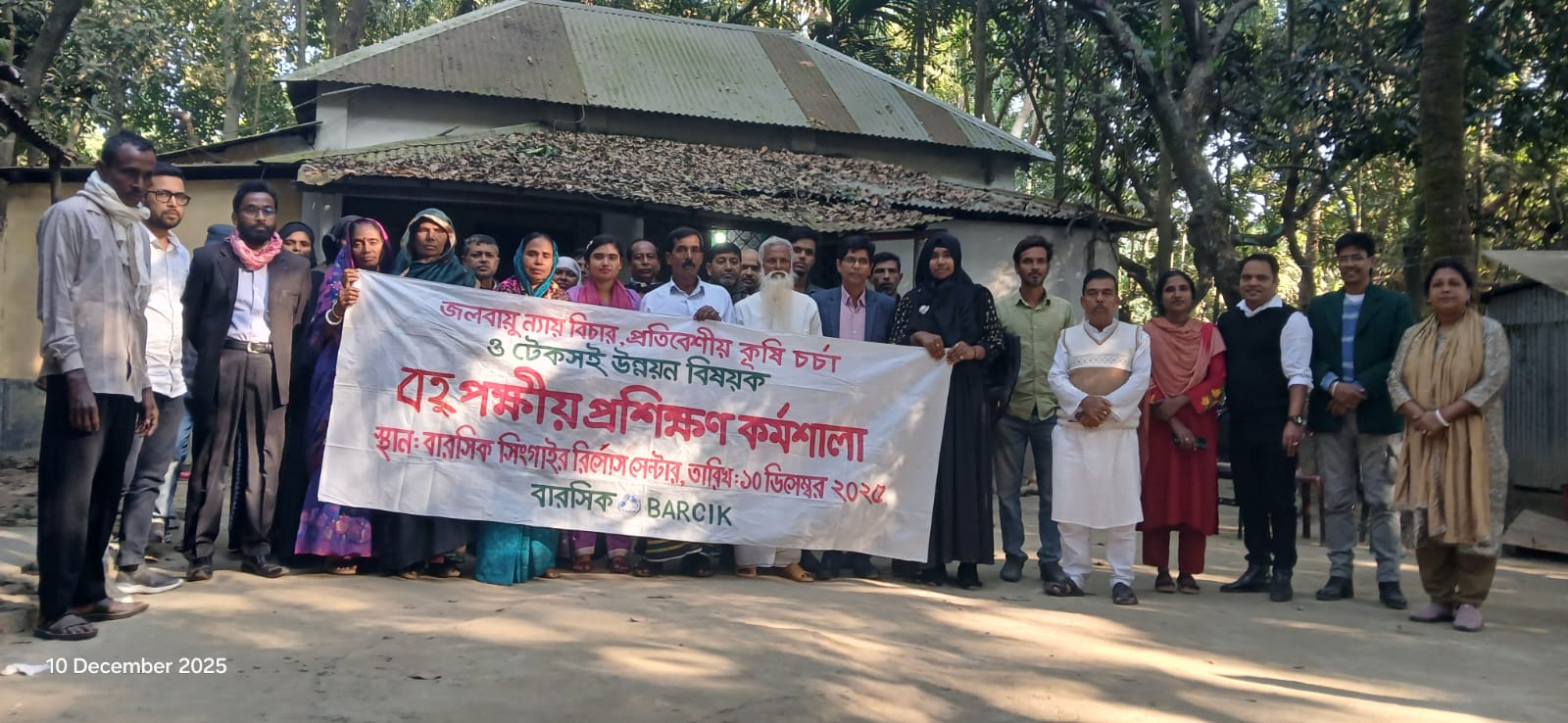
Through group work, participants outlined practical local actions, including natural water management, engaging government departments for canal and pond restoration, seed conservation, production of organic fertilizers and pesticides, and collective marketing of local seeds and inputs. They also emphasized on advocacy for increased government subsidies for seeds and organic materials.
Participants agreed that strengthening local knowledge, expanding agroecological practices, and enhancing collective community action are essential for achieving climate justice and building sustainable agriculture systems.