
By Gunjon Rema fro Kalmakanda, Netrokona
In response to prolonged waterlogging during the monsoon season in Kalmakanda upazila of Netrokona, a climate-resilient vegetable cultivation method known as the Chang Bed has shown promising results.
With BARCIK’s support, four Agroecology Learning Centers have been established in the area to promote sustainable farming practices. On a pilot basis, year-round vegetable cultivation using the Chang (dais) Bed method was introduced at two centers to address the challenges faced by farmers Parimal Rema and Abdul Motaleb, whose homestead lands remain waterlogged for much of the year.
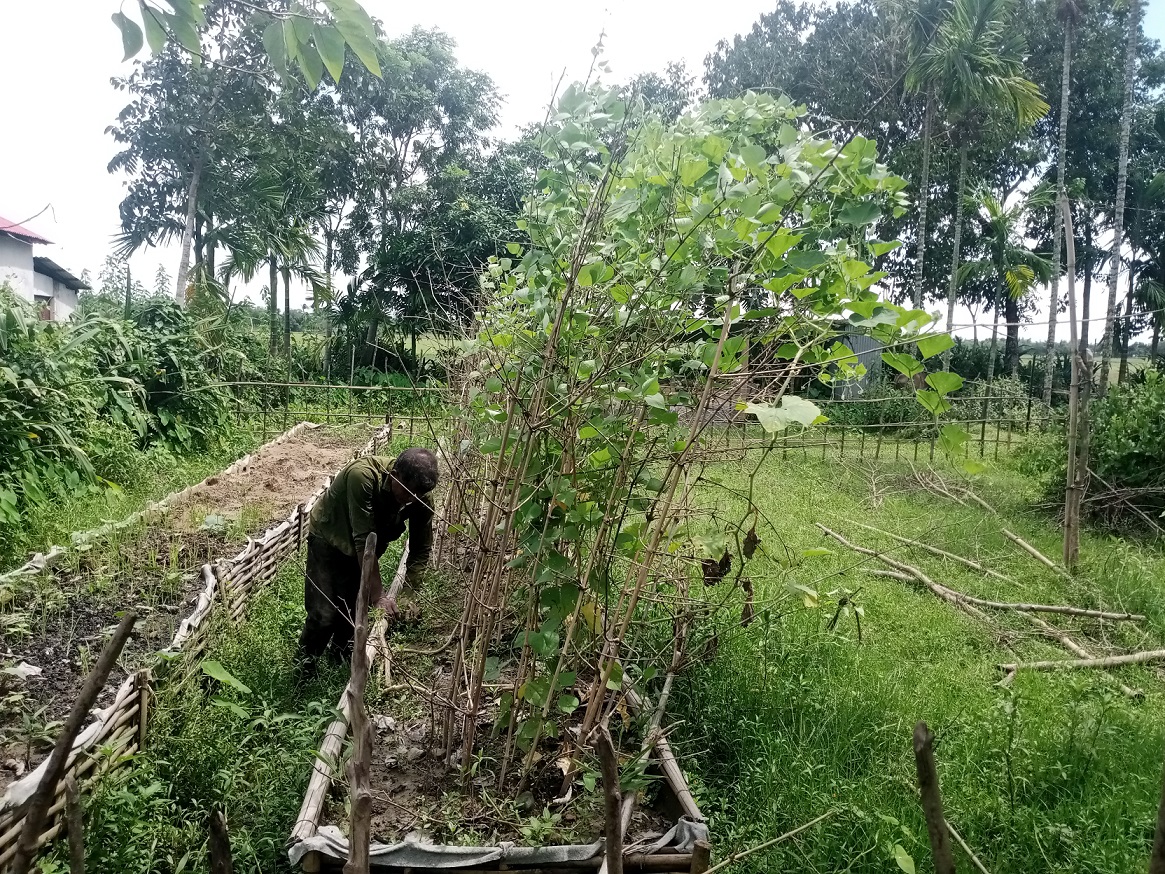
The Chang Bed is a low-cost, locally developed raised structure made from bamboo, jute bags, and organic materials, designed specifically for waterlogged conditions. Unlike conventional beds, it allows excess rainwater to drain quickly, protecting crops during heavy rainfall.
Farmers successfully cultivated vegetables such as bottle gourd, yard-long bean, sponge gourd, cucumber, sweet pumpkin, and eggplant. Compared to conventional methods, plant growth and yields were significantly better, even during periods of heavy rainfall.
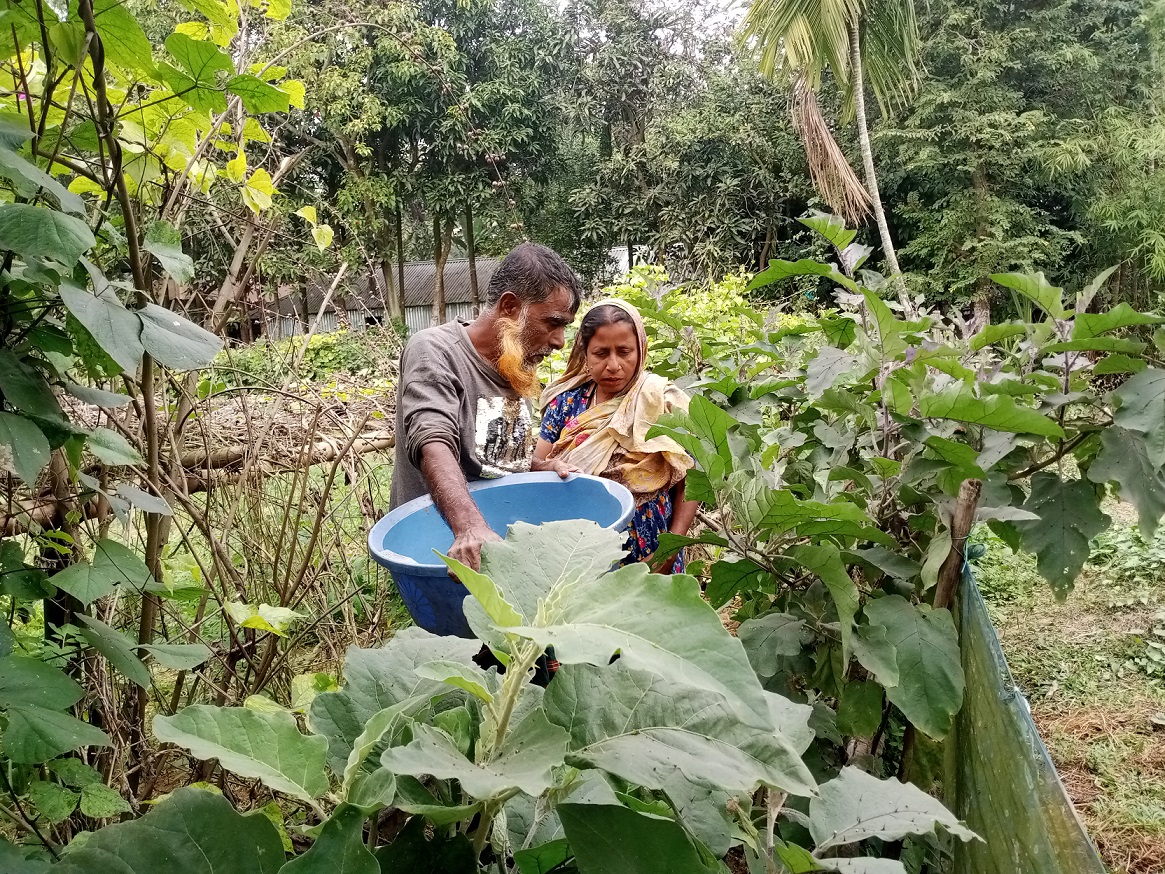
Parimal Rema reported producing 7 bottle gourds, 48 kg of beans, 55 kg of sponge gourd, and 17 kg of cucumbers, meeting household needs and supporting neighbors. Abdul Motaleb earned around BDT 7,200 by selling surplus vegetables while continuing to harvest crops for family consumption.
The Chang Bed method ensures year-round access to safe, fresh vegetables, reduces dependence on markets, lowers household expenses, and creates income opportunities. Using organic inputs and local materials, it is environmentally friendly and aligns with agroecological principles. The method also empowers women and youth by making small homestead spaces productive, offering a sustainable solution to climate-related agricultural challenges.