
By Amit Sarker from Rajshahi
Along the railway line near the Ganir Dhalan in Ward No. 30 of Matihar in Rajshahi city, Budhpara slum is located. A slum which is now home to many people who left their villages because of climate change. Many low-income families came here from Pabna, Natore, Naogaon, Chapainawabganj, and different parts of Rajshahi after losing their homes and livelihoods due to river erosion, drought, irregular rainfall, and loss of farmland. They found a new life after moving to the city, but the struggle did not end. Their lives in the slum exposes them to extreme heat, heavy rain, waterlogging, cold weather, storms, and unhealthy surroundings. Most families survive on uncertain incomes from rickshaw pulling, auto driving, domestic work, construction labor, daily wage jobs, or begging.
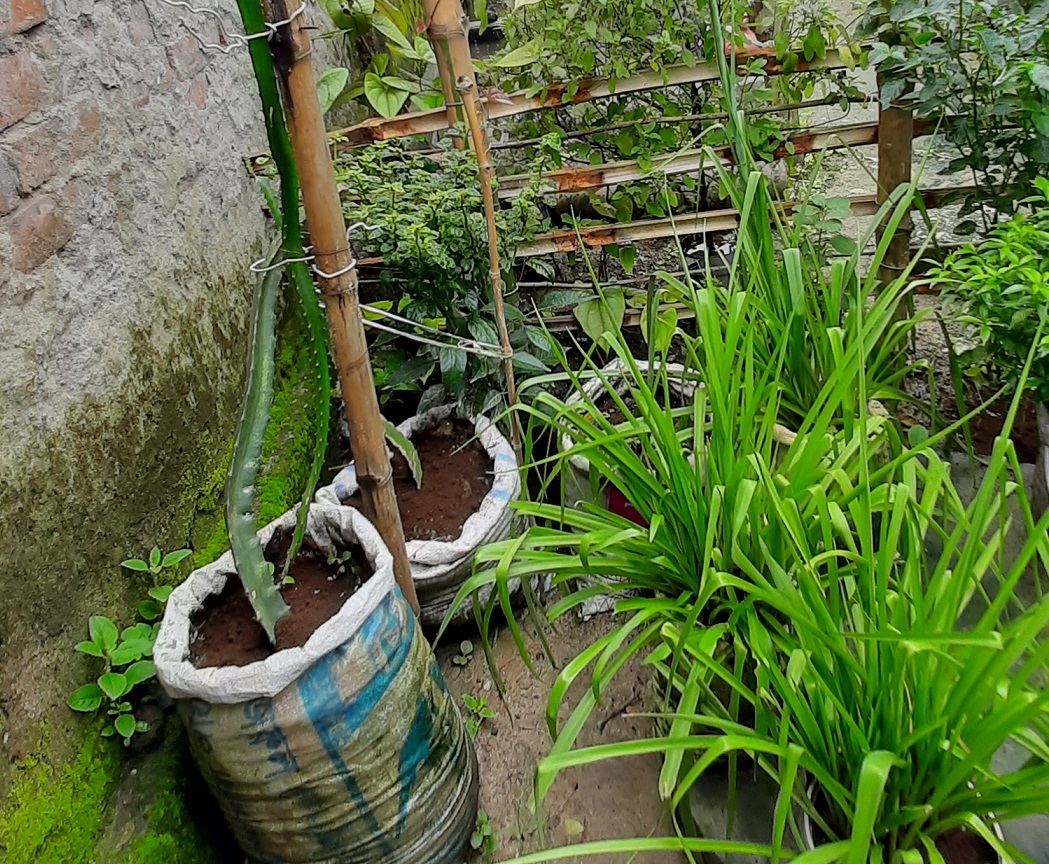
BARCIK Rajshahi has been working in Budhpara slum since 2024 to help people adapt to climate change and to claim their basic rights as urban citizens. In line with this, efforts have been made to implement various initiatives to make people’s lives and livelihoods sustainable by using limited space and resources at the slum level. Through regular meetings, training, and planning, people are learning how to grow vegetables in their home yards, on rooftops, along unused railway land, and in discarded plastic containers. Using simple methods like trellises, hanging gardens, and growing vegetables in sacks and reusable bottles, the residents in the slum are now producing their own food. This has also increased greenery in the area, improved family nutrition, reduced dependence on markets, and created small income opportunities.
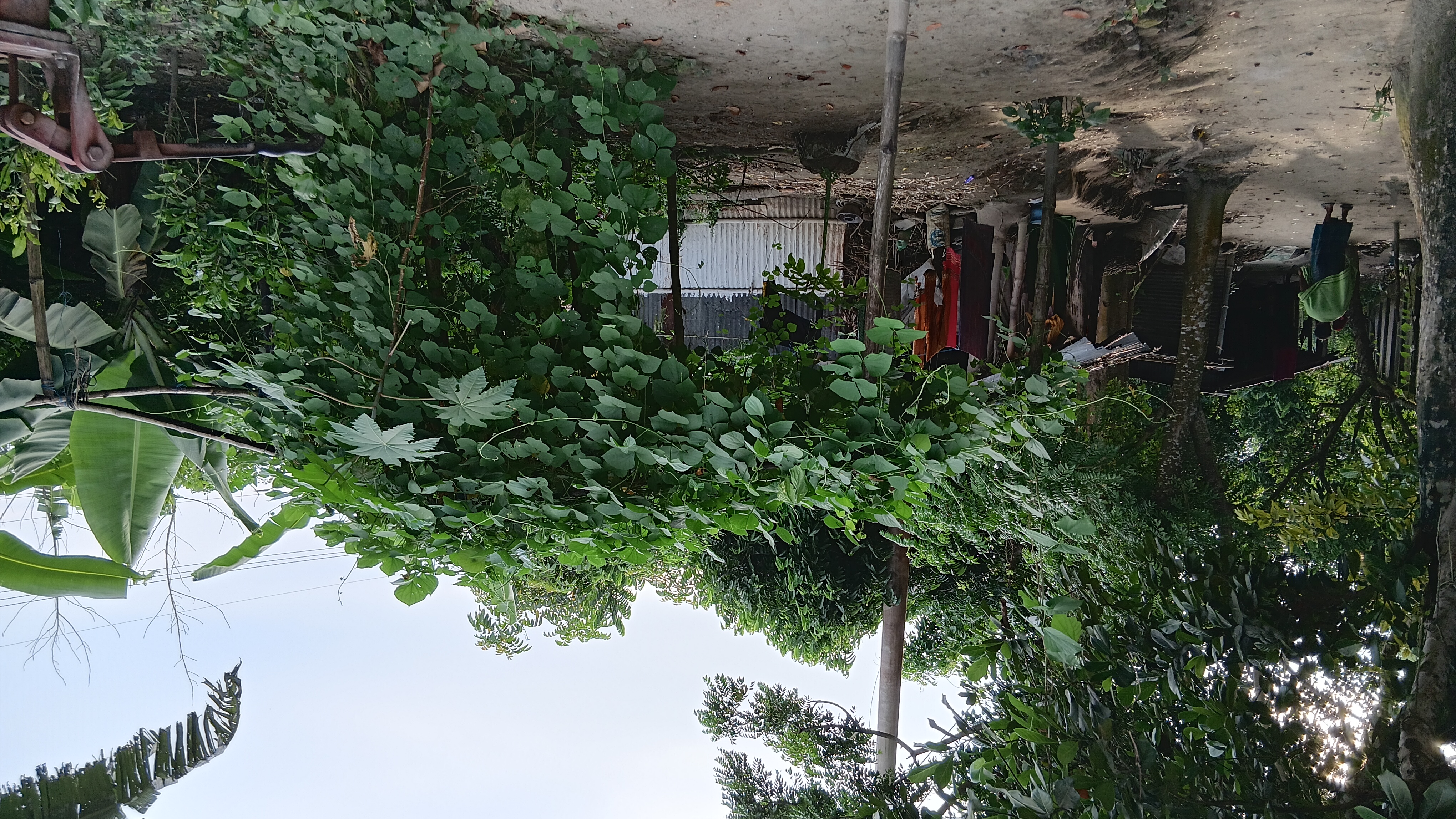
Latifa Begum’s life shows this change clearly. She lost her home to river erosion about fifteen years ago and came to Budhpara with her family. Her husband and son work as construction laborers. They struggled to buy vegetables from the market. After attending several meetings of BARCIK she got the support and motivation of growing vegetables in her small courtyard. In her little space in her courtyard, buying all vegetables from the market was a heavy burden. After joining BARCIK meetings, she started growing vegetables in her small courtyard. She built simple bamboo supports and now grows bottle gourd, chili, tomato, ginger, cucumber, Malabar spinach, pumpkin, cabbage, and cauliflower. By using plastic bottles and sacks, she meets her family’s needs and sells extra vegetables for a small income. She says that earlier everything had to be bought from the market, but now the slum is greener and her family depends less on the market.
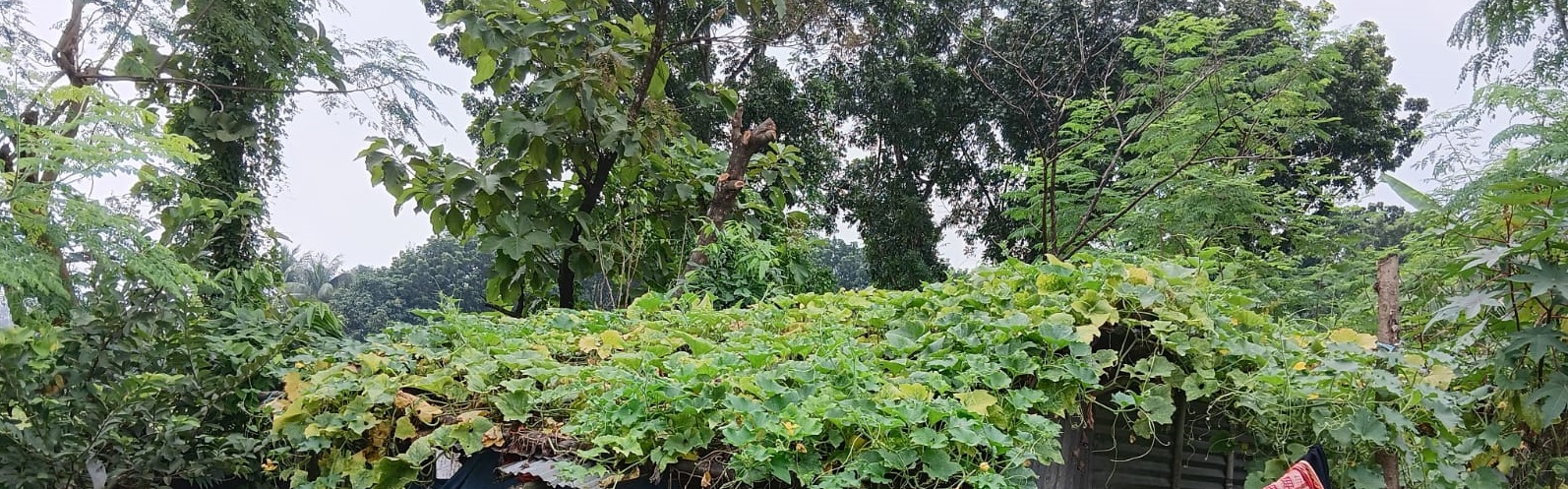
Omar Ali, another resident of Budhpara, also experienced change. He moved to Rajshahi from Pabna about twenty years ago in search of work. He now lives in Budhpara with his mother and wife. His mother begs, and he works as a construction laborer. With BARCIK’s advice, he cleared unused land near his house and started growing papaya, bottle gourd, beans, tomatoes, and Malabar spinach. At first, he planted a chili plant in a cut plastic oil bottle and did not believe it would grow. When it produced chilies, his confidence grew.
Now Omar grows vegetables, flowers, and medicinal plants in 46 plastic bottles using bamboo and compost. He also grows ginger and elephant foot yam in sacks. Today, his small space is full of papaya, dragon fruit, gourds, tomatoes, eggplant, chilies, and flowers. He meets most of his family’s vegetable needs and earns extra money by selling seedlings grown in discarded plastic cups. He says BARCIK has changed the way he thinks and shown him what is possible.
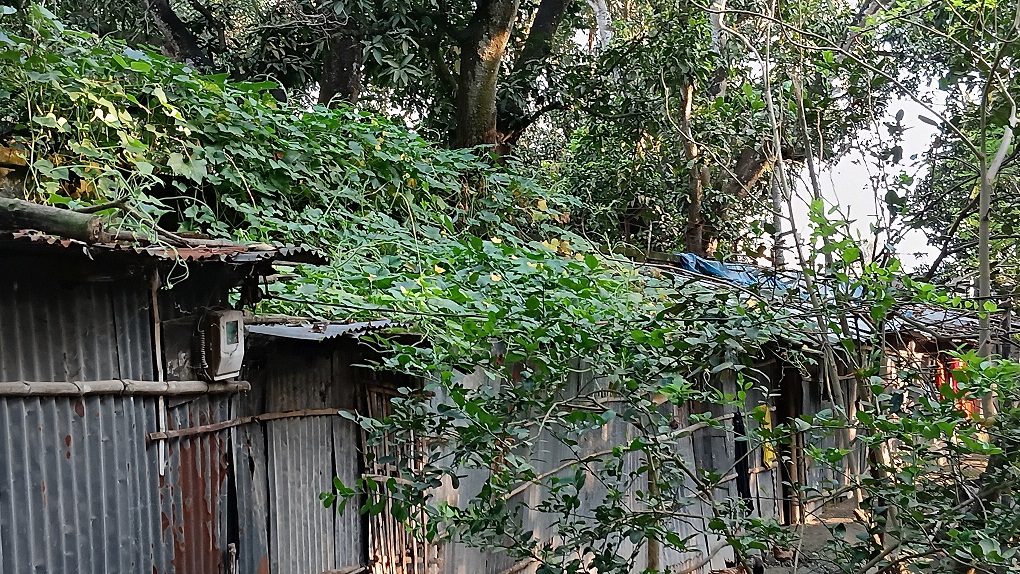
The other residents of the slum are now following the same path. Marufa Begum now grows leafy vegetables and chilies beside her kitchen, reducing daily market costs. Young Sohel Islam, who once depended on irregular daily labor, now grows vegetables in his yard, gaining confidence and a new sense of purpose.
Because of BARCIK’s continued work, Budhpara slum has visibly changed. The area of Budhpara used to be a place filled with dust, heat, and waste but now that has turned into greenery with plants and vegetables. The environment is cooler, families are eating better, market dependence is lower, and women and young people are more involved. They have shown that even in very small spaces, with low cost and local knowledge, urban poor communities can adapt to climate change and build better lives.